
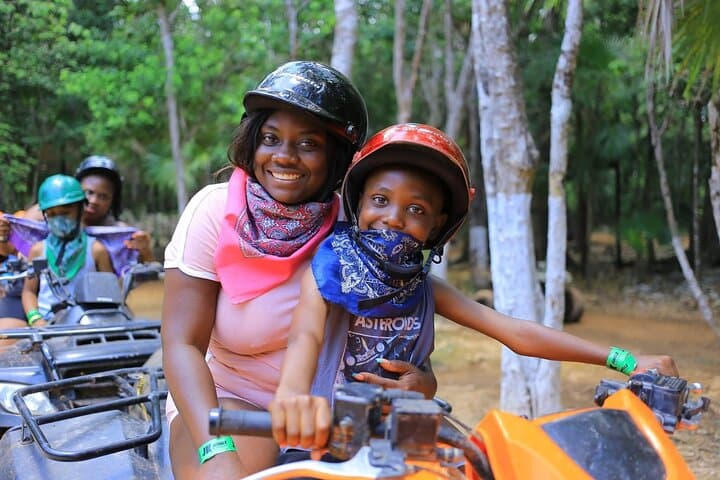
What the day feels like
You can feel the humidity before you see the jungle. It hangs in the air just past the hotel zone—the ocean’s breeze giving way to a thicker, greener hush. By the time the van diverts off the highway and onto a dusty track, palms and strangler figs crowd the road. A guide checks helmets, hands out gloves, and grins: “Ready to wake up?” What follows is a compact, five-hour escape from the postcard beaches of Cancun into the kind of kinetic playground that feels almost engineered to jolt you out of vacation stupor—ATV trails that dart across scrub and packed earth, a zipline course that cuts through a canopy, and a lunch that reboots the whole day: hot chicken fajitas and a short tequila tasting that lands with surprising grace on the itinerary.
This tour sells itself on momentum. It’s part adrenaline, part cultural palate cleanser. On the ATVs you lean into corners as the jungle shoulder rushes by; ruts and berms throw up bursts of red dust, and the machines respond like eager beasts. Then the ziplines shift the world horizontally—your perspective narrowing to a line of cable, then opening to a patchwork of green and blue sky. The group pauses at a platform to trade whoops and to take photos; if the riders ahead are loud, the vines answer with birdcalls.
What grounds the day is detail. The lunch—simple, carefully executed chicken fajitas—arrive sizzling, and the tequila tasting that follows is less about bravado and more about craft, a quick primer on what makes an añejo different from a blanco. The guides, many of whom are local, weave in short stories: bits about the Mayan Riviera, the shift of land use from small farms to tourism parcels, the old coastal trade routes that once threaded the region. It’s not a history lecture; it’s context that makes the whoop at the end of a zipline feel like part of a place rather than a standalone thrill.
Geology and climate shape the experience. The limestone bedrock of the Yucatán means the jungle sits over a porous underlayer. Trails are firm most of the year, but during rainy months the surface can get slick quickly and water pools in the low spots. The canopy here is a chorus of strangler figs, gumbo-limbo, and younger palms—plants acclimated to a seasonally variable rainfall pattern. Wildlife sightings are opportunistic: a Coati slipping through the understory, the flash of a green parrot, or the slower shuffle of a lizard warming itself on sunlit bark.
Practicalities make or break a half-day like this. The tour is five hours long, with round-trip transport from Cancun accommodations included, which means it’s doable even for travelers with limited time. Price starts from about $57.96, a bargain for an adventure package that bundles equipment, guides, lunch, and a tequila tasting. Confirmation is instant and the operator often runs free-cancellation and special offers, but morning departures are the smart pick—cooler air, fewer midday insects, and the light is better for photos.
Safety is straightforward but non-negotiable. Guides brief the group on machine limits and basic riding posture; helmets and gloves are required. The zipline platforms use harnesses and dual-line systems for redundancy. This is not an advanced off-road race—expect moderate technical exposure on the ATVs and brief bursts of speed on the ziplines—but come prepared: closed-toe shoes, hydration, and a spirit for steady, intentional adventuring.
Who is this for? It suits a wide range—people who want a fast, curated introduction to the jungle beyond Cancun’s beaches, small groups looking for a shared adrenaline hit, and travelers who want an easy full-day option without the logistics headache. It’s less ideal for someone seeking technical off-road challenges, multi-stage canopy tours, or an immersive ecological trek. But for what it sets out to be—a high-energy sampler of jungle motorsport, aerial exposure, and local flavors—it succeeds.
If you’re planning, think logistics: tuck your phone in a chest pocket or use a secure strap when zipping, ask about weight limits (operators often have them for the ziplines), and leave loose jewelry on the hotel dresser. Consider morning departures to avoid heat and rain; the wet season can make trails muddier and the sky less picture-perfect.
At the end of the day you’ll have dust in the seams of your clothes and a taste of mezcal or tequila on your tongue. More than that, you’ll have a compact narrative to bring back to the beach—the sort of unpretentious story that lands well over beers: “We rode into the jungle, flew through the trees, ate fajitas, and then tried some really good tequila.” It’s an easy sell to friends, and a good reminder that Cancun’s best stories don’t only come from the sea.
Why go? Because it lets you switch gears quickly—literally and figuratively. It’s the kind of itinerary that rewards a single day in Cancun with a layered experience: motion, landscape, food, and a neat cultural connector in the tequila tasting. It’s not a complete education in the Yucatán, but it’s a precise, efficient dose of why this coastline is more than powder-sand beaches—there’s a green, humming interior just beyond the tourist strip, and this day tour is one of the most direct ways to meet it.
Trail wisdom
Small choices, better day.
Ride in the morning
Book the earliest departure to avoid midday heat and reduce the chance of afternoon showers on trails.
Secure your gear
Use chest straps or zipped pockets for phones and cameras—loose items can fall on ziplines and ATVs.
Wear closed-toe shoes
Sturdy sneakers or light hiking shoes protect feet on ATVs and provide traction at zipline platforms.
Hydrate and pace
Bring water and drink regularly—tropical heat and activity can dehydrate you faster than you expect.
Local knowledge
Read the place, not just the route.
Watch for native species including Green parrot, Coati.
Keep an eye out for wildlife during the transition between areas and habitats. Respect distance guidelines.
Stick to marked trails, avoid feeding wildlife, and choose operators who follow local waste management practices to reduce impact on fragile jungle ecosystems.
Follow the guide's instructions on size limits, ethical handling, and leave-no-trace practices.
Mercado 28 in downtown Cancun for authentic tacos and local crafts. Parque Las Palapas for evening street food and a taste of local life
Locally recommended viewpoints and quiet spots known best to local operators.
The modern tourist development of Cancun began in the 1970s as a government-led project to boost coastal tourism; the area sits on the northern edge of the historic Mayan trade zones.
Maritime roots and regional tradition shape the waterways and working coasts.
Seasonal guide
Four versions of the same landscape.
Spring
Best forcomfortable temperatures · birdwatching · fewer heavy rains
Challengesincreasing humidity · possible pollen
Spring offers warm days and reduced rainfall compared with summer, making trails firm and ziplines pleasant.
Summer
Best forlush foliage · longer daylight · fewer crowds at some times
Challengeshigh heat and humidity · afternoon thunderstorms
Summer brings dense greenery and dramatic skies but plan for sudden showers and hotter conditions.
Fall
Best forpost-summer greenery · lower humidity than summer · good light for photos
Challengeshurricane season overlaps (peak Aug–Oct) · trail muddiness after storms
Early fall still carries storm risk—check forecasts and operator policies during hurricane season.
Winter
Best forcooler mornings · dry trails · clear skies
Challengesslightly cooler water for wildlife · higher tourist demand in high season
Winter (Dec–Apr) is peak season for stable weather and excellent visibility on ziplines.
Operator details
What the booking data adds.
Included
- ✓Roundtrip Transportation
- ✓Lunch
- ✓Tequila Tasting
- ✓Ziplines
- ✓Minute ATV Ride Through The Mayan Jungle
Not included
- —Locker
- —Photography
Good to know
- ✓Public transportation options are available nearby
- ✓Infants are required to sit on an adult’s lap
- ✓Suitable for all physical fitness levels
- ✓The weight limit for ziplines is 286 pounds
Pack with intention
What to bring.
Good to know
Common questions.
The total experience is about 5 hours, including round-trip transport from most Cancun hotels.
Plan the edges
The details that make the day easier.
Cancún was a government-planned tourist development launched in the 1970s; before that, the area was sparsely populated coastal land with small fishing communities.
After the tour, head to Mercado 28 for authentic tacos and handmade goods, or dine at La Habichuela for Yucatecan classics; Parque Las Palapas offers evening street food and a local atmosphere with cold beers.
- Closest airport
- Cancún International Airport (CUN)
- Typical drive from Hotel Zone
- 30–45 minutes (varies by operator)
- Cell service
- Generally available near base but can be spotty on some trails
- Permits
- None required for visitors—tour operator handles access and equipment.
Choose operators that minimize off-trail riding, manage waste responsibly, and work with local communities; avoid single-use plastics and pack out any trash to protect the fragile Yucatán jungle.
Explore by topic
Follow the threads.
Keep exploring
Make the story part of the trip.
Set out from Bass Harbor for a private, customizable day on Blue Hill Bay — lighthouses, puffins, seals, and the chance to feel Acadia from the water. Small groups, local captains, unforgettable views.
In four hours you can move from shaded canyon ferns to wind-scoured coastal ridgelines, guided by someone who knows where the light—and the hidden views—live. This private half-day hike on the Monterey Peninsula or Big Sur is compact, curated, and perfect for travelers who want depth without a multiday commitment.
 Related story
Beneath a sky of shifting light, Skaftafell’s ice reads like a map of time. This three-hour guided glacier hike mixes technical instruction with geology and culture: compact, safe, and unforgettable.