
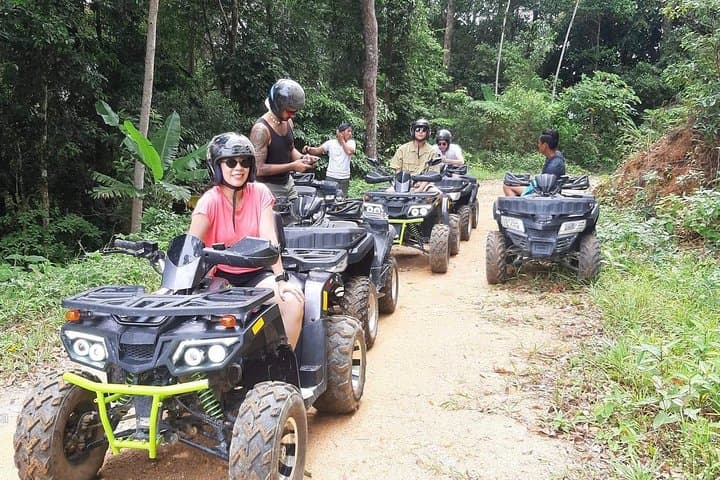
What the day feels like
You hit the throttle and the jungle answers back. Leaves slap at your elbows, the track narrows to a single-rut ribbon, and the smell of wet earth and coconut husk fills the air. For sixty minutes the island speeds up: a pulse of engine, a spray of red dirt, and sudden openings where the trees part to let the ocean in. This is Koh Samui not from the beach — the island’s interior, where coconut plantations blur into rainforest, is stitched by old dirt tracks and the occasional lookout with a view that makes you forget the hotels back on the shore.
The Mini ATV Safari on Koh Samui is compact by design: a one-hour, guided ride tailored for first-timers and small groups that want a taste of off-road adrenaline without signing up for a full-day expedition. It's the sort of short, concentrated rush that fits between a morning swim and a sunset dinner. Guides give a brief safety orientation, hand out helmets, and lead the way, picking lines through a landscape shaped by both geology and human habit — low ridges carved by ancient currents, flattened terraces of coconut farms, and scrubby forest that clings to steeper slopes.
Koh Samui’s story is written in palms and coral. Once a quiet coconut backwater known for palm oil and fishing, the island exploded into tourism in the late 20th century. Beneath the glossy postcard beaches are old plantation roads and unpaved tracks originally cleared by local farmers — now repurposed as trails that thread lookouts and hidden coves. The geology is forgiving: granite outcrops, red laterite soil, and small ridgelines that give ATVs enough pitch for fun but generally avoid technical exposure. Weather, however, is the plot twist — in the monsoon months those tracks can become a clay slick that turns a comfortable ride into a slippery puzzle.
Culturally, a jungle ride on Samui brushes past everyday island life. Villagers cultivate coconuts and fruit in small parcels; you’ll pass simple wooden homes, temple shrines painted in bright lacquer, and roadside stalls selling coconut water straight from the shell. Guides — usually local — are part naturalist, part tour leader: they’ll point out medicinal plants, tell stories about the island’s shift from plantation to resort economy, and explain how tides and trade routes shaped Samui’s community.
For travelers who want to plan, the logistics are refreshingly straightforward. The tour is one hour of riding, with hotel pickup and drop-off included; the price starts around USD 60. Expect a small-group format with basic instruction provided, and note that helmets are mandatory and supplied. Terrain is mostly dirt tracks, occasional steep sections, and short technical bits where you’ll drop into gullies or clamber over exposed roots. The activity suits adventurous beginners and intermediate riders but doesn’t require previous ATV experience.
Practical prep matters. Wear closed-toe shoes, longish pants to guard against brush, and layers you don’t mind getting dusty. Hydrate before you go — an hour of engine heat and bumpy tracks can sneak up on you. If you’re traveling in the rainy season, choose morning slots when trails are firmer and visibility is better. Cameras are welcome, but use a chest or helmet mount; loose phones can be lost in the dust.
Why go? Because it compresses the best bits of Samui’s interior into a tidy, accessible adventure: a fast way to feel the island’s geography, to glimpse rural life, and to stand at an overlook where the coral fringe of the Gulf of Thailand meets a scatter of islets. It’s also a smart add-on for families or groups with mixed interests — while half the party lounges at the beach, the others can carve an hour of memorable off-road fun.
Safety and sustainability are part of the tour DNA. Reputable operators limit group sizes, keep riders to established tracks, and brief guests on minimizing impact — avoid riding through streams, respect village property, and pack out trash. If you’re booking, confirm helmet quality, insurance coverage, and how they manage vehicle rotation and maintenance. A well-run operator makes the ride feel less like a commodity and more like a responsibly run slice of island life.
At the end of the loop you’ll trade engine hum for the sound of waves and maybe stop at a roadside stall for a coconut or a plate of som tam. The island’s allure is both immediate and layered: the sun on the sea is easy to love, but the dirt track gives you the context — how people live here, what the land feels like when you’re not just skimming its edge. For an hour on two wheels, Koh Samui gives you speed, scenery, and a sharper sense of place.
Trail wisdom
Small choices, better day.
Wear Closed-Toe Shoes
Sturdy sneakers or lightweight hiking shoes protect toes from debris and provide better control on footrests.
Bring a Small Dry Bag
Keep your phone, cash, and sunscreen in a small dry bag strapped to your body or the ATV’s rack.
Choose Morning Slots
Trails are firmer and temperatures cooler in the morning; afternoon monsoon showers can make tracks slippery.
Listen to Your Guide
Guides know which lines to take, how to manage tricky descents, and local etiquette when passing villagers.
Local knowledge
Read the place, not just the route.
Watch for native species including Monitor lizards, Colorful tropical birds (kingfishers, bulbuls).
Keep an eye out for wildlife during the transition between areas and habitats. Respect distance guidelines.
Stay on established tracks to protect native vegetation and avoid stream crossings to prevent erosion; local operators commonly support community initiatives to reduce litter and manage vehicle impact.
Follow the guide's instructions on size limits, ethical handling, and leave-no-trace practices.
Small roadside stalls serving fresh coconut water near inland lookouts. Quiet temple shrines and viewpoint benches off the main dirt tracks
Locally recommended viewpoints and quiet spots known best to local operators.
Koh Samui’s interior roads grew from plantation and farming access routes; the island transitioned from a coconut-based economy to tourism in the late 20th century.
Maritime roots and regional tradition shape the waterways and working coasts.
Seasonal guide
Four versions of the same landscape.
Spring
Best forLower crowds · Warmer dry days
ChallengesRising heat (March–May) · Dustier tracks
Spring is hot and getting drier; expect dusty tracks and warm temperatures — good for clear vistas but bring sun protection.
Summer
Best forLush jungle · Fewer tourists
ChallengesIntermittent rain showers · Slick sections after storms
Summer brings tropical showers that turn red mud slippery; early morning departures limit rain risk and offer cooler conditions.
Fall
Best forDramatic green landscape · Good photo light
ChallengesMonsoon peak (Sept–Oct) · Trail closures possible
Fall can be wet during the monsoon peak; if rides run, the jungle is at its greenest but traction can be poor.
Winter
Best forCooler temps · Stable weather
ChallengesHigher visitor numbers · Pricier accommodations
November–February is the island’s high season: clear skies and firm trails make for the most reliable ATV conditions.
Operator details
What the booking data adds.
Included
- ✓Accident Insurance for rider & passenger (ATV damages not covered)
- ✓Safety equipment
- ✓First Aid Kit
- ✓Join in ATV experience
- ✓Tour Guide
- ✓Drinking water, Free Season Fresh Fruits dish
Not included
- —Hotel transfers
Good to know
- ✓Not recommended for travelers with spinal injuries
- ✓Not recommended for travelers with poor cardiovascular health
- ✓Not recommended for pregnant travelers
- ✓Public transportation options are available nearby
- ✓Suitable for all physical fitness levels
- ✓Riders have to be in good physical and mental ability to ensure safety.
- ✓During the tour, riders are asked to strictly follow the tour guide/instructor. The tour operator has the right to stop any risky riding with no refund.
- ✓There is a minimum of 2 people required to run this tour!
- ✓Not recommended for pregnant travelers or those with heart conditions, high blood pressure, asthma, or recent surgery.
- ✓In the rare event the tour must be canceled, you will be informed in advance and offered a new date, an alternative tour, or a full refund
Pack with intention
What to bring.
Good to know
Common questions.
No; the tour is designed for beginners with a safety briefing and guided route. Basic coordination and comfort on uneven ground are helpful.
Plan the edges
The details that make the day easier.
Koh Samui was historically nicknamed the 'Coconut Island' because coconut farming was the backbone of the local economy before tourism expanded.
After the ride head to Fisherman’s Village in Bophut for fresh seafood restaurants, or grab a coconut from a beachside vendor in Chaweng; night markets offer great local snacks and cold beer for cooling down.
- Closest airport
- Samui Airport (USM); Typical drive from Chaweng: 15–30 minutes; Cell service: generally good in populated areas, patchy in interior tracks; Permits: none required for short guided rides
Stick to established tracks, avoid stream crossings, and pack out all trash; many local operators contribute to community waste-management and trail restoration efforts.
Explore by topic
Follow the threads.
Keep exploring
Make the story part of the trip.
 Related story
Less than two hours from Nairobi, Kereita Forest pairs hands-on canopy adventure with quiet montane trails and a sobering colonial history—perfect for families, teams, and curious travelers seeking a full-day pulse of nature.
Set out from Bass Harbor for a private, customizable day on Blue Hill Bay — lighthouses, puffins, seals, and the chance to feel Acadia from the water. Small groups, local captains, unforgettable views.
In four hours you can move from shaded canyon ferns to wind-scoured coastal ridgelines, guided by someone who knows where the light—and the hidden views—live. This private half-day hike on the Monterey Peninsula or Big Sur is compact, curated, and perfect for travelers who want depth without a multiday commitment.