
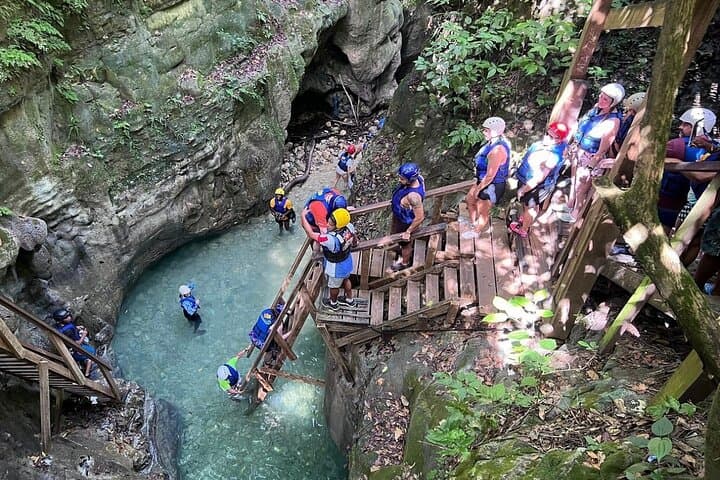
What the day feels like
You hear the river before you see it—first as a distant drum, then as a rising chorus, then as a full-throttle laugh that seems to dare you forward. The trail out of the parking lot drops quickly into a narrow gorge where sunlight fingers through broad-leaf canopy and the air turns cool and mineral-scented. Here the water speaks in a different register: a series of polished basalt steps, emerald plunge pools, and narrow chutes that beg you in the way a good challenge does—equal parts promise and instruction.
This is the Waterfalls of Damajagua, often called Los 27 Charcos. The tour unwraps across two to three hours of hiking, wading, and jumping—an adrenaline-tinged loop through roughly 1.5–2.5 miles (2.5–4 km) of trails and river corridors with about 200 feet (≈60 m) of cumulative elevation change. You move through a sequence of falls that were hewn by volcanic flows and then smoothed by centuries of rush and retreat. The geology is intimate: basalt ledges, tidal-like pools, and narrow drop points where water has carved slides and natural chutes you can send yourself down with nothing more than momentum and a good pair of water shoes.
The experience blends physicality with local culture. Most tours out of Puerto Plata pair the waterfall circuit with a light city tour—stop-offs at a rum factory to watch sugarcane spirits transform into dark amber Ron, a stroll down the umbrella-draped pedestrian street that plasters color across the old zone, and a quick look at the so-called Pink Street with its muraled facades. Locally guided tours are the norm here; guides know which jumps are for the confident and which pools are better for cautious swimmers. They are also storytellers, pointing out where fruit trees hide in the understory, or where the path climbs a braided root system that was once a Taino trail.
A quick word on history and geology: the waterfalls cascade through volcanic rock laid down when the island’s modern topography was taking shape. Over millennia, runoff from the Cordillera Septentrional etched the basalt into the stepped chutes you use today. The human layer is just as visible—this landscape sits in a province shaped by sugar, rum, and colonial trade, and the local communities have adapted to an economy that today blends agriculture, small-scale industry, and growing adventure tourism.
Why take this trip? For many travelers it’s a perfect mash-up: active movement without technical climbing, an intimate connection with Caribbean freshwater that feels private despite its growing popularity, and a little cultural contrast when you pair the natural section with a rum distillery tour and a walk through Puerto Plata’s colorful streets. It’s approachable for competent swimmers and hikers who are comfortable with scrambling; it’s not a technical canyoning route, but it delivers the kind of wet, immediate thrills that linger longer than most postcard views.
Practical realities matter here. Expect to be in the water: plan on 2–3 hours on the activity itself, with transfer time to and from Puerto Plata. The route includes several spots where you’ll walk along slick rock and hop across roots and narrow ledges. Guides typically brief groups on safe jumping techniques and will advise against certain jumps in high water. Bring footwear with good grip—rubber-soled water shoes or worn-in trail sandals are better than flip-flops. A small dry bag for a camera or phone, reef-safe sunscreen, and a quick-dry change of clothes will make post-tour logistics easier. Hydration matters even in the shade—pack a filled 1-liter bottle at minimum.
Safety: this is a guided, commercial experience. Follow the guide’s instructions, scout jumps before you make them, and don’t overreach—individual fitness and comfort levels vary. If you’re planning to take photos, tether your camera or use a waterproof housing; hands-free setups like a chest harness work best while jumping or sliding.
Timing is simple: the island’s dry season (roughly December–April) delivers lower flows and clearer pools, while the rainy season raises water levels and increases current strength—both are beautiful but different. The tour is popular in high season, so book the morning slot if you prefer fewer people and cooler temperatures. Price-wise, the experience starts around USD 65 and commonly includes transfer from Puerto Plata, entrance fee, guide, and sometimes light safety gear like helmets or life jackets—verify inclusions with your operator.
When the day ends, there’s still Puerto Plata to explore: sip dark rum at the factory, wander umbrella-strewn plazas, and find a local paladar for seafood and fried plantain. The waterfall day feels best paired with a slow evening—salted fish or a hearty stew, a cold beer, and the sense that you just earned your sunset.
At its core, the Waterfall Experience is a reminder of why Caribbean adventures aren’t all about beaches. There’s grit, elevation, and a freshwater heartbeat here that’s both elemental and immediate. For anyone who likes their travel mixed with movement and a little local color, it’s hard to beat the simple, wet joy of sliding into a green pool and surfacing laughing, the guide’s voice somewhere above, the valley’s hum folding up around you.
Trail wisdom
Small choices, better day.
Wear grippy water shoes
Slick basalt and wet roots make traction essential—closed-toe water shoes or sticky-soled sandals reduce slips.
Scout jumps first
Never jump blind—walk around the pool and let your guide check depth and underwater hazards.
Pack a small dry bag
Protect your phone and wallet—bring a 5–10L dry bag for essentials and a tether for cameras.
Hydrate and pace yourself
Even in shade you sweat—bring water and take breaks between jumps to maintain focus.
Local knowledge
Read the place, not just the route.
Watch for native species including Green iguana, Tropical hummingbirds and kingfishers.
Keep an eye out for wildlife during the transition between areas and habitats. Respect distance guidelines.
Operators emphasize staying on trails and not using chemical sunscreens; visit with a licensed guide and pack out any trash to minimize erosion and water contamination.
Follow the guide's instructions on size limits, ethical handling, and leave-no-trace practices.
A short detour to the nearby Cangrejo Cave for a shaded photo stop. Local fruit stalls along the approach road selling coconut water and guava pastries
Locally recommended viewpoints and quiet spots known best to local operators.
The region around Puerto Plata grew from sugarcane and rum production; the nearby Ron factory in many city tours shows the island’s long tie to distillation and export.
Maritime roots and regional tradition shape the waterways and working coasts.
Seasonal guide
Four versions of the same landscape.
Spring
Best forLower crowds · Clearer pools
ChallengesIntermittent showers · Variable trail muddiness
Spring (March–May) sits near the tail end of the dry season with generally good water clarity and manageable flows—ideal for most groups.
Summer
Best forLush green canyon scenery · Fewer international tourists
ChallengesHigher rainfall and stronger currents · Hotter, more humid conditions
Summer brings dense vegetation and more water; flows can be stronger so follow guide advice and expect occasional closures after heavy storms.
Fall
Best forWarm water temperatures · Vibrant riverine foliage
ChallengesHurricane season risk (watch forecasts) · Higher sediment after storms
Fall is warm and vivid but carries increased weather risk—flexible travel plans are recommended.
Winter
Best forDry-season clarity · Comfortable temps
ChallengesHigher tourist numbers in peak months · Limited availability if not booked early
Winter (Dec–Feb) is the most reliable time for calm pools and cool hiking—book morning departures for smaller groups.
Operator details
What the booking data adds.
Included
- ✓Private transportation
- ✓Bottled water
- ✓WiFi on board
- ✓Entrance fee
- ✓Air-conditioned vehicle
Good to know
- ✓Infants and small children can ride in a pram or stroller
- ✓Service animals allowed
- ✓Public transportation options are available nearby
- ✓Not recommended for pregnant travelers
- ✓Suitable for all physical fitness levels
Pack with intention
What to bring.
Good to know
Common questions.
The activity itself takes about 2–3 hours, with round-trip transfers from Puerto Plata typically extending total time to half a day.
Plan the edges
The details that make the day easier.
The Waterfalls of Damajagua are commonly called Los 27 Charcos—27 natural pools carved in volcanic rock that have become a signature inland attraction near Puerto Plata.
After the waterfalls head back to Puerto Plata’s old town: visit the Ron factory for a guided tasting, stroll the umbrella-draped pedestrian street for craft stalls, then grab fried fish and cold beer at a seaside paladar—it's a classic post-adventure cooldown.
- Closest airport
- Gregorio Luperón International Airport (POP); Driving distance from Puerto Plata: ~30–45 minutes (20–35 km) depending on traffic; Cell service: intermittent in the gorge—expect gaps; Permits
- fees
- entrance fee usually collected at site and often included in tour price.
Stick to marked paths, avoid using non-biodegradable sunscreens that can contaminate freshwater, and support licensed local guides who contribute to community conservation efforts.
Explore by topic
Follow the threads.
Keep exploring
Make the story part of the trip.
Set out from Bass Harbor for a private, customizable day on Blue Hill Bay — lighthouses, puffins, seals, and the chance to feel Acadia from the water. Small groups, local captains, unforgettable views.
In four hours you can move from shaded canyon ferns to wind-scoured coastal ridgelines, guided by someone who knows where the light—and the hidden views—live. This private half-day hike on the Monterey Peninsula or Big Sur is compact, curated, and perfect for travelers who want depth without a multiday commitment.
 Related story
Beneath a sky of shifting light, Skaftafell’s ice reads like a map of time. This three-hour guided glacier hike mixes technical instruction with geology and culture: compact, safe, and unforgettable.