
What the day feels like
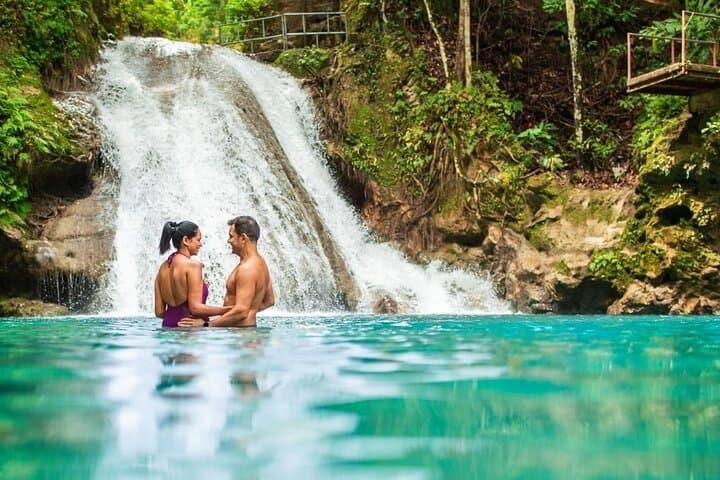
You push through a curtain of vines and the world snaps open: a ribbon of turquoise pools threaded with narrow cascades, pockets of sun catching the water so it looks lit from within. The jungle leans in close here—ferns brushing your forearms, banana leaves whispering—while the falls go about their business, daring you to climb, jump, and explore. This is Irie Blue Hole, frequently called Secret Falls, a compact wildwater playground tucked into the hills above Ocho Rios that feels improbably private despite its popularity.
There is an immediacy to the place. The pools are shallow and startlingly clear; currents nudge you along while rope swings hang like invitations from the overgrowth. Follow the guide upstream and low caves appear—dark mouths that siphon the river and open into hidden plunge pools. Downstream, the falls break into a series of steps, each one offering a different vantage: a slick ledge to scramble, a quiet basin for a float, a sunlit shelf for drying off and passing bananas.
Geologically, Blue Hole is a karst landscape shaped by limestone and spring-fed water that has carved small sinkholes and channels into the Trelawny and St. Ann hills. It’s not a single monumental waterfall but a chain of natural pools and cascades, which is part of its charm—this is play-by-play water, interactive and variable depending on the season and the rainfall that week.
Culturally the spot sits in the living, layered Jamaica of the north shore. The land here carries Taino and colonial histories, sugar-plantation shadows, and a present-day community whose livelihoods are now entwined with tourism. Local guides—often from nearby Ocho Rios or the surrounding villages—bring you through the site, and their knowledge shapes the experience: where to jump safely, which caves have the clearest water, which rope swing has the longest arc.
What makes the Irie Blue Hole special is its mix of ease and edge. It’s approachable for a wide range of travelers: families who want safe plunge basins, couples seeking a photogenic afternoon away from the main beach, or moderately fit adventurers eager for a short scramble and some cliff jumps. But it still feels like an adventure because you’re negotiating wet rocks, threading through jungle passages, and sometimes entering small cave mouths that demand a steady foot and a measure of boldness.
Practically speaking, you’re signing up for a 3–4 hour outing that includes a short drive from central Ocho Rios and a guided hike in and out of the pools. Viator lists this as a private-tour option starting at $109, which typically covers guide fees and entrances; check the specific operator for the latest inclusions, but expect to tip guides directly for a job well done. The terrain is uneven and slippery; water shoes or grippy sandals are more useful than regular flip-flops. Bring a dry bag and a small towel; leave bulky backpacks at the shuttle or in the vehicle. If you want photos, water-safe phone pouches or a waterproof camera are essential—this place refuses to be photographed decently from the bank alone.
Timing matters. Visit earlier in the day to beat the crowds and to enjoy cooler air and better light for photography. During the dry season (roughly December–April) the water runs clearer and the rope swings are more stable; in rainy months the cascades thicken and the pools can be more turbulent. Guides will route you toward calmer pools or more adventurous drops depending on conditions and your comfort.
Respect goes a long way here. This is not a manicured national park but a living stream with sensitive riparian zones. Use biodegradable sunscreen, avoid dragging feet through shallow plant beds, and follow your guide’s directions when climbing or jumping—the rocks can be sharp and the currents deceptively strong. If you want to linger, sit on the shaded stones and listen: birds call from the canopy, the water counts out seconds as it spills into the next pool, and small fish pick at submerged rocks.
Whether you’re after a compact adrenaline hit—rope swing + cliff jump—or a quieter afternoon of floating and photography, Irie Blue Hole delivers because the experience is flexible. It’s a concentration of what makes Jamaica magnetic: vivid water, lush hills, friendly local guides, and the feeling that you’ve found a private corner of the island’s wild side.
If you go: wear traction on your feet, bring a small tip for your guide, pack a light change of clothes, and plan the rest of your day around the drive back into Ocho Rios—pizza, jerk chicken, and a cold Red Stripe never tasted better after a few hours in cool mountain water.
Trail wisdom
Small choices, better day.
Wear water-friendly shoes
Choose shoes with good traction—wet limestone is slippery and flip-flops won’t cut it.
Bring a dry bag
Protect your phone, wallet, and camera—pools and caves make for soaked pockets.
Go early
Morning visits mean fewer people, cooler temperatures, and clearer water for photos.
Follow your guide
Local guides know safe jump spots and cave passages—listen to their directions.
Local knowledge
Read the place, not just the route.
Watch for native species including Green Iguana, Hummingbird.
Keep an eye out for wildlife during the transition between areas and habitats. Respect distance guidelines.
The Blue Hole sits in a sensitive freshwater system—use biodegradable products, pack out trash, and stick to established paths to protect riparian plants and fish habitats.
Follow the guide's instructions on size limits, ethical handling, and leave-no-trace practices.
A quiet upstream pool where locals sometimes picnic. Short jungle trails above the falls that offer shaded viewpoints
Locally recommended viewpoints and quiet spots known best to local operators.
The hills above Ocho Rios carry layers of Taino presence and later colonial-era agricultural land use; local villages adapted these slopes into small farms and, more recently, tourism services.
Maritime roots and regional tradition shape the waterways and working coasts.
Seasonal guide
Four versions of the same landscape.
Spring
Best forclear water photos · rope swings · moderate hikes
Challengesoccasional showers · slick rocks after rain
Late spring tends to be warm with occasional rain; pools are generally clear and comfortable for swimming.
Summer
Best forlush jungle views · extended daylight · warm swims
Challengesheavier rainfall possible · higher water flow after storms
Summer brings lush vegetation and warm water, but brief heavy rains can make currents stronger—choose calmer pools.
Fall
Best forfewer tourists · lush foliage · golden light
Challengesshort rain bursts · variable water clarity
Autumn sees lighter crowds and great light for photography, though intermittent rain can cloud the water.
Winter
Best fordry-season clarity · stable rope swings · cooler air
Challengeshigher tourist numbers in peak months · sun exposure on exposed rocks
Winter (Dec–Apr) is the most reliably dry season—ideal for clear pools and predictable conditions, but expect more visitors.
Pack with intention
What to bring.
Good to know
Common questions.
The tour runs about 3–4 hours from pickup to drop-off, including drive time and time at the falls.
Plan the edges
The details that make the day easier.
The Blue Hole area consists of limestone karst fed by freshwater springs—its cascades and pools were formed over millennia by dissolving rock and underground streams.
After the swim, head back into Ocho Rios for jerk chicken at a roadside shack like Scotchies or grab fresh seafood and cold Red Stripe at a beachfront spot; finish with a stroll through the craft market for wood carvings and locally made rum cake.
- Closest airport
- Ian Fleming International (OCJ) or Sangster International (MBJ) for wider service; driving from Ocho Rios town center to the trailhead is typically 15–30 minutes; cell service can be patchy in the canyon; entrance fees and guide service are usually included in paid tours—confirm with your operator.
Protect the freshwater ecosystem—use biodegradable sunscreen, pack out all trash, keep to trails, and support local guides who steward these sites.
Explore by topic
Follow the threads.
Keep exploring
Make the story part of the trip.
Set out from Bass Harbor for a private, customizable day on Blue Hill Bay — lighthouses, puffins, seals, and the chance to feel Acadia from the water. Small groups, local captains, unforgettable views.
In four hours you can move from shaded canyon ferns to wind-scoured coastal ridgelines, guided by someone who knows where the light—and the hidden views—live. This private half-day hike on the Monterey Peninsula or Big Sur is compact, curated, and perfect for travelers who want depth without a multiday commitment.
 Related story
Beneath a sky of shifting light, Skaftafell’s ice reads like a map of time. This three-hour guided glacier hike mixes technical instruction with geology and culture: compact, safe, and unforgettable.