
What the day feels like
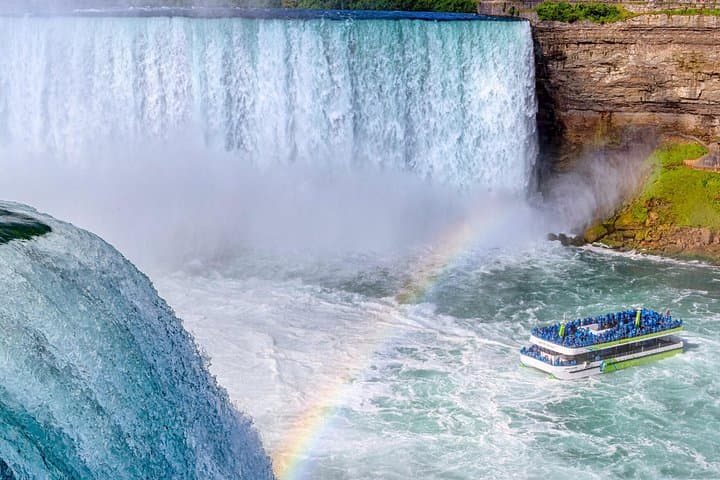
You feel the Falls before you see them. The shuttle pulls away from a downtown hotel and the first thing that arrives at the window is a cold, vibrating mist that tastes faintly of river—an advance notice of the power waiting ahead. On approach, the Niagara River narrows and seems to gather itself like a boxer breathing in, then the wall of water announces itself: white, enormous, relentless. Boarding Maid of the Mist is less a polite introduction than a dare; the boat edges into the thunder and the Falls leans over you like a giant taking a long breath. Water dares you to come closer, and you answer by stepping forward.
This signature half-day experience—about 4.5 hours from hotel pickup—pairs the classic Maid of the Mist boat ride with a descent into the Niagara Gorge at Cave of the Winds. The two attractions are choreographed counterpoints: one is horizontal, allowing you to push into the spray from the river’s cup; the other drops you vertically into the carved throat of the Falls, where wooden walkways lead you to Hurricane Deck, a narrow platform that places you feet from Bridal Veil Falls. Between them, the shuttle takes you to Goat Island for Terrapin Point, Prospect Point and panoramic views that let you understand scale: what looks like a theatrical backdrop close-up is a sculpted engine of ice, stone, and flow.
Geology and history anchor the dramatics. Niagara Falls is a young landscape—carved at the end of the last glaciation roughly 12,000 years ago—where glacial meltwater exploited softer rock beneath a capstone of dolostone. As glaciers retreated, the river cut into the bedrock and kept marching backward, an erosional retreat that left the present cliffs. Human stories crowd the edges of that geology: Native Haudenosaunee people knew the river as an axis of life and ceremony long before European settlement. In the late 19th century, landscape architects like Frederick Law Olmsted reframed the area as public parkland; Niagara Falls State Park is the United States’ oldest state park. And juxtaposed with stewardship are the streaks of daring—swimmers, barrel riders, slackliners—people always testing the line between awe and the impossible.
Culturally, this stretch of river sits on an international seam. The tour described here focuses on the American side—access to Maid of the Mist and Cave of the Winds—yet you feel the cross-border conversation in viewpoint alignments, ferry rhythms, and the layered tourism economy. Locals treat the Falls like both a neighbor and a commodity: it’s a place of daily weather, seasonal spectacle, and big summer crowds. Conservation here has been incremental and deliberate; the park’s look and access are the results of interventions that balanced tourism with habitat and visitor safety.
Practicalities matter once your adrenaline quiets. The experience lasts roughly 270 minutes, with expert commentary on the shuttle and time to explore Goat Island, the boat, and the Hurricane Deck. The price point starts at about $95.75 per person. Maid of the Mist runs seasonally—typically spring through fall—so check dates before booking; Cave of the Winds has its own safety and seasonal considerations. Expect stairs and boardwalks at the Cave of the Winds, and the boat will give you a poncho, but bring layers and non-slip shoes anyway. Phones and cameras will get wet; a waterproof case or dry bag is worth its weight in souvenir photos.
Timing is both tactical and aesthetic. Early morning departures before the midday crush give you cleaner air and better photos; late afternoon light softens the water’s edge. If you want fewer people in your frames and more space on walkways, avoid peak summer weekends. For families, the Maid of the Mist is accessible and thrilling without being intimidating; Cave of the Winds is more kinetic—there are stairs and strong wind-driven spray—so factor in mobility and comfort.
Safety is straightforward: follow staff instructions on walkways, don provided safety gear, and keep a secure grip on cameras. The Falls care nothing for human plans; currents and spray remain indifferent forces. That’s part of the draw. Up close, the river feels alive—pushing, testing, and obligingly present.
Why go? Because few experiences let you be that close to a raw, geological process that’s both demonstrably ancient and immediately immediate. The Maid of the Mist and Cave of the Winds compress scale and proximity: one moment you’re riding the river into a curtain of whitewater, the next you’re under the commerce of falling water on a wooden deck that hums under your boots. It’s a place where education and adrenaline coexist, where kids’ faces register the same stunned hush as the old-timers who return every decade. And practical benefits—hotel pickup, expert narration, and curated pacing—mean you spend more time in wonder and less time in logistics.
If you go armed with a plan—arrive early, wear grippy shoes, protect your gear—you’ll leave with something simpler: a memory that can still make your stomach flip if you recall the exact instant the boat slid into the mist. This tour is not about conquering a landscape but about being present inside a natural show that insists on being noticed.
Trail wisdom
Small choices, better day.
Arrive early
Morning departures reduce crowds and give you cleaner air and better photo light.
Wear non-slip shoes
Wooden decks and wet steps get slick—sturdy soles with traction keep you steady.
Protect your gear
Use a waterproof case or dry bag; ponchos help but won’t keep cameras dry.
Follow staff guidance
Walkways and barriers exist for safety—stay behind rails and heed instructions during high flow or wind.
Local knowledge
Read the place, not just the route.
Watch for native species including Peregrine falcons nesting on cliff faces, Ring-billed gulls and waterfowl near the river.
Keep an eye out for wildlife during the transition between areas and habitats. Respect distance guidelines.
Park management balances heavy visitation with habitat protection through maintained boardwalks and seasonal restrictions—stay on marked trails and pack out waste.
Follow the guide's instructions on size limits, ethical handling, and leave-no-trace practices.
Terrapin Point—an intimate edge view onto the Horseshoe Falls. Prospect Point Observation Tower—offers a different angle and quieter photography spots
Locally recommended viewpoints and quiet spots known best to local operators.
Niagara Falls State Park, designed in the late 19th century by Frederick Law Olmsted, is the oldest state park in the U.S.; the area also has a long Indigenous history predating European settlement.
Maritime roots and regional tradition shape the waterways and working coasts.
Seasonal guide
Four versions of the same landscape.
Spring
Best forHigh water flow · Fewer crowds than summer · Fresh green scenery
ChallengesCool temperatures · Unpredictable weather · Early season maintenance closures
Spring offers dramatic flows from snowmelt and fewer crowds, but mornings remain cool and some services open later in the season—check schedules.
Summer
Best forFull power and consistent operations · Long daylight hours · Family-friendly visits
ChallengesLarge crowds · Higher prices · Hot, humid conditions
Summer is the most reliable season for both the boat and Cave of the Winds, but expect busy days and plan for heat and queueing.
Fall
Best forCrisp air and autumn color · Cooler temps · Photogenic light
ChallengesShorter days · Variable water levels · Tour schedules winding down late season
Fall combines vivid foliage and comfortable temperatures—ideal for photography and less oppressive humidity than summer.
Winter
Best forIce-sculpted scenery from a distance · Peaceful, off-season views
ChallengesBoat and some attractions closed · Limited access and services · Cold and slippery conditions
Winter offers stark, beautiful vistas but the Maid of the Mist and Cave of the Winds are typically closed—plan visits around park viewpoints instead.
Operator details
What the booking data adds.
Included
- ✓All Fees and Taxes
- ✓Air-conditioned vehicle
- ✓Free admission to the Dark Ride, located inside the Vortex Arcade at the One Niagara Welcome center
Good to know
- ✓Wheelchair accessible
- ✓Infants and small children can ride in a pram or stroller
- ✓Service animals allowed
- ✓Public transportation options are available nearby
- ✓Infants are required to sit on an adult’s lap
- ✓Transportation options are wheelchair accessible
- ✓All areas and surfaces are wheelchair accessible
- ✓Suitable for all physical fitness levels
Pack with intention
What to bring.
Good to know
Common questions.
Yes—ponchos are typically provided for the boat portion; they reduce spray but won’t fully keep cameras dry.
Plan the edges
The details that make the day easier.
Niagara Falls began forming around 12,000 years ago at the end of the last Ice Age as glacial meltwater carved the river and eroded softer rock beneath a dolostone cap—geological retreat continues today.
After the thrill, head to nearby downtown Niagara Falls, NY for a hearty meal—try local pubs for craft beers and wings or the historic Third Street for diners and bakeries; for a quieter finish, stroll Goat Island for sunset views and then grab a locally brewed beer in the city.
- trailhead
- Buffalo Niagara International Airport (BUF)
- Niagara Falls State Park; Driving distance from airport
- ~30 minutes (25 miles); Cell service: generally good in park but may drop near the gorge; Permits
- passes required
- Park entry is free, but attraction tickets required—book Maid of the Mist and Cave of the Winds in season.
Niagara Falls State Park emphasizes visitor stewardship—stay on designated walkways, don't feed wildlife, and pack out all trash to protect river habitat.
Explore by topic
Follow the threads.
Keep exploring
Make the story part of the trip.
 Related story
Less than two hours from Nairobi, Kereita Forest pairs hands-on canopy adventure with quiet montane trails and a sobering colonial history—perfect for families, teams, and curious travelers seeking a full-day pulse of nature.
Set out from Bass Harbor for a private, customizable day on Blue Hill Bay — lighthouses, puffins, seals, and the chance to feel Acadia from the water. Small groups, local captains, unforgettable views.
In four hours you can move from shaded canyon ferns to wind-scoured coastal ridgelines, guided by someone who knows where the light—and the hidden views—live. This private half-day hike on the Monterey Peninsula or Big Sur is compact, curated, and perfect for travelers who want depth without a multiday commitment.