
What the day feels like
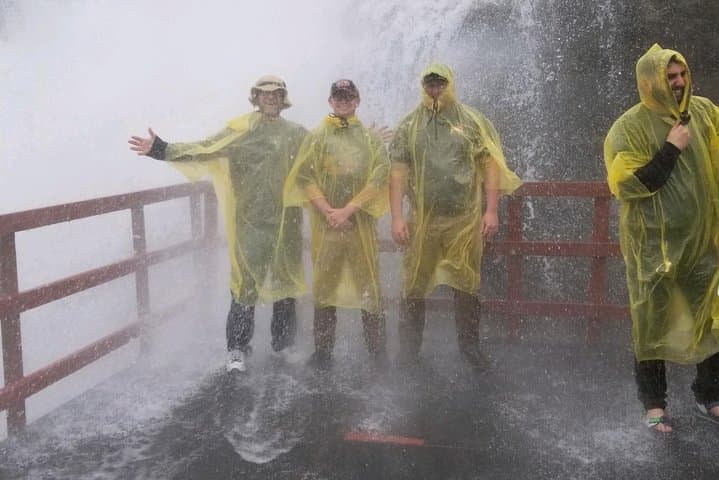
You arrive at Niagara Falls not by sight but by sound: a distant, pulsing thunder that swells the closer you get, a motor in the chest that insists you lean into it. The pavement near the park slips into wooden walkways and then, suddenly, the world opens—gorge walls plunge away, a column of spray hangs like a wet veil, and the boardwalk drops you into the raw, immediate theater of Bridal Veil Falls. This is Cave of the Winds, a short, intense encounter with the falls that asks nothing fancy of you—only that you let the water have a say.
The Cave of the Winds experience on the U.S. side is as tactile as a waterfall can be. Guides shepherd small groups across Prospect Point, past Luna Island and Terrapin Point, narrating the human stories stitched into the rock: hydroelectric feats, daredevils who flirted with the abyss, and the conservators who pushed for public access. Geologically, Niagara Falls is recent—born at the end of the last Ice Age about 12,000 years ago—yet the gorge erodes continuously. That erosion is readable here: layers of dolostone and softer shale carve ledges and plunge pools that shape how the water behaves, and where you stand determines whether the torrent will throttle you or merely spray you into a grin.
The guided tour trims the logistics out of the visit. Your tickets are arranged in advance so you skip the line and step directly into the curated flow of the state park. Duration is flexible—most groups spend 60 to 120 minutes moving between viewpoints, watching the Maid of the Mist boats below, and taking in the multimedia displays that tell the story of Niagara’s industrial and daredevil past. Along the way, guides point out the best framed views and explain how seasonal flows change the falls’ personality: a late-summer hush of mist-saturated warmth, or a cold, crystalline roar in the shoulder season.
Culturally, Niagara is a borderland. The horseshoe of water straddles the U.S.-Canada line and the tourism fabric reflects this: eateries and vendors catering to day-trippers, history stitched into plaques, and small local operations that preserve a sense of place. Niagara Falls State Park—America’s oldest state park—is a product of conservation-minded planners like Frederick Law Olmsted who wanted public access to the spectacle without the circus. That mission persists: boardwalks, railings, and interpretive panels all keep visitors close enough to feel the power without being reckless.
Practicalities matter here more than flash. The walkways put you within feet of Bridal Veil; the Hurricane Deck famously delivers a near-vertical spray that will soak you. Stairs and wet planks demand steady shoes and a willingness to be damp. If you’re traveling with kids, expect squeals and short bursts of fatigue; benches and viewpoints offer regular breaks. The product’s highlights—Terrapin Point and Luna Island—are compact but densely rewarding: chances to photograph the gorge’s sculpted walls, watch the froth churn, and feel the wind push around the islands.
If you want the best visit, time your trip for early morning or late afternoon to avoid the midday crush. Spring and summer bring lush green cliffs and a high water volume; fall wraps the gorge in color and cools the spray, and winter turns the whole place crystalline and otherworldly, though some walkways are closed then. The tour’s flexibility—one to two hours—means it fits a day trip or a longer Niagara itinerary. At roughly $47 per ticket through this operator, you get skip-the-line convenience plus a guide to explain the falls’ technical and cultural context.
Packing for Cave of the Winds is a practical exercise: a lightweight waterproof layer, grippy sneakers, and a phone sleeve for the inevitable splash. Respect for the environment is part of the tour: stay on designated paths, don’t toss anything into the gorge, and keep the noise reasonable so others can drink in the moment. Guides will emphasize safety—rails are firm but the forces here are not to be underestimated.
This is not a summit or an ultra-run; it’s a close-quarters encounter with one of the planet’s most concentrated energies. It’s over before you know it, but it leaves you with a new metric of scale—the size of a river you can stand next to, and the stubbornness of a place of stone and water that has been cutting itself for millennia. For casual travelers and seasoned adventurers alike, Cave of the Winds is an efficient, elemental reminder of why people travel: to be reminded that the Earth still moves you.
If you go: plan for crowds if you visit midday, layer for spray, and bring a camera but protect it—the best shots are often the ones taken after you’ve stopped trying to keep everything dry. Back in town, sit down to a hearty meal, review the photos, and feel the steady hum of the falls for as long as you can.
Trail wisdom
Small choices, better day.
Expect to get wet
Bring a lightweight waterproof layer or quick-dry clothing; the Hurricane Deck sprays visitors thoroughly.
Grip matters
Wear sneakers or hiking sandals with traction; wooden planks can be slippery when wet.
Beat the crowds
Book early-morning or late-afternoon tours to avoid peak tour groups and capture better photos.
Protect electronics
Use a waterproof phone case or zip-top bag for cameras and phones—the mist is relentless.
Local knowledge
Read the place, not just the route.
Watch for native species including Bald eagles (occasionally), river trout downstream.
Keep an eye out for wildlife during the transition between areas and habitats. Respect distance guidelines.
The park balances heavy visitation with habitat protection—stay on designated paths, remove litter, and avoid disturbing shoreline vegetation to help preserve the gorge.
Follow the guide's instructions on size limits, ethical handling, and leave-no-trace practices.
Luna Island—quiet vantage points between the falls. Observation points on Riverway Trail upstream of Prospect Point for different perspectives
Locally recommended viewpoints and quiet spots known best to local operators.
Niagara Falls State Park, designed in part by Frederick Law Olmsted in the 19th century, is the oldest state park in the United States and was created to ensure public access to the falls.
Maritime roots and regional tradition shape the waterways and working coasts.
Seasonal guide
Four versions of the same landscape.
Spring
Best forlush riverbanks · higher water flows · fewer tourists than summer
Challengescool temperatures · icy patches early in season
Spring brings the thaw and high-volume flow—expect powerful spray and green cliffs, but dress for variable temperatures.
Summer
Best forwarm weather · full flows · extended park hours
Challengespeak crowds · hot midday conditions
Summer offers the classic Niagara experience—warm, loud, and crowded; early or late visits are best for photos.
Fall
Best forautumn foliage · crisper air · photography
Challengesshorter daylight · cooler evenings
Fall adds color to the gorge and cools the mist; it’s a great shoulder-season choice for fewer people and vivid light.
Winter
Best forice formations · dramatic frozen vistas
Challengesboardwalk closures · cold and slippery conditions
Winter turns the falls crystalline but may limit access—check closures and wear crampons if exploring nearby trails.
Operator details
What the booking data adds.
Included
- ✓All Fees and Taxes
Not included
- —Snacks
- —Soda/Pop
- —Maid of the Mist is not included. It is a separate attraction.
Good to know
- ✓Wheelchair accessible
- ✓Infants and small children can ride in a pram or stroller
- ✓Service animals allowed
- ✓Public transportation options are available nearby
- ✓Infants are required to sit on an adult’s lap
- ✓Transportation options are wheelchair accessible
- ✓All areas and surfaces are wheelchair accessible
- ✓Not recommended for travelers with poor cardiovascular health
- ✓Travelers should have at least a moderate level of physical fitness
Pack with intention
What to bring.
Good to know
Common questions.
The guided tour runs roughly 60 to 120 minutes depending on group size and time spent at each viewpoint.
Plan the edges
The details that make the day easier.
Niagara Falls began forming about 12,000 years ago at the end of the last Ice Age as glacial meltwater carved the Niagara Gorge.
After the tour, head to the Table Rock House for classic fall-off-the-falls views and local fare, or cross into downtown Niagara Falls to try regional craft brews at a neighborhood taproom—finish with a plate of Buffalo wings if you’re visiting from afar.
- Closest airport
- Buffalo Niagara International Airport (BUF); Driving distance: ~25 miles
- meeting point
- Niagara Falls State Park—Cave of the Winds entrance at Prospect Point; Cell service: generally good but may be limited near the gorge; Permits
- passes
- Cave of the Winds admission required—tickets provided by tour operator.
Niagara Falls State Park prioritizes conservation and visitor safety—stay on marked paths, pack out trash, and avoid feeding wildlife to protect the gorge ecosystem.
Explore by topic
Follow the threads.
Keep exploring
Make the story part of the trip.
 Related story
Less than two hours from Nairobi, Kereita Forest pairs hands-on canopy adventure with quiet montane trails and a sobering colonial history—perfect for families, teams, and curious travelers seeking a full-day pulse of nature.
Set out from Bass Harbor for a private, customizable day on Blue Hill Bay — lighthouses, puffins, seals, and the chance to feel Acadia from the water. Small groups, local captains, unforgettable views.
In four hours you can move from shaded canyon ferns to wind-scoured coastal ridgelines, guided by someone who knows where the light—and the hidden views—live. This private half-day hike on the Monterey Peninsula or Big Sur is compact, curated, and perfect for travelers who want depth without a multiday commitment.