
What the day feels like
The bus pulls off the coastal ribbon of highway and the air changes. The salt and sun of Costa Maya fall away and the jungle steps in—dense, humid, green in a way that kneels rather than shouts. On the path toward Chacchoben, a guide points out a procession of leaf-cutter ants marching like tiny engineers across the road. Above us, the canopy hums and a toucan’s beak flashes like punctuation.
For four and a half hours you’ll move through this compact slice of the Maya world: a 270-minute tour designed to fit into a cruise day or a short-stay itinerary from Mahahual. It’s not a long pilgrimage, but it’s the kind of place where time loosens its watchband. Temple platforms rise out of the forest floor like old promises; plazas hold the footprints of ritual economies; and stone lintels keep their patient silence. Guides here do more than recite dates. They translate place—how water shaped decisions, how trade routes threaded inland, and how the jungle both hid and fed a civilization. The language of stone and tree makes sense again.
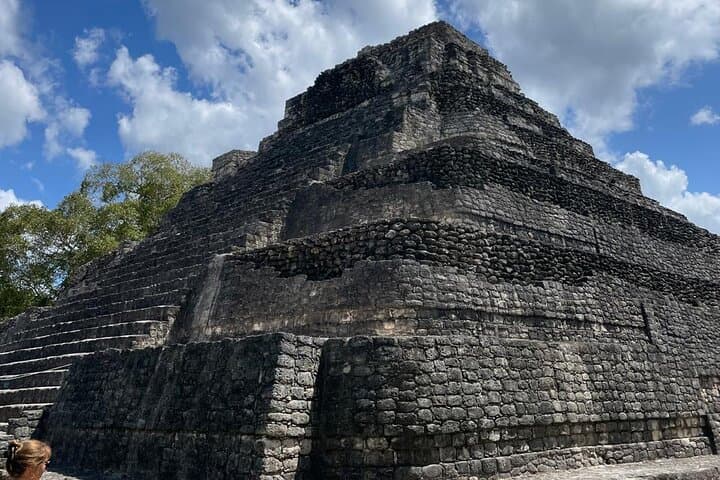
Chacchoben translates roughly to “Place of Red Corn,” a name that gestures at agricultural importance and the rhythms of subsistence that underwrote classic Maya life. Archaeologists date much of what you’ll see to the Classic period (about AD 300–900), though the site continued to be a node of regional activity later. Unlike the imposing pyramids of Tikal or Chichén Itzá, Chacchoben is human-scale; its plazas and stairways invite walking and imagining daily life—a ritual here, a market there—rather than awe from a distance.
Geologically, the site sits atop limestone karst typical of the Yucatán Peninsula. That porosity shaped Mayan settlement patterns: cenotes and seasonal wetlands determined where people stored water and planted maize. Today, jungle and reclaimed secondary growth have crept back over cleared plazas, and the riffle of a distant stream dares you to follow it. The natural world is active here—the forest relents slowly and also reclaims quickly.
Culturally, the region is still alive with Mayan resonance. Guided tours are bilingual and often led by locals who fold traditional stories into archaeological context—how temple orientation tracked the sun, or how certain carvings mark alliances and conflicts. Small-group formats on this tour mean the guide’s voice carries; you’ll get answers, not only facts. The route is set up for accessibility from Costa Maya’s cruise port or quieter Mahahual, and the operator’s promise of an on-time return is a practical relief for short-schedule travelers.
What to expect on the ground: the walking is mostly flat with short stair climbs onto temple platforms. Trails are dirt and compacted soil—mud can appear after rain—so good shoes and steady footing matter more than technical climbing skills. There’s shade much of the way, but the sun finds the plazas and the roof of your hat. Expect warm, humid air and the constant company of birds; lizards sun themselves on stones as if another century could be tucked away in their scales.
Why travelers go: it’s the combination of access and intimacy. At roughly $56 for guided tours from Costa Maya, this is a wallet-friendly cultural dip with a nature component and a compact time commitment. It’s ideal for families who want an archaeological experience without a full-day inland excursion, for cruisers who need an on-time return, or for any traveler who wants a first-hand sense of what life looked like away from the monumental centers.
Practical edge: bring water (at least 1–1.5 liters), wear breathable layers and a hat, spray for bugs, and carry a lightweight rain shell if the forecast suggests afternoon showers. Respect the site—stay on marked paths and avoid climbing on fragile structures. Photography is excellent in the dappled light, but slow down and look; the animal encounters are often quiet and brief.
The tour flows: pickup in Costa Maya or Mahahual; roughly 45–60 minutes’ drive into the interior; guided walk through the complex with stops at main plazas and platform tops; return with time to spare. Because the route is short and focused, you’ll leave with more than a set of photos: you’ll carry an anchored sense of place, a clearer idea of Maya daily life, and an appreciation for how the jungle both preserves and obscures.
If you want more than a single visit, combine the ruins with a morning swim in Mahahual or an afternoon at a local eco-systems demonstration (mangrove walks and birdwatching). Support the local economy by buying a craft or tipping guides—small gestures that help maintain stewardship and interpretation of these non-renewable cultural resources.
Chacchoben doesn’t pretend to be the largest site in the region. What it offers instead is scale, texture, and the layered logic of place—stones that speak softly of empire, and a jungle that never stops listening. It’s a graceful half-day that rewards attentiveness and arrives with the practical comforts many modern travelers need: bilingual guides, reliable transfers, and a schedule that keeps the sea-bound clock honest.
If you go, leave the site as you found it, pack out what you packed in, and let the green silence do its work. The ruins will still be here tomorrow—quiet, patient, and waiting for the next listener.
Trail wisdom
Small choices, better day.
Hydrate Before You Go
Bring 1–1.5 liters of water—heat and humidity make even short walks taxing.
Wear Grippy Shoes
Closed-toe hiking or trail shoes handle dirt trails and slippery limestone stairs better than sandals.
Bug Protection
Apply DEET or picaridin-based repellent before entering the jungle—mosquitoes are common, especially near water.
Respect the Ruins
Stay on designated paths and avoid touching or climbing on fragile structures to help preserve them.
Local knowledge
Read the place, not just the route.
Watch for native species including Green iguanas, Coatimundi and a variety of tropical birds.
Keep an eye out for wildlife during the transition between areas and habitats. Respect distance guidelines.
The site is managed with attention to preservation—stay on trails, avoid touching carvings, and support local guides to help fund conservation efforts.
Follow the guide's instructions on size limits, ethical handling, and leave-no-trace practices.
Climb a smaller temple platform for a quiet, shaded view of the plaza. Combine the visit with a stop at a local Mahahual artisan stall for handwoven textiles
Locally recommended viewpoints and quiet spots known best to local operators.
Chacchoben’s core architecture dates to the Classic period (roughly AD 300–900), and the site’s name links to agriculture—the red corn central to Maya subsistence.
Maritime roots and regional tradition shape the waterways and working coasts.
Seasonal guide
Four versions of the same landscape.
Spring
Best forFewer crowds · Wildflower blooms
ChallengesIncreasing heat · Afternoon showers
Late spring offers warm weather and fewer cruise crowds, but afternoon storms become more common—plan morning visits.
Summer
Best forLush jungle greenery · Birdwatching
ChallengesHigh heat and humidity · Frequent heavy rain
Summer turns the jungle vividly green; go early to avoid storms and intense midday heat.
Fall
Best forLower tourist numbers · Comfortable mornings
ChallengesHurricane season risks · Unpredictable weather
Fall can be quieter but carries hurricane-season volatility—check forecasts and cancellation policies.
Winter
Best forDry, comfortable conditions · Excellent visibility
ChallengesCooler mornings (brief)
Winter (Nov–Apr) is the optimal window—drier trails, milder temperatures, and reliable tour schedules.
Operator details
What the booking data adds.
Included
- ✓Travel insurance
- ✓Soda/Pop
- ✓Alcoholic Beverages
- ✓Archeological site entrance fee
- ✓Air-conditioned vehicle
- ✓Certified bilingual guide, Spanish and English
Not included
- —Tips
Good to know
- ✓Infants and small children can ride in a pram or stroller
- ✓Service animals allowed
- ✓Specialized infant seats are available
- ✓Not recommended for travelers with spinal injuries
- ✓Not recommended for travelers with poor cardiovascular health
- ✓Suitable for all physical fitness levels
Pack with intention
What to bring.
Good to know
Common questions.
The full experience runs about 270 minutes (4.5 hours) including round-trip transport from Costa Maya.
Plan the edges
The details that make the day easier.
Chacchoben roughly translates to 'Place of Red Corn' in Yucatec Maya—a nod to the agricultural basis of the community that once thrived here.
After the ruins, head back to Mahahual for grilled seafood, ceviche, and a cold local beer at a beach palapa—look for small family-run kitchens serving fresh catch and Yucatecan specialties like cochinita or lime-marinated seafood dishes.
- Closest airport
- Chetumal International (CTM) ~2.5-hour drive; Cancun (CUN) ~4–5 hours. Trailhead
- Start
- Costa Maya
- Mahahual pickup (~45–60 min drive). Cell service
- intermittent. Permits
- Fees
- entrance typically included in tour price; check operator details.
This site is fragile—stick to marked paths, avoid touching stones, pack out any trash, and support local guides whose income underpins conservation and interpretation.
Explore by topic
Follow the threads.
Keep exploring
Make the story part of the trip.
Set out from Bass Harbor for a private, customizable day on Blue Hill Bay — lighthouses, puffins, seals, and the chance to feel Acadia from the water. Small groups, local captains, unforgettable views.
In four hours you can move from shaded canyon ferns to wind-scoured coastal ridgelines, guided by someone who knows where the light—and the hidden views—live. This private half-day hike on the Monterey Peninsula or Big Sur is compact, curated, and perfect for travelers who want depth without a multiday commitment.
 Related story
Beneath a sky of shifting light, Skaftafell’s ice reads like a map of time. This three-hour guided glacier hike mixes technical instruction with geology and culture: compact, safe, and unforgettable.