
What the day feels like
You step out of the van and the heat folds around you like a warm blanket; the air smells of wet stone and crushed leaf. A narrow track drops into a gorge where the river pulses in a steady, knowing rhythm — daring you to follow it. Guides sling dry bags over their shoulders and gesture toward a series of jade pools rimmed with ferns. For a few hours the world compresses to water, stone, and the sound of the cascade: Reach Falls, a pocket of rainforest calm an easy day’s drive from Kingston but a world away from the city’s rumble.
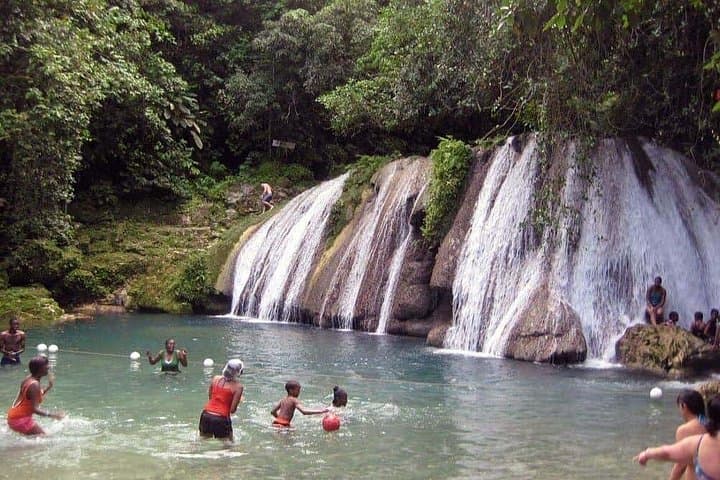
Reach Falls doesn’t announce itself like Dunn’s River — it’s quieter and more intimate. The path leads through low canopy where sunlight fractures into thin green blades, and then out to a set of stepped pools carved by the river’s patience. The falls are small by Caribbean standards, but they are built for lingering: warm, waist-deep pools for wading, boulders that make step-stone terraces, and a shallow grotto tucked behind the main curtain where you can stand, cool spray on your face, and watch sunlight skim the water’s surface.
Geologically, Reach Falls is the result of water wearing away softer rock layers and leaving behind those sculpted basins that collect and hold the river. The process is slow but sure: each pool a small testament to time. Botanically, the gorge is a shelf for ferns, mosses, and broadleaf trees that drink the humidity. Birds — kingfishers, warblers, and the occasional heron — treat the river as a highway; lizards sun themselves on exposed rock. The environment feels engineered for slow adventure: steps to clamber, stones to balance on, shaded corners for reading, and sunlit pools for a mid-hike dip.
Port Antonio, the nearest town and one of Jamaica’s oldest tourism hubs, casts a quiet cultural shadow over the falls. In the late 19th and early 20th centuries this stretch of coast gained a reputation as an exclusive escape — banana boats and private villas drew visitors who wanted a quieter, greener Jamaica than the busy western resorts. That history still lingers in the area’s easygoing hospitality: family-run guesthouses, local guides who grew up in the valley, and beachfront jerk stands where fishermen sell the day’s catch.
Why come here? The appeal is simple and honest. Reach Falls is for people who like to move through landscape at human speed: wading, short scrambles, and swimming between natural pools. It’s also a practical choice for travelers based in Kingston who want a full-day escape without a multi-day commitment — this Viator experience bundles the transport and local expertise into a seven-hour outing, making logistics painless.
Practicalities you’ll appreciate: the walk to the main pools is short but uneven. Expect rocky, sometimes slippery terrain and wet sections where sandals will fill with water. Guides often show little routes and sheltered spots you’d miss on a solo visit, and they’ll point out cultural and botanical highlights along the way. The tour usually includes an entrance fee, and most operators provide water and basic safety instruction; still, preparedness makes the day more enjoyable.
Timing matters. Morning visits tend to be quieter and cooler; late afternoon light gilds the pools but brings more people as day tour traffic swells. Weather is a key variable — heavy rain upstream can change river flow quickly, turning placid pools into stronger currents. A trusted local guide will read conditions and choose safe sections for swimming.
How to plan: wear sturdy water shoes or sandals with a reliable tread, bring a small dry bag for electronics, and pack reef-safe sunscreen and insect repellent. A lightweight towel and a change of clothes for the drive back to Kingston are helpful — the van is likely to be warm on the return trip. If you’re photographing, bring a small waterproof camera or a GoPro; phone cameras do fine but keep them in a secure, sealed pocket when you’re moving between pools.
The day’s rhythm is restorative. You stand in the grotto and let the fall’s spray reset focus; you float in an emerald pool and let the current slide by; you listen to the river’s steady punctuation and feel something in your shoulders loosen. The guides often end the trip with a short stop back in Port Antonio: a roadside jerk stand, a quick look at Boston Beach, or a vantage point overlooking the harbor. It’s a gentle reminder that this is not only a natural outing but also a cultural one — a chance to taste and see a community shaped by sea and river.
If you’re the sort of traveler who likes to mix activity with accessibility, Reach Falls is a reliable choice. It’s not extreme; it’s intentional. It rewards patience, curiosity, and the willingness to let a river set your pace. And because the site is less trafficked than Jamaica’s larger attractions, there’s a real possibility of moments where the falls feel like your own private pool.
Bottom line: Reach Falls is a day of small adventures stitched together — a short hike, stone-hopping, a cool grotto, and a local lunch — all within reach from Kingston. For people who want wilderness without the wilderness logistics, or who want a meaningful day outside without committing to multiple days on the road, this cascade delivers. Take sensible footwear, a good guide, and an appetite for slow water, and you’ll leave with a cooler head and a quieter pace.
Length & logistics: the Viator itinerary runs about seven hours, which typically includes round-trip transport from Kingston, park entrance, a guided walk, and time to swim and relax. For a day trip that combines natural beauty, cultural context, and straightforward logistics, Reach Falls is a compact, satisfying escape.
Trail wisdom
Small choices, better day.
Wear grippy water shoes
The route includes wet rocks and shallow swims — shoes with good traction protect ankles and prevent slips.
Bring a small dry bag
Protect your phone, wallet, and spare clothes from spray and unexpected splashes.
Start early
Morning visits are cooler and less crowded; aim to arrive when the tour launches from Kingston.
Listen to your guide
Local guides know safe pools and how river conditions change after rain; follow their recommendations.
Local knowledge
Read the place, not just the route.
Watch for native species including Kingfisher, Anolis lizards (green anoles).
Keep an eye out for wildlife during the transition between areas and habitats. Respect distance guidelines.
The river and surrounding forest are sensitive ecosystems—stick to marked paths, avoid soap in pools, and pack out all trash to protect habitat.
Follow the guide's instructions on size limits, ethical handling, and leave-no-trace practices.
Frenchman’s Cove beach for a post-hike swim and picnic. Boston Beach jerk stands — famous regional spot for authentic jerk pork and fish
Locally recommended viewpoints and quiet spots known best to local operators.
Port Antonio developed as one of Jamaica’s early tourism hubs in the late 19th and early 20th centuries, attracting visitors seeking a quieter coastal alternative.
Maritime roots and regional tradition shape the waterways and working coasts.
Seasonal guide
Four versions of the same landscape.
Spring
Best forSmaller crowds · Warm water swims
ChallengesOccasional showers · Increased humidity
Spring offers warm, swim-friendly conditions and generally comfortable temperatures, though short tropical showers can occur.
Summer
Best forLush foliage · Long daylight hours
ChallengesHurricane season risk · Hotter, more humid conditions
Summer brings dense greenery and extended daylight, but keep an eye on weather forecasts during hurricane season and mid-summer storms.
Fall
Best forFewer tourists · Pleasant water temperatures
ChallengesPossible heavy rains early in season · Variable river flow
Fall can be a calm time to visit with reduced tour traffic; watch for occasional heavy rain that can affect river safety.
Winter
Best forDry days and cooler air · Best overall visibility
ChallengesMore day-trip traffic from visitors · Higher demand for tours
The drier winter months (Nov–Apr) are the most reliable for clear days and stable river conditions, but expect higher tour numbers.
Operator details
What the booking data adds.
Included
- ✓Well-appointed Private Air-conditioned vehicles
- ✓All local government taxes and fees
- ✓Hotel/Port pick up and drop off
Not included
- —Meals and Drinks
- —Gratuity (Optional)
Good to know
- ✓Suitable for all physical fitness levels
- ✓Children must be accompanied by an adult
- ✓Not suitable for pregnant women or persons with back problems
- ✓Dress code is smart casual, wear swimwear under your clothes, and water shoes
- ✓Bring a towel
Pack with intention
What to bring.
Good to know
Common questions.
The full experience is about seven hours, typically including round-trip transport from Kingston, park entrance, and guided time at Reach Falls.
Plan the edges
The details that make the day easier.
Reach Falls is in Portland parish, an area long known as one of Jamaica’s earliest tourism destinations; the falls are notably smaller and less crowded than Dunn’s River Falls near Ocho Rios, offering a more intimate experience.
After the falls, stop at Boston Beach for famous jerk pork or fish, or head into Port Antonio for seafood at a family-run restaurant; local vendors often sell fresh coconut water and patties — small purchases support the community.
- Closest airport
- Norman Manley International Airport (Kingston). Driving distance: roughly 2.5–3 hours from Kingston depending on traffic. Cell service: intermittent in the gorge. Permits
- fees
- park entrance fee typically included with organized tours.
This river is part of a sensitive watershed—use biodegradable sunscreen, avoid disturbing wildlife, and pack out all trash. Hire local guides to support community-based tourism.
Explore by topic
Follow the threads.
Keep exploring
Make the story part of the trip.
 Related story
Less than two hours from Nairobi, Kereita Forest pairs hands-on canopy adventure with quiet montane trails and a sobering colonial history—perfect for families, teams, and curious travelers seeking a full-day pulse of nature.
Set out from Bass Harbor for a private, customizable day on Blue Hill Bay — lighthouses, puffins, seals, and the chance to feel Acadia from the water. Small groups, local captains, unforgettable views.
In four hours you can move from shaded canyon ferns to wind-scoured coastal ridgelines, guided by someone who knows where the light—and the hidden views—live. This private half-day hike on the Monterey Peninsula or Big Sur is compact, curated, and perfect for travelers who want depth without a multiday commitment.