
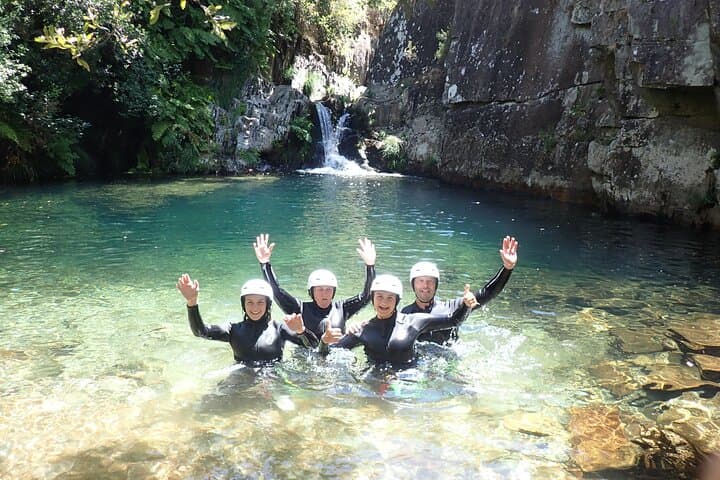
What the day feels like
Morning drifts over the Freita Mountain like a slow breath, cool and steady, as the Frades River wakes and beckons. The water whispers over granite shelves, clear enough to read the pebbled script beneath. A wetsuit squeaks as you cinch the final strap, the harness hugs your waist, and the river—never shy—dares you to step in. The first shock is temperature. The second is sound: a constant rush that fills the canyon and nudges you forward. This is canyoning in Arouca Geopark’s Frades River—part obstacle course, part meditation, and entirely addictive.
Canyoning here is not a parade of stunts for the sake of adrenaline. It’s a carefully guided descent through a mountain corridor carved by time. You learn to read the river’s tells: the glassy calm that hides depth; the satin foam that hints at power; the way the current shoulder-checks you around a bend, then lets you go. The day folds into a rhythm—walk, wade, scramble, jump, slide—punctuated by ropework when the canyon tightens and waterfalls ask for respect. Rappelling becomes choreography: lean back, weight the rope, feet find purchase on polished granite. A waterfall hisses beside your ear, the spray cool as the rope lowers you into a jade pool that holds you for a beat before releasing you onward.
This river is the quiet star of Arouca Geopark, a UNESCO Global Geopark known for its dramatic geology—ancient marine layers uplifted into high plateaus, schist villages tucked into folds of green, and granite bones exposed in clean, sculpted forms. Just over the ridge sits Regoufe, a onetime wolfram mining hub that drew wartime intrigue in the 1940s. Hike a couple of hours in another direction and you’ll reach Drave, the storied “aldeia mágica,” an abandoned stone village that time hasn’t forgotten so much as paused, leaving terraces and slate lanes in painterly disarray. You might finish your river day at the Paiva Walkways (Passadiços do Paiva), where 8+ kilometers of timber boardwalk trace a gorge that feels otherworldly at golden hour, or tiptoe onto 516 Arouca, the record-length suspension bridge that strings a line between two cliffs over the Paiva’s roar.
For all its drama, Frades is precise. Pools are crystalline; granite slides are sculpted like luge tracks; eddies curl like commas between sentences. Guide-led canyoning keeps this precision intact. You’ll learn how to check landing zones, communicate with hand signals over the river’s voice, and conserve energy on the move. The best operators here favor small groups, solid gear, and a coaching style that turns nerves into confidence—essential when the canyon narrows and the water insists on being first through.
Expect a half-day of movement—roughly five hours—with flow conditions dictating the tempo. Spring can bring pushier currents and colder water; summer warms the canyon into its friendliest mood. Fall lingers with stable flows and fewer crowds. Winter is beautiful but often too cold and rowdy for standard trips. This is mountain water, not a water park. Respect it and you’ll be rewarded with a sense of exposure that’s never reckless. The jumps are optional, the rappels are belayed, and the river’s surprises are managed with clean systems and clear briefings.
Beyond the choreography, there’s the sensation of belonging to the canyon’s timings. You’ll stop to watch a dipper knife into a cascade, disappearing and reappearing like a sleight-of-hand trick. Lizards sun-warm on rock ledges dart away as your shadow leans over them. Ferns—ancient in their patience—clutch the damp walls, their ribs beading small galaxies of spray. The river keeps you in the present, each step placed, each handhold tested. It’s immersive, but not in the overblown sense. Immersive as in: here, now, exactly. The granite feels honest. The water sets the rules and keeps them.
Practicalities shape a good day out here. Closed-toe canyoning shoes or sticky-soled approach footwear make all the difference on slick rock. Wear a swimsuit and synthetic layers that won’t cling when soaked. Bring a dry change for the car, and fuel up beforehand—this is steady effort, not a sprint. Hydration counts. So does timing: start early to claim the canyon before the day warms and groups cluster at key drops. From Arouca town, you’re close; from Porto, add a scenic drive through north Portugal’s rolling hills.
And when it’s over—when the last pool has lifted you into sunlight and the last rappel has eased you down like a slow exhale—there is the small celebration of warm clothes and a snack, the retelling of a particular leap, a clean slide, the rope that hummed just so. The Frades River does what great adventures do: it recalibrates how you move through a place. You leave not with a litany of stunts, but with a river’s cadence rattling around your bones, the granite’s steadiness underfoot, and a quiet urge to come back and see what the water is saying tomorrow.
Trail wisdom
Small choices, better day.
Trust the Rope, Test the Rock
Lean back fully on rappel for better control and test each foothold—polished granite can surprise you.
Hydrate Before You Suit Up
Once zipped into a wetsuit, you’ll drink less; start the day well-hydrated and carry a small bottle.
Jump Only When Cleared
Always wait for the guide’s all-clear and visualize your landing zone—depths and currents shift with flow.
Keep Your Hands Warm
Neoprene gloves reduce numbness in spring or on shaded sections, improving grip and confidence.
Local knowledge
Read the place, not just the route.
Watch for native species including White-throated dipper, Iberian emerald lizard.
Keep an eye out for wildlife during the transition between areas and habitats. Respect distance guidelines.
Stick to established anchors, avoid trampling riparian plants, and pack out tape or cord—these can harm sensitive river habitats.
Follow the guide's instructions on size limits, ethical handling, and leave-no-trace practices.
Drave (Aldeia Mágica), an abandoned schist village reached by a scenic hike. Poço da Broca-style pools upstream—smaller cascades locals love on quiet days
Locally recommended viewpoints and quiet spots known best to local operators.
Arouca is a UNESCO Global Geopark famed for its geology and nearby Regoufe wolfram mines, which played a strategic role during World War II.
Maritime roots and regional tradition shape the waterways and working coasts.
Seasonal guide
Four versions of the same landscape.
Spring
Best forLush canyon scenery · Firmer, sportier flows
ChallengesColder water · Potentially strong current and variable weather
Expect energetic flows and cool temps. Wetsuits and gloves are helpful; guides may shorten routes in high water.
Summer
Best forWarmer water temps · Family-friendly conditions
ChallengesMore crowds · Strong sun on approach hikes
Peak season with stable flows and warm days. Start early for quieter rappels and gentler light in the canyon.
Fall
Best forFewer crowds · Balanced flows
ChallengesShorter daylight · Cool mornings
A sweet spot: comfortable water and quieter routes. Plan an early start and pack a warm layer for exit walks.
Winter
Best forDramatic scenery · Solitude
ChallengesVery cold water · High or unpredictable flows
Trips may be limited or suspended; only advanced, guide-approved outings run in safe conditions.
Operator details
What the booking data adds.
Included
- ✓Bottled water
- ✓Delight yourself with a typical meal (included on option "With Lunch") on a Riverside Terrace Bar.
- ✓Personal Accident Insurance
- ✓All the necessary equipment
- ✓Snacks
- ✓All Fees and Taxes
- ✓Experienced Guide
- ✓Private transportation
- ✓Photo Report
Good to know
- ✓Service animals allowed
- ✓Specialized infant seats are available
- ✓Not recommended for travelers with spinal injuries
- ✓Not recommended for pregnant travelers
- ✓Not recommended for travelers with poor cardiovascular health
- ✓Travelers should have a high level of physical fitness
Pack with intention
What to bring.
Good to know
Common questions.
No—this guided trip teaches rappelling and movement in water. Comfort in water and a moderate fitness level are important.
Plan the edges
The details that make the day easier.
Arouca’s 516 Arouca bridge spans 516 meters and was among the longest pedestrian suspension bridges in the world when it opened in 2021.
Refuel in Arouca with posta arouquesa (local beef) or a simple francesinha for a Porto-leaning twist. Pair it with a cold craft beer at a tasca in town, then cap the day with pão-de-ló de Arouca—sponge cake so soft it nearly spoons.
- Closest airport
- Porto (OPO). Trailhead: Near Rio de Frades village in Arouca Geopark. Drive: ~1h15 from Porto; ~20–30 minutes from Arouca town. Cell service: Patchy in the canyon—download directions and rely on guide comms. Permits: None for guided canyoning; operators manage access and safety gear.
This canyon is part of a protected UNESCO Global Geopark. Pack out all waste, use existing paths and anchors, and avoid sunscreen runoff by applying reef-safe formulas at least 20 minutes before water entry.
Explore by topic
Follow the threads.
Keep exploring
Make the story part of the trip.
In four hours you can move from shaded canyon ferns to wind-scoured coastal ridgelines, guided by someone who knows where the light—and the hidden views—live. This private half-day hike on the Monterey Peninsula or Big Sur is compact, curated, and perfect for travelers who want depth without a multiday commitment.
 Related story
Beneath a sky of shifting light, Skaftafell’s ice reads like a map of time. This three-hour guided glacier hike mixes technical instruction with geology and culture: compact, safe, and unforgettable.
 Related story
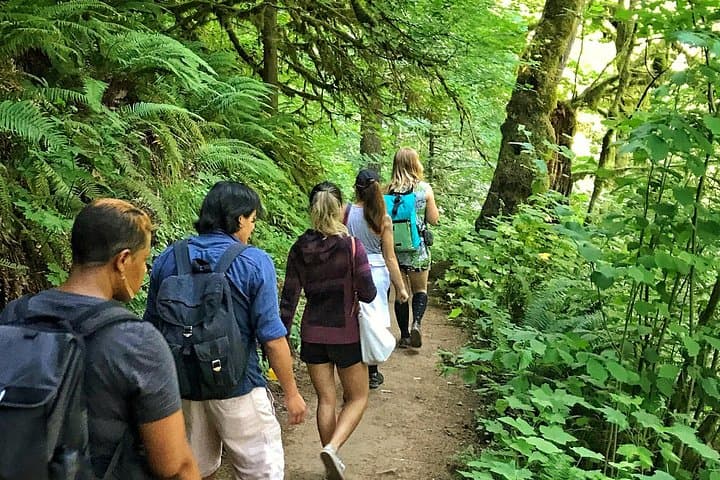
Lose the city for a few hours without leaving it: this 5-mile, 900-foot-gain Forest Park loop threads old-growth pockets, city viewpoints, and cultural landmarks for a compact taste of Portland’s wild side. Expect moss, roots, and stories.