
What the day feels like
You step off the bus into a humidity that feels like a welcome handshake — warm, alive, and smelling of wet earth. The road up to Cuetzalan narrows, cornfields give way to cloud forest and the town itself appears as a scatter of red tile and white walls folded around a green hill. On this private full-day tour you will move between three worlds: the under-earth hush of Chichicazapan Cave, the thunder-and-mist of the waterfalls, and the lived-in hum of a Pueblo Mágico where markets, meals and stories keep time.
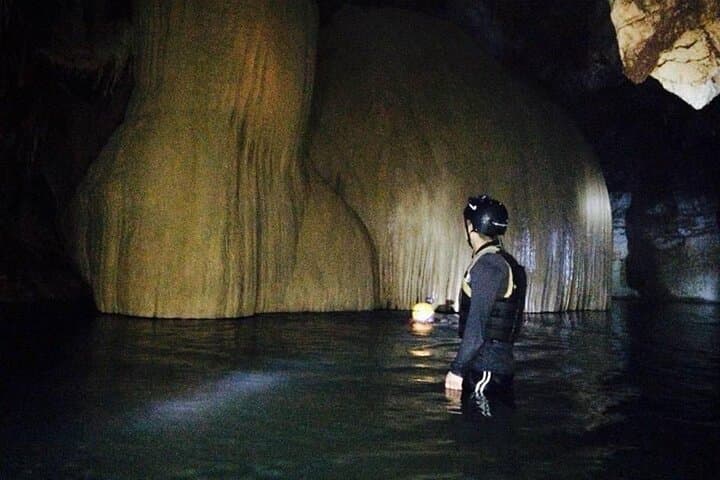
The first hour in the cave is a study in contrasts. Sunlight is a memory; your headlamp carves a personal radius of light across limestone curtains, flowstones and columns. Drops gather and fall with patient regularity. Geologically speaking, Chichicazapan is classic karst terrain — rainwater, slightly acidic after touching soil and vegetation, has dissolved channels in the limestone for millennia. That slow chemistry is responsible for the stalactites and thin, drapery-like formations that hang like the ribs of a sleeping animal. The cave demands a slower pace: measure your steps, listen for the tap of water, and appreciate how the space gathers sound and memory.
By mid-morning you emerge into a green that feels almost loud. The forest around Cuetzalan is a cloud forest, an ecosystem that traps fog and wrings moisture onto moss, bromeliads and the trunks of trees. Creeks run like the town’s veins, and a short walk delivers you to the waterfalls — a series of cascades set in layered pools. The water dares you to edge closer, to let cool fingers of mist hit your face. Trails around the falls are short but can be slick; wooden steps and rock ledges demand attention. Bring a lens that handles motion: the falls are at once intimate and cinematic.
Afternoon is for the town. Cuetzalan’s cobblestone streets slope and bend into plazas bordered by colonial-era facades and open-air markets. Indigenous Nahua culture is visible everywhere — in embroidered textiles, in the hand-shaped clay wares and in the cadence of local Spanish flavored by Nahuatl. This is not a museum town; it’s a working place where coffee is roasted in small shops and where families run stalls that have been in their care for generations.
Why go? This tour compresses a region’s geological history, biological richness and cultural continuity into twelve active hours. It’s an easy way to touch three different kinds of adventure without committing to backpacking or multi-day logistics. That makes it ideal for travelers who want an immersive day out: you’ll sweat a little, learn a lot, and sit down to real food before the evening bus ride back.
Practical snapshot: the full-day private tour runs roughly 12 hours, with walking on uneven cave floors, short slippery approaches at waterfalls and cobbled streets in town. Altitude in Cuetzalan sits around 1,200 meters, which can make a steep stairway feel more consequential than at sea level. The tour is rated for moderate fitness; you do not need technical climbing skills, but a steady footing and a tolerance for damp, sometimes tight spaces is required.
Local context matters here. Cuetzalan was designated a Pueblo Mágico for its living traditions and architecture. The valley’s caves and streams formed over eons as limestone dissolved and collapsed; what you see today is the result of slow chemistry and fast water. Conservation is an ongoing concern: cloud forest is a fragile habitat with endemic birds and an outsized role in local water cycles. Responsible tourism — sticking to trails, minimizing plastic waste, and supporting local guides and restaurants — keeps these places healthy and local economies resilient.
Timing and tips: travel in the dry months (late fall through early spring) for safer trail conditions and clearer skies. Rainy season, while lush and dramatic, makes trails slippery and caves run with higher flow in some passages. Wear closed, grippy footwear, bring a lightweight rain jacket, and pack a small daypack with snacks and water. A headlamp is essential for the cave (even if guides provide lights) and a dry bag or phone-proof case will protect electronics near the falls.
The town ties the day together. After the hike, look for a small comedor to try local coffee and a mole unique to the region — tastes here are dense and cinnamon-tinged, shaped by local chiles and fresh ingredients. If you can, buy a textile or a bag of roasted local beans: the money stays with families that depend on tourism.
For people who want nature without too much wilderness planning, Cuetzalan is a model day trip. For seasoned hikers it’s a reminder that good day adventures don’t need elevation records to be memorable. The cave is private and intimate rather than vast and commercial; the falls are near enough to feel immediate and wild; the town is an accessible touchpoint into a region’s language, craftwork and food.
At sunset, when the last tour groups thin and the hills blur into purple, you’ll feel the day’s compression: an ecosystem unearthed, a waterway sampled, a culture touched. That is the reason to go — to move through different kinds of quiet and noise in the same day, and return with both stories and practical memories that might actually change the next trip you plan.
Trail wisdom
Small choices, better day.
Bring a reliable headlamp
Even with guide lights, a personal headlamp frees your hands and ensures steady footing in the cave.
Wear grippy, closed-toe shoes
Trails around the falls and inside the cave can be slippery—trail runners or low hiking boots work best.
Protect electronics from spray
Use a small dry bag or zip-lock case for your phone and camera while near cascades.
Pace yourself for a 12-hour day
Expect moderate walking, short steep sections and time on your feet in town markets; bring snacks and plan for rest stops.
Local knowledge
Read the place, not just the route.
Watch for native species including Hummingbirds, Motmots and other cloud-forest birds.
Keep an eye out for wildlife during the transition between areas and habitats. Respect distance guidelines.
Cloud forests around Cuetzalan are ecologically fragile; travelers should stick to trails, avoid single-use plastics and support local conservation-minded guides.
Follow the guide's instructions on size limits, ethical handling, and leave-no-trace practices.
Upper galleries and narrow passages of Chichicazapan that are less-visited during peak season. A small handicraft alley near the main plaza where families sell hand-embroidered textiles
Locally recommended viewpoints and quiet spots known best to local operators.
Cuetzalan’s history blends indigenous Nahua traditions with colonial-era architecture; the town’s ‘Pueblo Mágico’ status recognizes its living cultural heritage.
Maritime roots and regional tradition shape the waterways and working coasts.
Seasonal guide
Four versions of the same landscape.
Spring
Best forWildflowers and lush trails · Fewer tourists than winter · Early bird birdwatching
ChallengesAfternoon rains begin mid-spring · Muddy trails after storms
Spring (March–May) brings a flush of green and active birdlife; late spring sees more rain, so pack a light waterproof layer.
Summer
Best forLush cloud-forest ambience · Vibrant flora and butterflies · Warm water at the falls
ChallengesHigh rainfall and slippery trails · Short, heavy storms can disrupt plans
Summer is richest ecologically but wettest; expect heavy showers and slick conditions—plan for flexibility.
Fall
Best forClearer weather after the rains · Harvest-season local foods · Crisp mornings for town walks
ChallengesOccasional post-rain fog · Shorter daylight hours
Fall (October–November) often offers clearer trails and comfortable daytime temperatures; mornings can be foggy.
Winter
Best forDry hiking conditions · Cool, comfortable walking · Festivals and local markets
ChallengesCooler mornings and evenings · Some services may operate reduced hours
Winter (December–February) is the most reliable season for dry trails and clear skies — bring a warm layer for early starts.
Operator details
What the booking data adds.
Included
- ✓Private transportation
- ✓Tourist host.
- ✓Includes helmet and water vests.
- ✓Bottled water
- ✓Certified adventure guide.
- ✓Access to the Chichicazapan cave.
- ✓Adventure activity insurance.
Not included
- —Food and drinks
- —Gratuities
Good to know
- ✓Not recommended for travelers with spinal injuries
- ✓Not recommended for pregnant travelers
- ✓Not recommended for travelers with poor cardiovascular health
- ✓Travelers should have at least a moderate level of physical fitness
Pack with intention
What to bring.
Good to know
Common questions.
The private tour is approximately 12 hours (full day), typically starting early morning and returning by evening.
Plan the edges
The details that make the day easier.
Cuetzalan is officially designated a 'Pueblo Mágico' by Mexico's tourism program, recognizing its cultural heritage and traditional architecture.
After the day’s trek, head to a local comedor for roasted coffee and a mole or tamales; browse the town’s market for embroidered textiles and small-batch roasted beans—buying local supports families and keeps craft traditions alive.
- Closest airport
- Puebla International Airport (PBC)
- Closest bus hub
- Huauchinango or Puebla City; Driving distance from Puebla City: ~3–4 hours; Cell service: intermittent in cloud-forest areas, reliable in town; Permits: none typically required for this private day tour
This area’s cloud forest is sensitive—avoid single-use plastics, stay on marked paths, and choose local guides who follow low-impact practices.
Explore by topic
Follow the threads.
Keep exploring
Make the story part of the trip.
 Related story
Less than two hours from Nairobi, Kereita Forest pairs hands-on canopy adventure with quiet montane trails and a sobering colonial history—perfect for families, teams, and curious travelers seeking a full-day pulse of nature.
Set out from Bass Harbor for a private, customizable day on Blue Hill Bay — lighthouses, puffins, seals, and the chance to feel Acadia from the water. Small groups, local captains, unforgettable views.
In four hours you can move from shaded canyon ferns to wind-scoured coastal ridgelines, guided by someone who knows where the light—and the hidden views—live. This private half-day hike on the Monterey Peninsula or Big Sur is compact, curated, and perfect for travelers who want depth without a multiday commitment.