
What the day feels like
The first line of the harness clicks into place and the canyon breathes under you — raw, green, and honest. On the One Day Adventure Tour at Hacienda Guachipelin, that moment arrives faster than you expect: a short walk from the adventure center, a quick safety briefing, then the world opens out beneath a ribbon of cable that drops into a turbulent river far below. The thrill is immediate and clean, a suspension between jungle walls where the river dares you with white water and the trees lean in as witness.
Hacienda Guachipelin sits on the lower flanks of Rincón de la Vieja, a volcanic massif that shapes this corner of Guanacaste. The property began as a working hacienda and now blends agricultural history with adventure tourism — its trails skirt old cattle paths, and coffee and ornamental trees share slope space with native rainforest species. Geologically, you’re in volcanic country: the canyon was carved by runoff and eruptions over millennia, giving sharp relief to cliffs and feeding a braided, sometimes-angry river at the bottom. Culturally, the Guanacaste region carries a proud cow-herding legacy; the hospitality you meet here still feels ranch-born — practical, earnest, and ready with strong coffee.
What sets this canopy apart is its audacity. It isn’t a gentle treetop hop. The course threads into a canyon and drops you along lines that cross over fast-moving water, giving zipliners a sensory mixture of wind, the river’s thunder, and the abrupt smell of wet rock. The walking between platforms is short — the operator describes the approach as a “short walk” from the adventure center to the first platform — but the terrain tightens quickly into canyon microclimates: humidity rises, the canopy thickens, and the light becomes flecked through leaves.
Practical notes are simple but important. The tour runs about 10 hours total (the listed duration is 600 minutes), so plan for an early start and a long, full day. The price starts at about USD 210. Reviews are strong — the experience averages roughly 4.8 out of 5 from recent travelers — and the operator is 100% Costa Rican, which matters for those who prefer local stewardship. Because this is a private tour offering with free cancellation and private options, confirm pickup and drop-off logistics when you book.
Who this is for: travelers who like their thrills with an emphasis on exposure rather than extreme technical climbing. You’ll need a head for heights and a willingness to move at a moderate pace; the activity balances adrenaline with short bursts of walking and waiting at platforms. This is a day designed to be enjoyed, not rushed.
Timing matters. Guanacaste’s dry season (roughly December–April) offers the clearest skies and easiest travel conditions; the wet season turns the canyon wilder, and while that can make the river more dramatic, it also increases the risk of closures and muddy approaches. Bring layers: early morning transfers from coastal towns like Tamarindo can be cool, and the canyon itself keeps humidity high.
Safety and logistics deserve attention. Briefings are thorough — operators typically handle harnessing, helmeting, and guided clips — but ask about weight limits, cable lengths, and the number of participants per line if you’re traveling with mixed-ability companions. Confirm what the tour includes (transport, lunch, insurance) when you book. Water and insect repellent are non-negotiables; a small daypack is helpful if you want a camera or a lightweight rain jacket.
Beyond the zipline, the surrounding landscape is worth lingering over. If you’re staying overnight in Tamarindo or Liberia, treat this as a full-day adventure: the road time to the ranch area can be substantial depending on pickup points, so budget energy for the return trip. The Hacienda experience is as much about place as pulse—listen for local birds, watch the river work the canyon, and pay attention to the guide’s take on flora and fauna. Guides here are often bilingual and deeply familiar with the micro-ecology of the property.
For photographers, the canyon is an exercise in contrast: rapid water, dark basalt, and glossy leaves. Use a fast shutter to freeze motion on the river, and a wide-angle lens to capture the sense of depth as lines cross the gorge. For portraits at platforms, ask for a moment of slack away from motion to get cleaner shots.
Why go now? Costa Rica’s adventure infrastructure is mature, and companies rooted in the country tend to reinvest in local conservation and staff training. Hacienda Guachipelin’s zipline into a canyon offers a singular vantage — you aren’t simply gliding over trees, you’re threading into a topographic throat that makes the river and the surrounding cliffs the main characters.
If you’re planning this in earnest: book early in high season, clarify pickup and exact itinerary with your operator, and be ready to translate your day’s energy into other local experiences afterward — a cold beer in Tamarindo, a plate of casado in a village soda, or a sunset stretch on the beach. The day is long; the memory is immediate and stays with you like the echo of the canyon’s river.
Trail wisdom
Small choices, better day.
Trust the Briefing
Guides provide a thorough harness and braking overview — pay attention and ask questions before you launch.
Shoes and Grip
Wear closed-toe hiking shoes or trail runners with good traction for wet steps and platform ladders.
Hydrate Early
Start the day well-hydrated; there’s limited shade between platforms and humidity climbs in the canyon.
Protect Your Gear
Bring a small dry bag or secure camera strap — the canyon’s spray and humidity are constant.
Local knowledge
Read the place, not just the route.
Watch for native species including Howler monkey, Trogon or other tropical birds.
Keep an eye out for wildlife during the transition between areas and habitats. Respect distance guidelines.
Operators in this area emphasize local hiring and low-impact operations; visitors are asked to stay on trails, avoid feeding wildlife, and pack out trash.
Follow the guide's instructions on size limits, ethical handling, and leave-no-trace practices.
Short wildlife-spotting breaks near shaded river bends. Old hacienda trails that reveal ranching history and panoramic views
Locally recommended viewpoints and quiet spots known best to local operators.
Hacienda Guachipelin began as a working ranch on the slopes of Rincón de la Vieja and has evolved into an eco-adventure property that preserves ranching heritage while offering outdoor activities.
Maritime roots and regional tradition shape the waterways and working coasts.
Seasonal guide
Four versions of the same landscape.
Spring
Best forDry-weather ziplining · Clear canyon views
ChallengesHigher tourist numbers · Early-morning fog some days
Spring (Mar–May) overlaps dry-season clarity with warming temperatures; travel logistics are easier and lines usually open.
Summer
Best forLush greenery · Fiercer river flow for dramatic scenery
ChallengesAfternoon showers · Mud on approaches
Summer (Jun–Aug) brings intermittent rains that make the canyon greener but can wet trails and gear.
Fall
Best forFull riverscapes · Fewer crowds on off-days
ChallengesHeavy rains possible · Potential closures after storms
Fall (Sep–Nov) is the rainiest period; expect intense storms that sometimes close aerial activities for safety.
Winter
Best forCooler mornings · Stable dry trails
ChallengesHigher demand in holiday weeks · Early start times to avoid heat
Winter (Dec–Feb) is prime for clear skies and reliable operating conditions, especially January–March.
Operator details
What the booking data adds.
Included
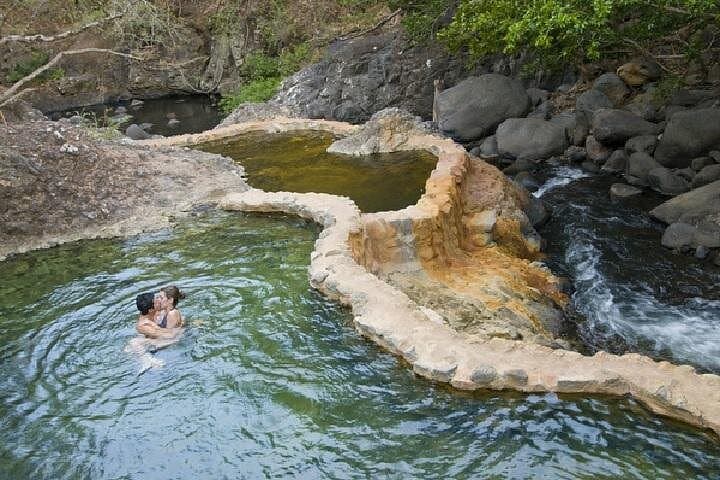
- ✓Canopy, rock climbing, tubbing, horse back riding, hot spring and mud bath.
- ✓Soda/Pop
- ✓Lunch
- ✓Air-conditioned vehicle
Not included
- —Gratuities
Good to know
- ✓Wheelchair accessible
- ✓Infants and small children can ride in a pram or stroller
- ✓Service animals allowed
- ✓Public transportation options are available nearby
- ✓Infants are required to sit on an adult’s lap
- ✓Specialized infant seats are available
- ✓Transportation options are wheelchair accessible
- ✓All areas and surfaces are wheelchair accessible
- ✓Not recommended for travelers with spinal injuries
- ✓Not recommended for pregnant travelers
- ✓Not recommended for travelers with poor cardiovascular health
- ✓Travelers should have at least a moderate level of physical fitness
Pack with intention
What to bring.
Good to know
Common questions.
The listed duration is 600 minutes (about 10 hours), which includes transfers, safety briefings, and the full canopy sequence.
Plan the edges
The details that make the day easier.
Hacienda Guachipelin sits on the flanks of Rincón de la Vieja volcano, part of a volcanic complex that has shaped Guanacaste’s canyons and hot springs.
After the exhilaration, head back toward Tamarindo for fresh-caught ceviche, a cold local beer, or a traditional casado at a family-run soda — the region’s coastal flavors pair well with a day of inland adventure.
- Closest airport
- Daniel Oduber Quirós International Airport (LIR, Liberia); Typical drive from Tamarindo: 1.5–2 hours depending on pickup; Cell service: intermittent in the canyon; Permits: none beyond operator requirements—confirm at booking.
This property operates within a sensitive watershed on volcanic slopes—help protect it by staying on marked trails, packing out trash, and supporting locally run services.
Explore by topic
Follow the threads.
Keep exploring
Make the story part of the trip.
Set out from Bass Harbor for a private, customizable day on Blue Hill Bay — lighthouses, puffins, seals, and the chance to feel Acadia from the water. Small groups, local captains, unforgettable views.
In four hours you can move from shaded canyon ferns to wind-scoured coastal ridgelines, guided by someone who knows where the light—and the hidden views—live. This private half-day hike on the Monterey Peninsula or Big Sur is compact, curated, and perfect for travelers who want depth without a multiday commitment.
 Related story
Beneath a sky of shifting light, Skaftafell’s ice reads like a map of time. This three-hour guided glacier hike mixes technical instruction with geology and culture: compact, safe, and unforgettable.