
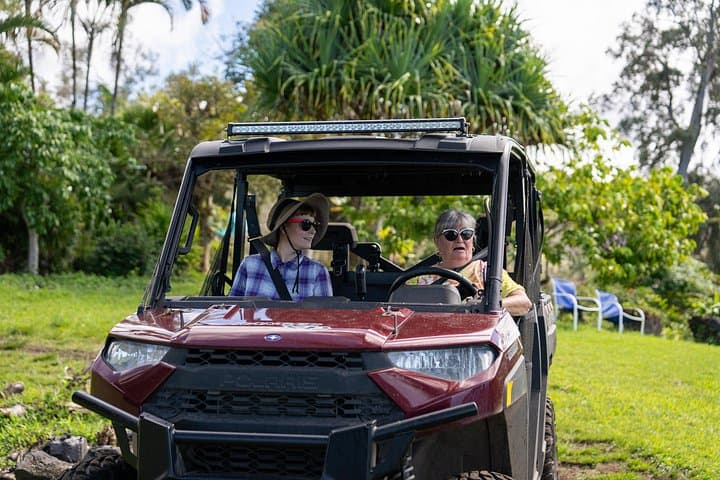
What the day feels like
The engine murmurs like a curious animal as the trail opens. Dust lifts in a filigree behind your Polaris and the air snaps with the scent of sun-warmed coffee cherries and volcanic rock. You crest a low ridge and the ocean appears a slow, silver promise far below; inland, the ohia trees stand like sentinels, their twisted trunks holding stories in the bark. For 30 minutes, the Express Kona Farms ATV Adventure strips travel down to motion and sense: throttle, terrain, and a steady stream of local knowledge from your guide.
This is not a manic off-road rush; it is a dialed, intimate sprint through the Kona coffee belt where agriculture and geology are inseparable. The route threads between cultivated plots of Coffea arabica and pockets of wild understory — a place where cacao plants nestle in sheltered depressions, and a name like Buddha’s Cup refers to a shaded hollow that cradles humidity and history. The ride is short by design but layered with context: the soil here is volcanic talus and ash, which gives Kona coffee its sharp acidity and bright aromatics, and the narrow farm tracks reveal a working landscape rather than a manicured tour stop.
Geology writes itself everywhere. The island is a palimpsest of lava flows from Mauna Loa and Hualalai; black basalt outcrops punctuate green rows of coffee trees. Ancient Hawaiians read these flows to mark sacred places and fishing grounds. Today, small plot farming still defines much of Kona’s culture — coffee roasters and family-run farms that balance modern tourism with centuries-old practices of land stewardship. This tour leans into that tradition: your guide will point out varietals, explain the thao of sun-drying versus wet-processing, and stop at cacao pockets where the air tastes of chocolate when you brush past the leaves.
The humans and the land feel linked here. Farmers call the mid-morning trade winds a blessing; the breeze cools the soil and dries the beans at just the right pace. The sea seems to push its own story inland, and the trails challenge you to keep up. Nature is given agency on this route: the wind teases your helmet visor, roots reach like questions across the singletrack, and shaded gullies dare you to slow and breathe.
Practicality is part of the appeal. The Express tour is a tight 30-minute loop, ideal for travelers who want a scalable slice of Kona adventure without committing to a half-day expedition. It runs daily with instant confirmation and, per the tour flags, offers free cancellation and private options. Expect a quick safety briefing, helmet and protective gear provided, and a chance to drive or ride tandem if you prefer. The Polaris machines handle the rocky, sometimes rutted farm tracks with composure; there are short grades and a few switchbacks but no technical cliff-hanging.
Why book a half-hour when you could do a longer excursion? Because it concentrates the essentials — dirt, coffee, cacao, and context — into a window that fits into any island itinerary. It’s snackable, high-impact, and accessible to families and mixed-ability groups. For coffee lovers, it’s a drive-by sensory primer: you’ll see the trees, hear about harvest cycles, and learn why Kona’s microclimates produce such distinctive cups. For photographers, the quick loop gives repeated vantage points where low-angle light plays off volcanic stone and glossy leaves.
Timing matters. Early morning runs offer softer light and cooler temperatures; late afternoon slices the landscape into gold and shadow. The island’s drier months are gentler on the tracks, but Kona’s weather is famously variable — a clear sky can turn to squall over a ridge — so prepare for dust and the occasional spray of mud.
Safety and stewardship are straightforward. Keep both hands on the bars when the trail narrows, follow your guide’s pacing, and respect farm operations: avoid straying into planted rows and follow biosecurity instructions to keep pests out of sensitive areas. Bring a small hydration pack and sun protection; the Hawaiian sun at mid-elevation is persuasive.
If you leave wanting more, Kona has options for extension: guided coffee tastings at historic farms, longer ATV loops into lava-scarred terrain, and coastal snorkeling to meet sea turtles and spinner dolphins. But there is a particular clarity to 30 minutes that makes this intro tour a smart first move — a way to brush the island and understand its layers without losing a day. You come off the ATV smelling of coffee and dust, carrying a few facts and a fresh appreciation for how geology, agriculture, and community shape Kona’s character.
For travelers balancing short schedules and high curiosity, the Express Kona Farms ATV Adventure Tour is an efficient, sensory-rich way to touch the Big Island’s working landscape. It’s the kind of small, fast memory that helps you plan the next, longer visit.
Trail wisdom
Small choices, better day.
Wear closed-toe shoes
Sturdy sneakers or light hiking shoes protect feet from mud, rocks, and footpegs.
Bring a small water bottle
Hydration for the half-hour ride plus heat from the sun and engine should be considered.
Book morning or late afternoon
Choose cooler hours for softer light and less dust on the trail.
Follow guide instructions
Maintain spacing, keep to designated tracks, and avoid planted rows to respect farm operations.
Local knowledge
Read the place, not just the route.
Watch for native species including Nene (Hawaiian goose), Honu (green sea turtle) along nearby coastal waters.
Keep an eye out for wildlife during the transition between areas and habitats. Respect distance guidelines.
Many Kona farms practice shade-grown or partial-shade coffee cultivation to support native birds and limit erosion; stay on trails and avoid disturbing farm operations to reduce environmental impact.
Follow the guide's instructions on size limits, ethical handling, and leave-no-trace practices.
Greenwell Coffee Company tour in nearby Kealakekua for a deeper coffee immersion. Puuhonua o Honaunau National Historical Park — a short drive for coastal history and snorkeling
Locally recommended viewpoints and quiet spots known best to local operators.
Kona’s coffee industry dates to the 19th century when settlers planted trees in nutrient-rich volcanic soils; small-scale farming and family plots still shape the region’s culture.
Maritime roots and regional tradition shape the waterways and working coasts.
Seasonal guide
Four versions of the same landscape.
Spring
Best forBlooming coffee blossoms · Comfortable temps
ChallengesOccasional showers · Soft muddy tracks after rain
Spring brings coffee blossoms and mild weather; expect lush understory and occasional wet sections.
Summer
Best forDrier trails · Longer daylight
ChallengesStronger sun · Dustier conditions
Summer is the driest and most reliable for firm trail conditions and stable operations.
Fall
Best forPost-harvest landscapes · Golden light
ChallengesUnpredictable trade winds · Shorter days
Autumn offers dramatic lighting and quieter trails after high tourist season.
Winter
Best forCooler mornings · Less crowding
ChallengesIncreased rain on windward slopes · Rocky runoff in low areas
Winter can be wetter; expect occasional run-off on farm tracks and the need for cautious riding.
Operator details
What the booking data adds.
Included
- ✓ATV Ride
Good to know
- ✓Infants and small children can ride in a pram or stroller
- ✓Service animals allowed
- ✓Public transportation options are available nearby
- ✓Infants are required to sit on an adult’s lap
- ✓Suitable for all physical fitness levels
Pack with intention
What to bring.
Good to know
Common questions.
The Express Kona Farms ATV Adventure Tour runs approximately 30 minutes on the trail, with a short safety briefing before launch.
Plan the edges
The details that make the day easier.
Kona coffee is grown on the slopes of Hualalai and Mauna Loa and is renowned for its unique flavor profile because of the volcano-derived soils and the region’s microclimates.
After the ride, head to a local roaster or farmstand in the Kona Coffee Belt for a cupping or fresh roast; grab hearty island-style plate lunches or poke bowls in Kailua-Kona and finish with a cold Kona craft beer at a neighborhood brewery.
- Closest airport
- Kona International (KOA) — 20–30 minute drive to central coffee farms; Driving distance from Kailua-Kona: typically under 20 miles depending on meeting point; Cell service: intermittent on farm tracks but reliable near towns; Permits: none required for tour; Meeting point details provided at booking.
This tour visits working agricultural land — respect planted areas, stick to marked tracks, and support farms that use shade-grown or sustainable practices to reduce runoff and protect native species.
Explore by topic
Follow the threads.
Keep exploring
Make the story part of the trip.
In four hours you can move from shaded canyon ferns to wind-scoured coastal ridgelines, guided by someone who knows where the light—and the hidden views—live. This private half-day hike on the Monterey Peninsula or Big Sur is compact, curated, and perfect for travelers who want depth without a multiday commitment.
 Related story
Beneath a sky of shifting light, Skaftafell’s ice reads like a map of time. This three-hour guided glacier hike mixes technical instruction with geology and culture: compact, safe, and unforgettable.
 Related story
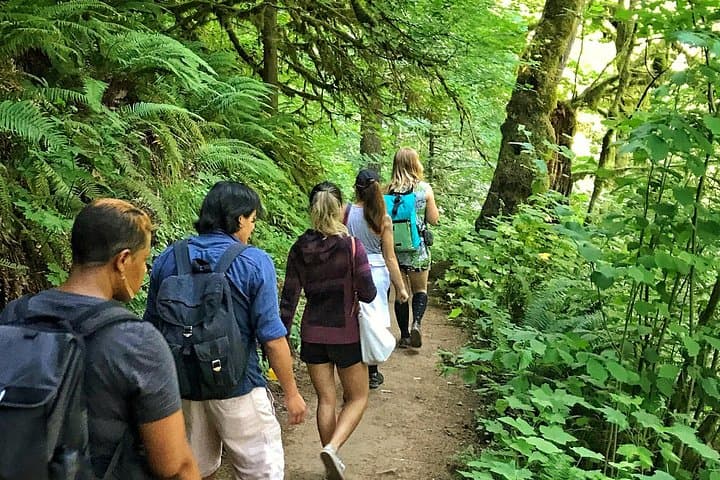
Lose the city for a few hours without leaving it: this 5-mile, 900-foot-gain Forest Park loop threads old-growth pockets, city viewpoints, and cultural landmarks for a compact taste of Portland’s wild side. Expect moss, roots, and stories.