
What the day feels like
The forest wakes up as you climb into high country, a thin alpine light slipping through Jeffrey pine and sugar pine, needles perfuming the cool air. At the trail’s edge, the granite looks like it has been poured in place, a staircase built for giants. You idle forward, low-range engaged, and feel the San Bernardino Mountains speak through the chassis—each rock a sentence, every ledge a challenge. The John Bull Jr. route is not here to flatter you. It prods, it tests, it teaches. It also rewards, pushing you into open meadows and ridge breaks where the sky widens and Big Bear’s backcountry rolls away in green folds.
This is a 3.5-hour guided, you-drive off-road adventure designed to sharpen skill and heighten senses. The headline features come quickly: a punchy hill climb strewn with boulders, a narrow ledge that asks for steady throttle and clean tire placement, and an electrifying descent that has you working the brakes and reading the terrain a few feet at a time. If you’re new to technical four-wheel driving, John Bull Jr. is the mentor—firm but fair—preparing you for the region’s iconic full John Bull trail without the highest consequences. If you’re seasoned, the trail still keeps you honest. In both cases, you’re here for the hands-on factor: the feel of tires loading up on granite and the satisfaction of choosing a line and executing it.
Big Bear’s backcountry wears its history on its sleeve. These ridgelines and valleys were the stage for Southern California’s largest gold rush in the 1860s, when William Holcomb found placer gold in Holcomb Valley and miners chiseled roads into these hills. The John Bull network follows that legacy—old routes reborn as off-highway challenges, the pines still whispering the same wind those prospectors knew. The rocks you crawl are Mesozoic granite, weathered and reliable, their grip a friction handshake that favors methodical driving over brute force. Manzanita crouches low beside the track, bright red limbs curling like question marks. When the afternoon sun slants low, the granite throws back soft light, and the forest feels like it is breathing in long, slow drafts.
What keeps this adventure grounded is the practical rhythm of a good guide and solid instruction. Before the first obstacle, you’ll get a briefing on approach and departure angles, how to ease into a line, and why steady is better than speedy. On the climb, you’ll dab the throttle just enough to carry momentum and let the tires do the talking. On the ledge, patience is the point; the rock is daring you to rush, but it’s the driver who trusts crawl speed that wins. And on the descent, you’ll find the gospel of low-range and careful braking—gravity’s nudge balanced by your judgment.
It’s not all grunts and granite. There are quiet moments in the pines when a Steller’s jay heckles your progress and mule deer flicker past like brown shadows. Views open toward Big Bear Lake, that cobalt saucer rimmed by lodges and ski runs, and out to the higher spine of the San Bernardinos. Photo stops are part of the arc, and this is where John Bull Jr. surprises: the backcountry feels closer to wilderness than resort town. Bring a camera and a sense of curiosity; dust may rise from the trail, but the air up here sits clean and cool even in mid-summer.
For planning, think of John Bull Jr. as the middle child of Big Bear’s off-road family—less extreme than the notorious big brother but far more engaging than a simple forest road. The 3.5-hour itinerary mixes obstacles with travel sections, and while you won’t be sprinting anywhere, you’ll cover enough terrain to feel like you’ve stepped into the deep side of the map. Families are welcome—children as young as 18 months can ride with proper seating—and the instruction is tuned to your pace. If you want to dig deeper into the route and book the experience, see the local expert page for details at <a href="https://app.advcollective.com/local-experts/john-bull-jr-jeep-big-bear-lake" target="_blank" rel="noopener">John Bull Jr. Jeep Big Bear Lake</a>.
The best seasons here are late spring through fall, when snow has retreated to the high ridges and the forest is open for exploration. Summer brings warm days and the occasional thunderhead; fall offers crisp mornings and pine-filtered light made for photography. Winter can be beautiful but fickle—ice, snow, and closures may turn the trail into a different animal, so always check conditions and let the professionals call the safety shots. Because you’re at elevation (Big Bear Lake sits around 6,700 feet), hydration matters. A hat and sunscreen matter too. Granite reflects sunlight with a quiet insistence, and the UV at altitude does not negotiate.
There’s a culture to this kind of driving that fits Big Bear well: patient, low-impact, precise. You’re not here to thrash; you’re here to learn the language of traction. The trail nudges you toward good habits—eyes up, hands relaxed, inputs smooth. When the ledge section rolls under your tires and the vehicle steps gently onto solid ground, the payback is pure satisfaction. That and the grin that shows up uninvited. The forest approves.
For more planning insights, route nuance, and booking logistics, head to the <a href="https://app.advcollective.com/local-experts/john-bull-jr-jeep-big-bear-lake" target="_blank" rel="noopener">local John Bull Jr. expert listing</a>. You’ll find the essentials on timing, what to bring, and how the day flows. And if you’re balancing a family itinerary with one big, memorable activity, this one threads the needle: engaging for drivers, scenic and safe for passengers.
One more tip before you go: expect dust, expect laughter, and expect the mountain to test you just enough. That’s the point. For deeper background and to reserve your slot, bookmark the <a href="https://app.advcollective.com/local-experts/john-bull-jr-jeep-big-bear-lake" target="_blank" rel="noopener">John Bull Jr. in Big Bear Lake</a> page and plan ahead—weekends fill fast when the granite calls.
Trail wisdom
Small choices, better day.
Air down expectations, not tires
Guided vehicles are prepped for the trail—focus on smooth throttle, not pressure adjustments, unless your guide advises otherwise.
Eyes on the line
Pick a rock two or three feet ahead and drive to it—short, precise targets keep you off diffs and onto traction.
Pack for altitude
At ~6,700 feet, you’ll dehydrate faster. Drink steadily and wear sun protection even on cool days.
Secure your tech
Use wrist straps or mounts for phones and action cams—the trail is bumpy and dust finds everything.
Local knowledge
Read the place, not just the route.
Watch for native species including Mule deer, Bald eagles (most commonly in winter).
Keep an eye out for wildlife during the transition between areas and habitats. Respect distance guidelines.
Stay on designated routes like 3N10 to protect habitat and prevent erosion. Follow Tread Lightly principles and pack out all trash, including micro-trash like bottle caps.
Follow the guide's instructions on size limits, ethical handling, and leave-no-trace practices.
Holcomb Valley historic sites—remnants of the 1860s gold rush tucked in the pines. Cougar Crest viewpoint for a quick leg-stretch and sweeping lake views
Locally recommended viewpoints and quiet spots known best to local operators.
Holcomb Valley’s 1860 gold strike ignited Southern California’s largest gold rush; many OHV routes trace former mining roads through the San Bernardino Mountains.
Maritime roots and regional tradition shape the waterways and working coasts.
Seasonal guide
Four versions of the same landscape.
Spring
Best forCool temps · Wildflowers in meadows
ChallengesLingering snow patches · Wet, slick granite after storms
Mornings are crisp and crowds are lighter. Expect variable conditions—check trail status after late storms.
Summer
Best forConsistent access · Long daylight for photos
ChallengesHeat in exposed sections · Dust and afternoon thunderheads
Classic season for the route: warm, dry, and reliable. Start early to beat heat and pop-up storms.
Fall
Best forStable weather · Golden light through the pines
ChallengesCooler evenings · Shortening days
Arguably the sweet spot—mild temps and clear skies make obstacles more enjoyable and photo stops stellar.
Winter
Best forSnow-dusted scenery · Quiet trails when open
ChallengesIce, closures, and reduced traction
Operations are weather-dependent; the trail can close after snow. Expect delays or reschedules in storms.
Pack with intention
What to bring.
Good to know
Common questions.
This is a guided, you-drive experience. You’ll be behind the wheel with professional guidance on line choice and technique.
Plan the edges
The details that make the day easier.
Holcomb Valley, just north of Big Bear Lake, hosted Southern California’s largest gold rush after William Holcomb’s 1860 discovery—remnants of mining roads still underlie many modern OHV trails.
After your drive, refuel at Big Bear Lake Brewing Company with local craft beers and hearty burgers. For a big breakfast the next day, Grizzly Manor Cafe is a beloved staple—expect a wait and outsized pancakes. Coffee people should swing by Moonridge Coffee Company, then walk the Big Bear Alpine Zoo to learn about local wildlife rehabilitation.
- Closest airport
- Ontario International (ONT), ~1.5–2 hours by car. Departure: Big Bear Lake area trailheads—5–15 minutes from The Village. Cell service: Spotty to none on the trail. Permits: Not needed for guided participants; operator handles access. Age: 18 months+ with advance notice for child seats.
These routes traverse the San Bernardino National Forest. Stay on designated tracks, avoid spinning tires that scar the soil, and keep voices low near wildlife. Pack out all trash and leave the forest quieter than you found it.
Explore by topic
Follow the threads.
Keep exploring
Make the story part of the trip.
In four hours you can move from shaded canyon ferns to wind-scoured coastal ridgelines, guided by someone who knows where the light—and the hidden views—live. This private half-day hike on the Monterey Peninsula or Big Sur is compact, curated, and perfect for travelers who want depth without a multiday commitment.
 Related story
Beneath a sky of shifting light, Skaftafell’s ice reads like a map of time. This three-hour guided glacier hike mixes technical instruction with geology and culture: compact, safe, and unforgettable.
 Related story
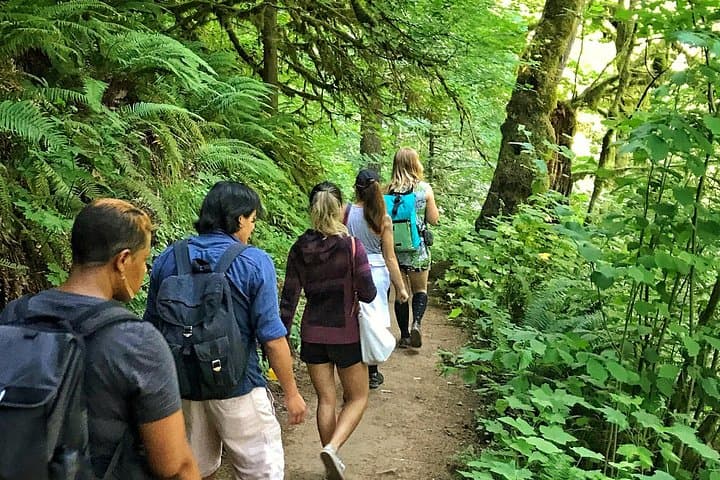
Lose the city for a few hours without leaving it: this 5-mile, 900-foot-gain Forest Park loop threads old-growth pockets, city viewpoints, and cultural landmarks for a compact taste of Portland’s wild side. Expect moss, roots, and stories.