
What the day feels like
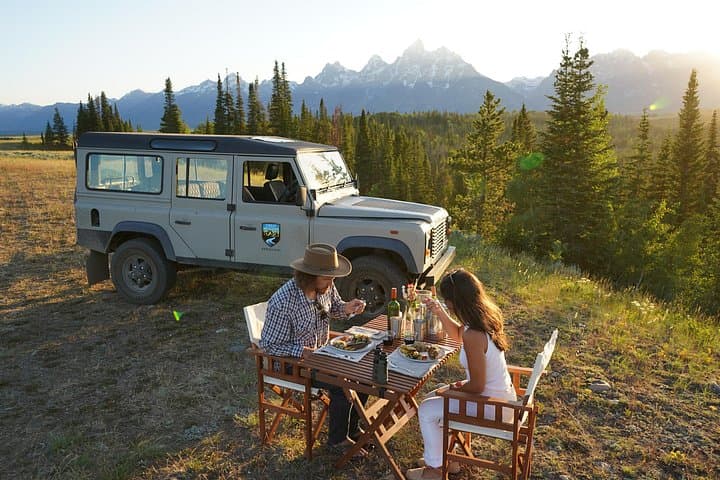
By the time the van pulls away from the hum of Jackson, the light has already started to change. It slips between serrated peaks and eases across the valley floor, making the Snake River glint like a ribbon of mercury. On an afternoon private tour of Grand Teton National Park, you are not being rushed past photo stops; you are being given permission—to linger at Oxbow Bend while a bull elk surveys the marsh, to walk the quiet lane at Mormon Row where century-old barns stand like stage sets against the mountains, to sit with a thermos of coffee as the first stars appear and a picnic dinner is laid out in the field.
This is a six-hour, small-group—or strictly private—safari through one of the American West’s most theatrical landscapes. The itinerary is efficient but unhurried: Mormon Row, the Snake River’s scenic turns, Oxbow Bend, Jenny Lake, and other signature viewpoints, each framed by narration that threads together natural history, geology, and local lore. Guides point out more than photo ops; they decode the landscape, explaining why the Tetons rise so abruptly, which birds are worth tracking with binoculars, and how homesteaders and ranchers shaped—then were shaped by—this place.
Geologically, the Teton Range reads like a rapid-growth spine. Compared with older ranges to the east, the Tetons are young—formed by fault uplift in the last several million years—and glaciers carved their shoulders and basins during the Ice Ages. Those same glaciers scoured valleys that now hold lakes like Jenny, giving you teal water with a jagged mountain backdrop. Culturally, this valley is layered: Indigenous Shoshone families used these plains and waterways for millennia; 19th- and 20th-century settlers established ranches that still exist in one form or another; and the 20th-century conservation battles helped define the park boundaries you’ll visit.
Mormon Row is where human history and mountain drama converge. The long, low barns—built by homesteading families in the early 1900s—sit with the Teton Range as if set by a careful hand. Guides will talk about the stark, stubborn lives of those settlers and the later efforts to conserve the valley’s working-ranch character. At Snake River and Oxbow Bend, the scene shifts to wildlife theater. River otters, moose, and the occasional grizzly or black bear appear when least expected. Raptors, including bald eagles, ride thermals along canyon rims, making these stops as much about patient observation as photography.
What makes this afternoon tour feel luxurious is its balance: a private vehicle that takes the stress out of navigation, a guide who reads the light (and the animals), and a picnic dinner that turns a scenic pullout into a small feast. The picnic is safari-style—simple, elevated, and timed to the sunset—so the last hour becomes an intentional pause rather than a sprint to a destination. Price reflects that private, curated experience: this is a premium outing for travelers who value time, interpretation, and exclusivity.
Practical essentials: the tour lasts about six hours and is best booked for late afternoon to catch the golden-hour transition into evening. Physical demands are low—short walks and standing at viewpoints—but bring sturdy footwear for uneven trails, a warm layer for post-sunset chill, binoculars, and a camera with a mid-range zoom. Wildlife sightings are never guaranteed, but a guide’s local knowledge increases your odds dramatically.
Timing matters. Summer afternoons bring long daylight, warm temps, and more visitors; late summer to early fall condenses crowds, improves elk activity, and deepens the light. In shoulder seasons you’ll trade some accessibility for prime wildlife activity and quieter views. Winter tours are rare for an afternoon picnic but offer stark, crystalline beauty with the right logistics.
Respect is part of the experience: obey distance rules around wildlife, keep voices low in quiet meadows, and follow Leave No Trace where the picnic is set. Grand Teton National Park charges an entrance fee; your guide typically handles logistics, but carry a park pass or be prepared to request one.
For photographers, the tour optimizes opportunities: aim for a 24–70mm for landscape and a 100–400mm for wildlife, shoot in RAW for post-processing latitude, and scout compositions during the ride so you’re ready when a moose or eagle appears. For families, the private format lets you tailor the pace, which makes this a solid choice for multi-generational groups who want views without the effort of a long hike.
Why do this tour instead of exploring on your own? The Tetons reward curiosity and timing. A local guide not only understands where and when to be for light and wildlife, but also gives context—the story of the valley’s ranchers, the geology of the range, and the conservation fights that preserved this landscape. In a single afternoon you leave with a clearer sense of place and a sunset dinner that feels like an earned conclusion.
If you have limited time in Jackson and want to compress the essentials into a relaxed, interpretive outing that finishes with a memorable meal in the field, this private afternoon tour delivers. You’ll come away with landscape shots framed by golden light, a few wildlife sightings, and a deeper respect for the forces—geological, ecological, and human—that made the Tetons what they are.
Book with an eye for season and group size. Communicate dietary needs for the picnic and ask about accessibility if mobility is a concern. Beyond that, arrive curious and layered; the Tetons do the rest.
Trail wisdom
Small choices, better day.
Time your tour for golden hour
Book late-afternoon departures to maximize wildlife sightings and catch sunset light for photographers.
Bring binoculars
A 8–12x compact binocular will dramatically improve wildlife viewing from roadside pullouts.
Dress in layers
Valley temperatures can drop quickly after sunset—pack an insulated layer and wind shell.
Give wildlife space
Follow guide instructions and keep recommended distances from animals—approaching can be dangerous and illegal.
Local knowledge
Read the place, not just the route.
Watch for native species including Moose, Bald Eagle.
Keep an eye out for wildlife during the transition between areas and habitats. Respect distance guidelines.
Grand Teton National Park balances recreation with ranching heritage and habitat protection—follow guidelines to minimize disturbance and pack out picnic waste.
Follow the guide's instructions on size limits, ethical handling, and leave-no-trace practices.
Schwabacher Landing for intimate sunrise reflections. Less-known pullouts along the Moose-Wilson Road for quieter wildlife viewing
Locally recommended viewpoints and quiet spots known best to local operators.
Mormon Row preserves early 20th-century homesteads; the barns there are iconic remnants of homesteading and ranching that shaped the valley’s cultural landscape.
Maritime roots and regional tradition shape the waterways and working coasts.
Seasonal guide
Four versions of the same landscape.
Spring
Best forWildflower viewing · Migratory birds · Less crowded roads
ChallengesUnpredictable snowmelt · Cold evenings · Limited road or service access early season
Spring brings fresh water, migrating birds, and early wildflowers, but expect cooler temps and some snow at higher elevations.
Summer
Best forLong daylight · Full access to park roads · Warm evenings for picnic dining
ChallengesPeak visitor season · Higher service demand · Possible afternoon thunderstorms
Summer offers reliably warm afternoons and full road access, though popular overlooks can be crowded; plan for afternoon storm risk.
Fall
Best forElk rut and wildlife activity · Crisp golden light · Smaller crowds
ChallengesShortening days · Cooler evenings · Some services begin seasonal closure
Early fall is ideal—fewer visitors, active elk, and excellent light—pack warm layers for sunset dinners.
Winter
Best forSnow-covered scenery · Quiet landscapes · Potential for unique wildlife silhouettes
ChallengesCold temperatures · Limited picnic feasibility · Road closures and limited services
Winter offers dramatic contrasts and solitude but requires specialized logistics and winter-ready clothing and equipment.
Operator details
What the booking data adds.
Included
- ✓Binoculars, Spotting scopes, Field guides
Not included
- —Gratuities
- —Grand Teton National Park fee of $20 if necessary.
Good to know
- ✓Infants and small children can ride in a pram or stroller
- ✓Public transportation options are available nearby
- ✓Specialized infant seats are available
- ✓Suitable for all physical fitness levels
Pack with intention
What to bring.
Good to know
Common questions.
The tour is approximately six hours and covers Mormon Row, Snake River viewpoints, Oxbow Bend, Jenny Lake, and other scenic pullouts with opportunities for short walks and wildlife viewing.
Plan the edges
The details that make the day easier.
The Teton Range is geologically young compared to many North American ranges—uplift and faulting in the last several million years created the dramatic, sharp skyline you see today.
After your tour, head into Jackson for local flavor: try the Snake River Grill for regional cuisine or grab a pint at Snake River Brewing; the town blends Western ranching roots with modern outdoor culture.
- Closest airport
- Jackson Hole Airport (JAC). Typical drive from Jackson to trailhead
- park
- 15–30 minutes. Cell service: intermittent in the park; strongest near Jackson. Permits
- passes
- Grand Teton entrance fee required; operator often handles passes.
This tour emphasizes low-impact viewing—stay in designated pullouts, avoid feeding or approaching wildlife, and pack out all picnic waste to protect fragile riparian habitats.
Explore by topic
Follow the threads.
Keep exploring
Make the story part of the trip.
 Related story
Less than two hours from Nairobi, Kereita Forest pairs hands-on canopy adventure with quiet montane trails and a sobering colonial history—perfect for families, teams, and curious travelers seeking a full-day pulse of nature.
Set out from Bass Harbor for a private, customizable day on Blue Hill Bay — lighthouses, puffins, seals, and the chance to feel Acadia from the water. Small groups, local captains, unforgettable views.
In four hours you can move from shaded canyon ferns to wind-scoured coastal ridgelines, guided by someone who knows where the light—and the hidden views—live. This private half-day hike on the Monterey Peninsula or Big Sur is compact, curated, and perfect for travelers who want depth without a multiday commitment.