
What the day feels like
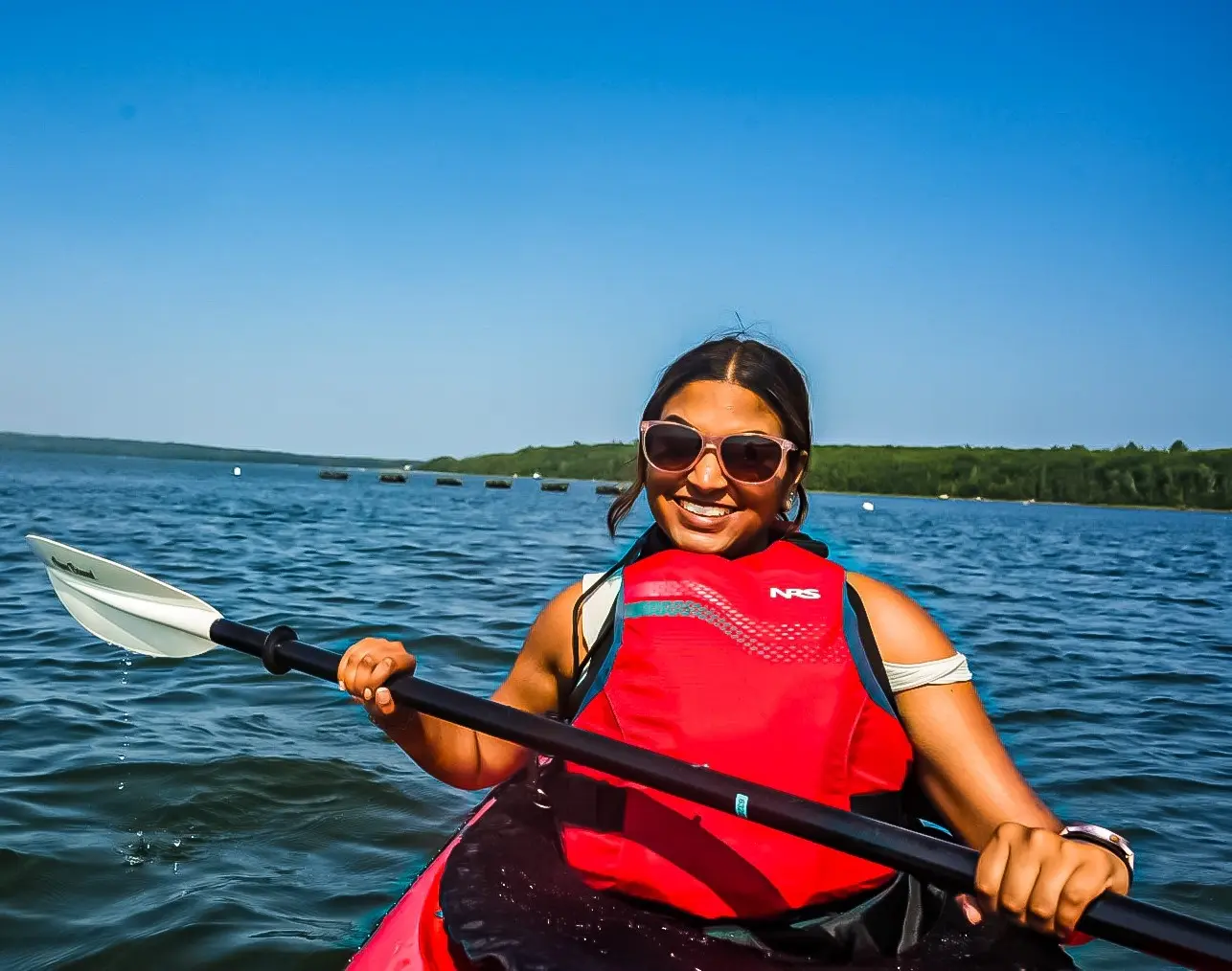
The tide breathes in and out along Frenchman Bay, drawing a silver line around barnacled ledges as if tracing the park’s heartbeat. A light breeze ruffles the spruce tops, and the water—dark, glassy, and watchful—waits. Slide a kayak off the cobbles and the bay greets you with a cool hand. On Acadia’s Too Easy Tour, the first few strokes feel like a handshake with the coast: respectful, curious, unhurried.
This two-hour intro to sea kayaking covers 2–4 miles at a relaxed pace, which means you have time to look—really look—at what the Atlantic is doing against Maine’s granite. Kelp gardens nod from below, the fronds waving you forward. A harbor seal pops up like a punctuation mark, blinking, then vanishing with a delicate flick. Gulls stitch the air with soft cries while the Porcupine Islands shoulder the horizon. The coast doesn’t rush you here; it nudges, invites, dares you to pay attention.
Guides start with the essentials: how to hold your paddle, how to sit comfortably, how to turn without fighting the wind. Ten minutes in and you’re already drafting beside the shore, following a clean line along pink granite and lichen-stippled boulders. There’s a rhythm you settle into—a four-beat pattern of reach, catch, draw, release—and the kayak rewards it by tracking straight and true. It’s designed to be stable, forgiving, almost eager to oblige. This is the point: on the Too Easy Tour, the ocean is partner, not opponent.
Acadia’s backstory deepens the experience. Glaciers did the heavy lifting here, carving U-shaped valleys and scouring deep basins that later filled with seawater. The result is Frenchman Bay’s island-scattered amphitheater, a classic Downeast scene where granite ribs rise from the sea and firs hold their ground against salt and weather. Long before it was a national park, these coves were highways for the Wabanaki, whose birchbark canoes stitched communities together across the Gulf of Maine. The coastline remembers; every narrow gut and kelp-choked eddy suggests a thousand crossings.
Bar Harbor became fashionable centuries later, drawing rusticators and tycoons who built summer cottages and carriage roads while the same ledges baked in the sun. Today, paddling past lobster buoys—each with a signature paint code that marks a local license—you read a working waterfront story still in progress. The bay hums quietly with traps below and skiffs buzzing between hauls. Respect the floats; the lines below tug with the tide’s mind of their own.
The Too Easy Tour keeps groups small (max eight), so the water never feels crowded and the instruction remains personal. Ages 8 and up can join, which shifts the tone from conquest to connection. It’s common to hear a whisper when a bald eagle ghosts from a spruce, or a laugh when a cormorant rockets from the water like a startled arrow. You’ll drift into moments where the current gently takes the lead, pressing your hull forward as if the ocean is guiding you to the next view.
Conditions set the mood. On glassy mornings, the bay is a mirror that doubles islands and sky. On light-wind afternoons, small chop tickles the bow, playful and alert. Fog sometimes arrives like a quiet guest, softening edges and turning sound into velvet. The guides read it well—timing, tide, and wind—and choose a route that keeps the tour comfortable, scenic, and within the group’s ability. You don’t need experience; you just need curiosity. To plan or book, see this local guide to sea kayaking in Acadia with the Too Easy Tour (https://app.advcollective.com/local-experts/sea-kayaking-in-acadia-with-too-easy-tour).
What makes this outing stick is how it balances ease with substance. Two hours is long enough to learn real sea-kayak basics—forward stroke, sweep turns, edging and posture—yet short enough to leave you wanting more. The pace gives space for interpretation: geology showing you the raw bones of the park, wildlife sketching in the margins, tides calling the cadence. As you round a point and the coastline opens, the water seems to inhale, gathering a subtle swell. Your kayak rises and falls, breathing with it. Acadia doesn’t perform so much as converse; the bay asks questions, and your paddle writes back.
Practicalities? Dress as if a breeze will find you—because it will. Quick-dry layers, a light wind shell, and sun protection go a long way. Footwear you don’t mind getting wet helps for the cobble launch. Bring water. Keep your phone in a dry bag. In peak summer, tours often run in the morning when winds are lighter and wildlife is more active. Always give seals and nesting birds a wide berth; binoculars beat bravado. And remember: tides here are not background—they’re the metronome. Guides will time the outing to ride what the coast is offering that day.
When you pull your kayak back onto the stones, the tide’s line will have moved. The bay is different, and so are you in small, satisfying ways: salt on your skin, new muscle memory, a sharper eye for the shapes of shoreline and sky. For many, the Too Easy Tour is a beginning—the first, friendly handshake with Acadia’s ocean side that leads to a lifetime of looking seaward.
Ready to slip a paddle blade into Frenchman Bay and see how the coast answers back? Learn more and reserve your spot here (https://app.advcollective.com/local-experts/sea-kayaking-in-acadia-with-too-easy-tour).
Trail wisdom
Small choices, better day.
Beat the wind with an early start
Morning tours typically mean calmer seas and clearer wildlife sightings. If you’re prone to chills or crowds, earlier is better.
Dress for the breeze, not the beach
Quick-dry layers and a light wind shell keep you comfortable when the bay’s cool air wraps around you during rest stops.
Respect the working water
Give lobster buoys and lines space; avoid paddling directly over trap lines to prevent entanglement.
Wildlife first, cameras second
Use a zoom lens or binoculars and keep a wide berth from seals and nesting birds to reduce stress on marine life.
Local knowledge
Read the place, not just the route.
Watch for native species including Harbor seals, Bald eagles.
Keep an eye out for wildlife during the transition between areas and habitats. Respect distance guidelines.
Avoid landing on seabird nesting islands and keep distance from seal haul-outs. Use mineral or reef-safe sunscreen to protect intertidal life.
Follow the guide's instructions on size limits, ethical handling, and leave-no-trace practices.
Bar Island Sand Bar (walkable at low tide from Bridge Street; watch the tide carefully). Compass Harbor Trail (short, quiet coastal loop just south of town)
Locally recommended viewpoints and quiet spots known best to local operators.
Acadia National Park occupies lands traditionally used by the Wabanaki, who traveled these bays by birchbark canoe long before the Gilded Age brought rusticators to Bar Harbor.
Maritime roots and regional tradition shape the waterways and working coasts.
Seasonal guide
Four versions of the same landscape.
Spring
Best forQuiet bays · Cool-weather paddling
ChallengesCold water temps · Unpredictable fog
Late spring brings fewer boats and crisp air; water remains cold, so layers and a wind shell are key.
Summer
Best forWarm air temps · Wildlife activity
ChallengesMidday winds · Busy waterfront
Peak season delivers long daylight and lively seas; aim for morning tours to skirt wind and crowds.
Fall
Best forCalmer conditions · Clear light for photography
ChallengesCooling temps · Shorter days
September and early October can be ideal: bright skies, thinning crowds, and steady, manageable conditions.
Winter
Best forSolitude (shore viewing) · Storm watching from land
ChallengesVery cold water · Limited tour availability
Guided kayak tours are generally not offered; admire the coast from shore and plan ahead for next season.
Pack with intention
What to bring.
Good to know
Common questions.
No. The Too Easy Tour is designed for beginners and includes instruction on basic strokes, steering, and safety.
Plan the edges
The details that make the day easier.
From roughly early October to early March, Cadillac Mountain in Acadia is the first place in the contiguous United States to see the sunrise.
Post-paddle, head to Jordan Pond House for classic popovers with jam and a view, or sip a cold one at Atlantic Brewing Company’s Town Hill location. For a casual lobster roll, Side Street Cafe in Bar Harbor keeps it local and easy. Stroll the Shore Path to extend the sea views without getting back in a boat.
- Closest airport
- Bangor International (BGR), ~50 miles
Frenchman Bay’s intertidal zone is rich and fragile—pack out everything, avoid landing on kelp beds, keep a generous buffer from wildlife, and choose mineral or reef-safe sunscreen to reduce chemical runoff.
Explore by topic
Follow the threads.
Keep exploring
Make the story part of the trip.
 Related story
Cobblestone streets, punk-era haunts, and neighborhood bakeries: the West Village compresses New York history into walkable, delicious experiences. Here’s how to make the most of it—what to book, eat, and remember.
 Related story
Stand in City Hall Park and feel the city breathe around an 1812 Federal-style landmark. This is a walking experience that pairs architecture, history, and Lower Manhattan’s lived-in streets—ideal for curious travelers who love stories with their sidewalks.
 Related story
Step beyond Canal Street and into a dense, sensory world where food, language, and history overlap. This is Chinatown: compact, storied, and urgently alive. Learn how to move through it like a neighbor — and why every corner tells a story.