
What the day feels like
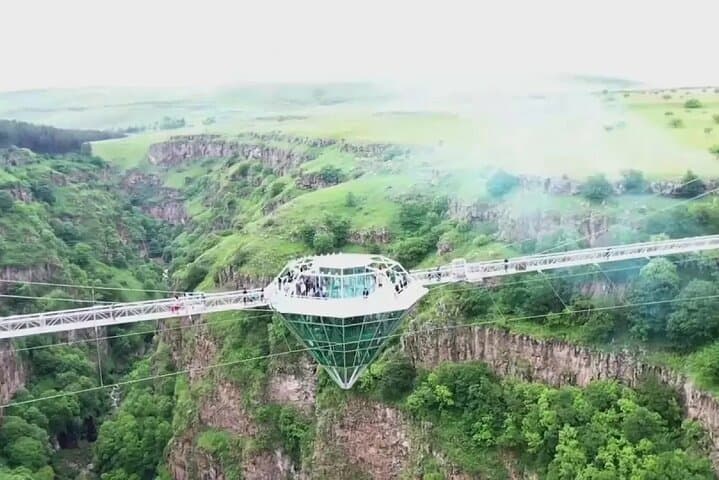
The glass trembles in a way that feels deliberate, a thin, honest sound beneath your feet as the canyon exhales. Sunlight slices down into steep, mossed walls, and the air tastes like river and stone. You step onto the Diamond Bridge—not a pedestrian crossing but a transparent café suspended above a gorge—and for a moment the world rearranges itself: the valley becomes a bowl you can see straight through. Around you, the canyon isn’t an abstract postcard; it’s a living, slightly unruly thing that dares you to look down and then draws you forward along narrow trails, over slick basalt, and past waterfalls that don’t just ornament the landscape, they shape it.
This nine-hour day trip from Tbilisi does three things well. It gives you the dizzying delight of a suspended glass structure with a coffee cup in hand; it delivers a short, sharp series of hikes that feel remote without requiring expedition-level legs; and it opens the door to optional thrills—zipline runs and sky-bike crossings—that let you choose your own adrenaline. The itinerary is intentional: guided transport from the city, local storytelling en route, itinerary flexibility for photo stops, and time for lingering so the place stops being scenery and starts to feel like a day you spent inside a particular slice of Georgia.
Dashbashi Canyon sits in a landscape where tectonic uplift and patient rivers have done the editing. The canyon’s walls are a patchwork of volcanic and sedimentary rock, polished and scored by runoff, while springs and small streams feed a necklace of waterfalls. In local parlance the area is modestly famed for its views, but the Diamond Bridge—marketed as a transparent café bridge—has put Dashbashi on a different map: travelers now come for a combination of natural drama and engineered spectacle. That mix of raw geology and designed experience is part of the charm; there’s a balance between being a place of solitude and a place built to be shared.
Culture in this part of Georgia is layered. Kvemo Kartli and neighboring regions have long been crossroads: shepherds and traders threaded routes through these valleys for centuries, and you can still taste that intersection of histories in the roadside stops. Guides on the tour usually point out local villages, speak about seasonal sheep grazing, and offer a lens on small-scale agriculture that roots the canyon in modern rural life. These towns are not tourist bubbles; they are working landscapes, and that lends a quiet authenticity to the visit.
Practicality: the core walking loop totals roughly 3–5 kilometers of well-marked trails with an estimated 150–250 meters of cumulative elevation gain, most of it in short, manageable climbs and stairways carved into rock. Terrain is mixed—packed dirt, basalt steps, and boardwalks—so good footwear is non-negotiable. Expect about nine hours total including round-trip transport from Tbilisi, which makes the tour a full-day commitment but not an expedition. Price points advertised from US$70 (with optional extras bringing the higher figure nearer US$88) make this an affordable way to see a lot in a single day.
If you like photography, aim for morning light on the canyon walls and late-afternoon warmth on the bridge. If you like speed, book the zipline or the sky-bike—they’re optional add-ons and supply a different choreography with the canyon, one that replaces the contemplative vertical view with an exhilarating horizontal pass. Guides are typically bilingual, know the best viewpoints, and manage safety for the more adventurous moments.
For anyone planning the trip: timing matters. Spring means waterfalls at their fullest and wildflowers dotting the rim; summer brings more stable skies but hotter exposure; fall sharpens the light and cools the air; winter can make the glass and trails icy and some attractions seasonal. Cell reception is generally good near the parking and bridge but becomes patchy deeper in the canyon, so plan accordingly. Finally, treat the area respectfully: stay on marked trails, carry out your trash, and let the canyon keep the quiet it needs.
In short, Dashbashi Canyon is a tidy, richly appointed day trip: part nature theater, part mechanical wonder, and fully accessible for travelers who want an active day outside Tbilisi. It’s the kind of place that makes for a memorable photograph, a deliberate coffee stop above a gorge, and a series of small, sharp physical moments—stepping over rocks, pausing to listen to a waterfall—that stick in the body longer than the image on your camera.
Trail wisdom
Small choices, better day.
Wear grippy shoes
Trails include basalt and wet rock; sturdy hiking shoes with good traction reduce slip risk.
Bring 1–2 liters of water
The hike is short but the day is long—hydration keeps you sharp for photo stops and optional activities.
Book morning slot for softer light
Morning reduces mid-day glare on the glass bridge and often gives calmer air for ziplines.
Layer for wind and shade
Temperatures can shift quickly between canyon bottom and exposed bridge—bring a light windproof layer.
Local knowledge
Read the place, not just the route.
Watch for native species including Birds of prey (e.g., hawks and kites), Small mammals such as foxes and hedgehogs.
Keep an eye out for wildlife during the transition between areas and habitats. Respect distance guidelines.
Stick to marked trails, avoid disturbing vegetation near springs, and pack out all waste—local operators emphasize minimal-impact visitation to protect fragile canyon ecosystems.
Follow the guide's instructions on size limits, ethical handling, and leave-no-trace practices.
Early-morning viewpoint on the eastern rim where light slices the basalt walls. Short side trail to a lesser-known cascade just off the main loop (less crowded)
Locally recommended viewpoints and quiet spots known best to local operators.
The canyon area sits along historic routes where shepherding and small-scale agriculture shaped local life; modern villages here retain traditional pastoral rhythms.
Maritime roots and regional tradition shape the waterways and working coasts.
Seasonal guide
Four versions of the same landscape.
Spring
Best forWaterfalls at peak flow · Wildflowers and lush greenery
ChallengesMuddy trails · Changeable weather
Spring brings high water and vivid greens—excellent for photography and dramatic flow—but expect muddy sections after rain.
Summer
Best forClear skies and warm temps · Longer daylight hours
ChallengesHeat and sun exposure · Crowds on weekends
Summer offers stable weather for ziplines and the bridge, though midday sun can be hot; bring sun protection.
Fall
Best forCrisp light for photos · Cooler hiking conditions
ChallengesShorter days · Occasional rain
Autumn softens the light and cools the air—comfortable for hiking and fewer crowds—watch for early rain.
Winter
Best forSnow-dusted vistas (if open) · Dramatic low-angle light
ChallengesIcy trails and bridge closures · Limited services
Winter can make the canyon icy and some attractions seasonal or closed; check operator schedules before booking.
Operator details
What the booking data adds.
Included
- ✓English/Russian (Mixed) Professional guide
- ✓WiFi on board
- ✓Air-conditioned vehicle
Not included
- —Dashbash 48 Gel
- —Price is not included
Good to know
- ✓Suitable for all physical fitness levels
- ✓Travel time: 5 hours
Pack with intention
What to bring.
Good to know
Common questions.
The tour runs about nine hours door-to-door, including round-trip transport and time on-site; expect 6–9 hours depending on photo stops and optional activities.
Plan the edges
The details that make the day easier.
The Diamond Bridge is promoted as a transparent café bridge—an engineered viewing experience that invites visitors to have coffee literally suspended above the canyon.
After the hike, head back to Tbilisi for an evening of khachapuri (cheesy bread), hearty stews, and local Georgian wines; neighborhoods like Vera and Sololaki have lively wine bars and efficient restaurants where you can trade canyon dust for a glass of qvevri-aged red.
- Closest airport
- Tbilisi International Airport (TBS); Driving distance from Tbilisi: ~1.5–2 hours depending on traffic; Cell service: good near parking
- bridge, patchy in canyon; Permits
- none typically required; Tour duration: ~9 hours; Entrance
The canyon’s ecosystems are sensitive—pack out trash, stay on established trails, and support local guides who follow minimal-impact practices.
Explore by topic
Follow the threads.
Keep exploring
Make the story part of the trip.
Set out from Bass Harbor for a private, customizable day on Blue Hill Bay — lighthouses, puffins, seals, and the chance to feel Acadia from the water. Small groups, local captains, unforgettable views.
In four hours you can move from shaded canyon ferns to wind-scoured coastal ridgelines, guided by someone who knows where the light—and the hidden views—live. This private half-day hike on the Monterey Peninsula or Big Sur is compact, curated, and perfect for travelers who want depth without a multiday commitment.
 Related story
Beneath a sky of shifting light, Skaftafell’s ice reads like a map of time. This three-hour guided glacier hike mixes technical instruction with geology and culture: compact, safe, and unforgettable.