
What the day feels like
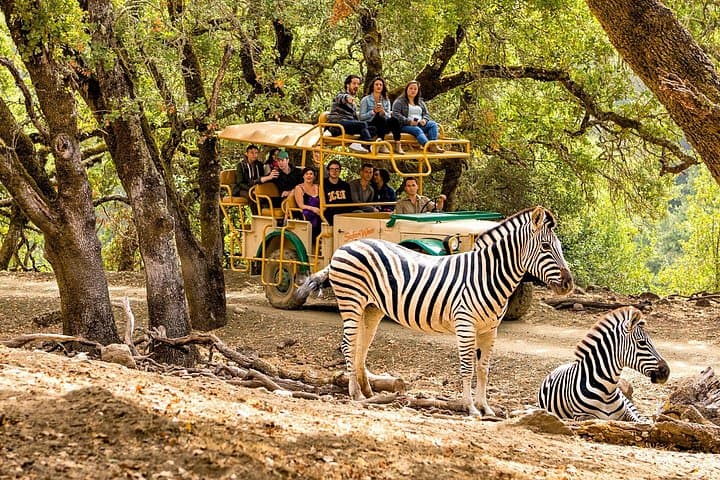
You pull into a dirt driveway framed by low, gnarled oaks and the last vineyards of Sonoma County, the air already warm with a June sun. Through the open sides of an armored Jeep the preserve opens like a theater: herds spread across tall, grassy paddocks; a giraffe lifts its long neck, deliberate and curious, to inspect the visitors; a breeze moves through acacia and eucalyptus and seems to hush the valley for the moment. That hush is the point — this is a wildlife preserve that borrows the language of the African savanna and writes it into Northern California landscape.
Safari West combines the theatrical thrill of a classic safari with the practical comforts of a three-hour guided operation. The tour begins on an open-air vehicle, led by guides who are part naturalist, part storyteller. You'll pass zebras and wildebeest, capricious antelope, and the slow confidence of cape buffalo. Later, walkable enclosures let you get a closer look at lemurs, a lush aviary of small songbirds, and a dedicated cheetah habitat where the cats pace a perimeter that hints at their heritage as sprinters of the plains. Children and adults lean forward in the same way here: small faces pressed to the railings; grown-up cameras trained and held steady.
This preserve sits in Sonoma’s transitional landscape — a place where oak woodlands meet grassland and vineyard. Geologically it's mild, the low ridges and alluvial fans of the Russian River watershed shaping gentle bowls of habitat rather than dramatic escarpments. The area's history is layered: indigenous Pomo and Wappo peoples managed these hills long before the arrival of ranchers and vintners; later, Sonoma County's modern identity became tied to fruit and wine production. Safari West is a different kind of stewardship — a private, conservation-minded sanctuary that opened in the late 20th century to house and breed a diversity of species and to educate visitors about wildlife needs and habitat protection.
What makes a visit worth the short drive from Santa Rosa isn’t just the animals but the thoughtful design. Enclosures are spacious and geared toward enrichment; guides explain the biology, social structure, and conservation status of each species. The reserve participates in conservation and education programs; every ticket sale supports care for more than 900 animals and on-site breeding initiatives. This is a place to see animals you won’t meet anywhere else in California without a passport — but it isn’t a zoo in the conventional downtown sense. The scale and the rhythm lean toward immersion.
Practicalities are simple: the standard experience runs about three hours and is family-friendly (children must be 4 or older). Book online to secure a spot — small-group tours can sell out on weekends and during school holidays. Arrive early for cooler light and calmer animals; mid-morning and late afternoon are often the most active windows for grazing and social behaviors. Wear closed-toe shoes for the brief walking sections and bring sunscreen and water — the sun finds the paddocks quickly, and shade can be sparse in summer.
Beyond optics and itinerary, a few on-the-ground tips smooth the day. Binoculars pay off — they make subtle patterns and distant horns readable. Keep voices low; guides appreciate restraint because animals respond to tone. Photography is forgiving: many animals are close, but fast-moving species like cheetahs require a shutter-happy approach with faster settings. Respect the animals’ space in walkable areas: touch is limited to guided interactions only, and the safety protocols are clear and enforced.
If you’re building a Sonoma weekend, pair Safari West with wine country in a practical way: mornings at the preserve, afternoons in tasting rooms or on short hikes among redwoods, and evenings at small-town restaurants. The preserve’s mission is local, educational, and conservation-focused — it’s one of the region’s less expected but deeply satisfying stops for travelers who want something more than vineyards and picnic blankets.
Why go? Because the experience compresses a little of what makes safaris compelling — scale, proximity, and stories about species survival — into a compact, accessible outing. You’ll leave with a sense of being in a place that cares for animals and invites you to care too, whether that means learning a new species name, supporting conservation programs, or making a mental note to return on a different season’s cycle when young animals or migratory birds might reshuffle the cast.
This is not an adrenaline sport; it is a deliberate encounter. It asks you to slow down and watch the giraffes deliberate over a branch, to notice the tiny, impatient hops of a lemur, to listen to a guide stitch anecdote to biology. For travelers who want nature with context — the hows and whys behind what they see — Safari West is a tidy, rewarding half-day that pairs well with a slow Sonoma itinerary.
Trail wisdom
Small choices, better day.
Book the earliest tour
Morning tours offer cooler light, calmer animals, and better photo opportunities.
Bring binoculars
A compact pair reveals patterns and distant behavior the naked eye misses.
Wear closed-toe shoes
Walkable areas include uneven dirt paths — comfortable, supportive shoes matter.
Respect the animals
Follow guide instructions; maintain quiet and avoid sudden movements in enclosures.
Local knowledge
Read the place, not just the route.
Watch for native species including Giraffe, Cheetah.
Keep an eye out for wildlife during the transition between areas and habitats. Respect distance guidelines.
Ticket sales support the care of over 900 animals and on-site conservation work; the preserve participates in species survival and educational initiatives.
Follow the guide's instructions on size limits, ethical handling, and leave-no-trace practices.
Lemur trail and aviary — quieter and great for detail photos. Nearby short hikes through oak woodland on regional preserves
Locally recommended viewpoints and quiet spots known best to local operators.
Safari West opened in the late 20th century as a private sanctuary focused on conservation, education, and breeding programs for multiple species.
Maritime roots and regional tradition shape the waterways and working coasts.
Seasonal guide
Four versions of the same landscape.
Spring
Best forYoung animal sightings · Wildflowers · Milder temperatures
ChallengesCrowded weekends · Occasional spring rains
Spring brings newborns and active animals; light is soft and temperatures are comfortable, making it the best season for families and photographers.
Summer
Best forLonger days · Early morning activity · School vacation visits
ChallengesHot afternoons · Stronger sun exposure
Summer offers extended hours and consistent schedules; aim for early tours to avoid heat and midday lethargy in the animals.
Fall
Best forCrisp air · Foliage contrast · Smaller crowds after Labor Day
ChallengesShorter daylight hours · Variable weather
Autumn has stable light and fewer visitors — a good season for quieter experiences and mild hiking nearby.
Winter
Best forCool, dramatic skies · Lower visitation · Rainy-season mood
ChallengesWet trails · Some habitats less active
Winter is quieter and moodier; expect wet ground and shorter tours if storms come through, but visitors enjoy more one-on-one time with guides.
Operator details
What the booking data adds.
Included
- ✓Professional guide
- ✓Transport by Jeep
Not included
- —Gratuities
- —Food and drinks (if you would like to eat at the on-site Savannah Cafe, please call Safari West to make a reservation after booking; the phone number will be on your voucher)
Good to know
- ✓Wheelchair accessible
- ✓Not recommended for travelers with spinal injuries
- ✓Not recommended for pregnant travelers
- ✓Not recommended for travelers with poor cardiovascular health
- ✓Travelers should have at least a moderate level of physical fitness
- ✓Minimum age is 4 years; all children must be accompanied by an adult
- ✓Please provide your contact information (i.e. 'on the road' contact number) at time booking
- ✓Guests are not permitted to take food out on the tour, but water bottles are welcome; during the summer months, the snack bar is open and guests may purchase sandwiches, chips, fruit, drinks and other items to eat during the tour break or afterward; you may also dine in the Savannah Cafe at your own expense (reservations can be made after booking)
- ✓Not recommended for pregnant women, as the tour includes a 2.5-hour drive over rugged terrain that may be uncomfortable
- ✓Hearing-impaired guests: While we do not provide interpreters, we welcome guests with hearing-related needs and encourage you to contact us in advance so our team can be prepared to support your experience.
- ✓Service animals: For safety reasons, service animals are not permitted on safari vehicles, but are allowed on the grounds. Please reach out before your visit so we can assist with planning.
- ✓Strollers: Strollers are welcome on our accessible lower grounds, but cannot be brought on safari vehicles.
- ✓Please arrive 15 minutes before your scheduled tour time
- ✓Weather: Tours run rain or shine. Please dress appropriately and wear comfortable shoes.
- ✓Toddlers & Infants: Children must be at least 4 years old to participate in the Classic Safari tour. If you're visiting with younger children, please contact us to learn more about family-friendly alternatives available at Safari West.
- ✓Our Guest Policy: Safari West is for Everyone: Just like the wildlife we care for, our guests reflect the rich diversity of the world around us—no matter your background, ability, or who you love. At Safari West, we strive to be a truly welcoming space for all. All families are welcome. Come as you are and experience the wild, together.
Pack with intention
What to bring.
Good to know
Common questions.
The standard Safari West experience lasts about three hours, including a guided vehicle tour and access to walkable habitats.
Plan the edges
The details that make the day easier.
Safari West cares for more than 900 animals and supports conservation and breeding programs on-site.
After your safari, head into downtown Santa Rosa for farm-to-table restaurants and local breweries or drive 20–30 minutes to Healdsburg for tasting rooms and a classic Sonoma wine-country meal.
- Closest airport
- Charles M. Schulz–Sonoma County Airport (STS). Driving distance from downtown Santa Rosa: ~10 miles
- 15–20 minutes. Cell service
- patchy in paddocks; OK in parking
- Passes
- Paid admission; book online to reserve a spot.
Safari West is conservation-focused — guests are asked to stay on designated paths, avoid feeding animals, and pack out trash; proceeds help fund animal care and habitat programs.
Explore by topic
Follow the threads.
Keep exploring
Make the story part of the trip.
In four hours you can move from shaded canyon ferns to wind-scoured coastal ridgelines, guided by someone who knows where the light—and the hidden views—live. This private half-day hike on the Monterey Peninsula or Big Sur is compact, curated, and perfect for travelers who want depth without a multiday commitment.
 Related story
Beneath a sky of shifting light, Skaftafell’s ice reads like a map of time. This three-hour guided glacier hike mixes technical instruction with geology and culture: compact, safe, and unforgettable.
 Related story
Lose the city for a few hours without leaving it: this 5-mile, 900-foot-gain Forest Park loop threads old-growth pockets, city viewpoints, and cultural landmarks for a compact taste of Portland’s wild side. Expect moss, roots, and stories.