
What the day feels like
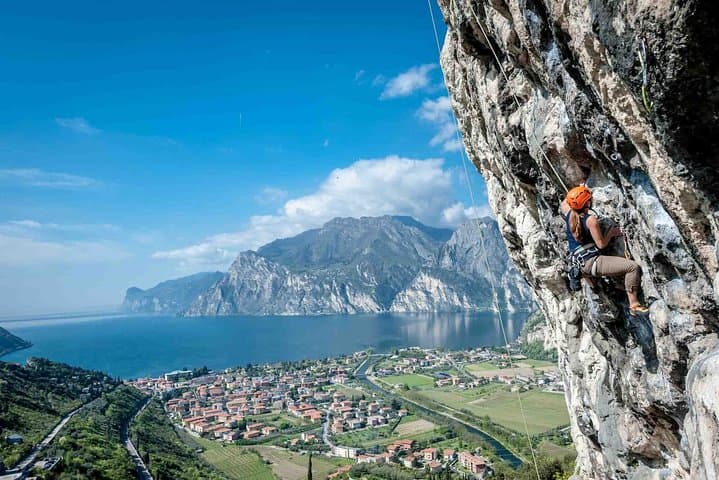
Morning slides into the Sarca Valley with a soft, amber light that seems to coax the limestone awake. The cliffs warm first, then the olive groves, then the river that threads past medieval towers and sleepy villages toward Lake Garda. On the rock above Trento, your fingers discover edges that feel as if they were placed there on purpose—pockets that invite, ledges that bargain, slabs that test trust without punishing it. The wall whispers: lean in, breathe, and move. This is the Fun Climb, a guided introduction to one of Europe’s most welcoming climbing playgrounds, where alpine air meets a Mediterranean rhythm and the stone itself gives beginners a fair shot.
Climbing here is a conversation with geology. These pale gray walls were born of an ancient sea; coral and shell compressed into limestone, then raised and sculpted by ice and water into pocketed faces and sinuous buttresses. The valley funnels breezes—the Ora in the afternoon, the Pelèr in the morning—that sweep heat off the routes, drying holds almost as fast as an afternoon shower can slick them. It’s why Trento and nearby Arco are a year-round draw, and why your guide can orienteer you to sun or shade, grippy slab or friendly overhang, as the day demands.
If you’ve heard whispers about the Sarca Valley, you’ve likely heard the superlatives. This corridor boasts one of Europe’s densest concentrations of bolted sport routes, from easy grade III and IV warmups to heady 30-meter classics. It’s also the spiritual home of modern sport climbing competitions: Arco’s Rock Master has been drawing the world’s best since 1987. Yet the beauty of this region—and the Fun Climb in particular—is how approachable it feels. Approaches are short. Anchors are modern. The stone isn’t out to school you; it’s here to teach you. The guides, many with Alpine credentials, know which sectors cradle apprehension and which feed ambition. They’ll tie your figure-eight, check the belay, and—just as important—read the room.
The morning starts with a boot check on gravel and a few minutes of knots-and-commands. The rope is patient; it asks for clarity. So does the belay device. There’s a short, pine-scented walk to the crag—maybe Bindesi above Trento or a sunny wall closer to the river—and the valley spreads below you in layers of orchards and steeples. When your turn comes, the first move is a lesson in trust. Limestone rewards accuracy more than force: a careful foot, a quiet hip. Holds appear as you commit, like the rock only reveals its logic once you’re all in. The wind nudges your helmet; swifts stitch the sky. A peregrine cuts a shadow that makes you feel smaller and braver at the same time.
On the ledge, you pause—not long, not the melodramatic kind of pause—and look out over Trento’s tiled roofs and the dark ribbon of the Adige River. Down there is espresso, cobbles, and the echo of history. Trentino was a frontier between empires; forts still stand guard in the hills, and the town’s Roman bones show through its Renaissance skin. Up here, the conversation is simpler: breathe, balance, push. The guide gives a cue; your feet answer. The rope hums in quiet approval.
What makes this adventure distinct among Italy’s mountain offerings is its blend of climate, culture, and convenience. The Sarca Valley sits at a crossroads: alpine peaks to the north, a mild, lake-tempered climate to the south. That means climbable rock most of the year, with sector choice a game of aspect and breeze. The cliffs are a short drive from Trento’s rail station; you can eat polenta with wild mushrooms at lunch and toast the day with a glass of Trentodoc sparkling wine by dinner. You don’t need to be a lifer to belong here. The routes, the air, the easy logistics—they break down the idea that climbing is only for those who speak in grades and hangboards.
Practicalities matter, and the Fun Climb has them dialed. Budget four hours, enough for a thorough safety briefing, a walk-in, and several rounds on routes that build confidence step by step. Wear snug climbing shoes if you have them (many programs can arrange rentals), and bring a light layer—the valley’s breezes are polite but persistent. The rock can feel slick in the midday heat; starting earlier gives your rubber a friendlier bite. Hydration matters more than you think on bright stone, even in cool weather; aim for at least a liter per person.
As your comfort grows, the guide might bump the grade or point you at a line that wanders across a sea of pockets. Your body learns micro-movements: pressing with the big toe, relaxing your grip, letting the wall carry part of the load. At the anchor, the valley breathes with you. The river hustles toward the lake as if it’s late for a meeting; the cliffs shrug off your nerves and offer another round. You lower to cheers—the kind that make climbing, at any level, a communal sport.
After the rope’s coiled and the chalk dust fades, linger. Wander Trento’s Piazza Duomo, visit an Austro-Hungarian fort like Castel Drena above the valley, or walk the Sarca’s riverside paths past olive groves and sleepy stone bridges. The day’s arc is simple and complete: a morning on limestone, an afternoon of gelato and history, an evening where the cliffs blush pink and the breeze sets the olive leaves whispering like an old friend with a secret.
Come for the climb, stay for the way this place makes movement feel natural. The rock invites. The valley encourages. And with a steady rope and a patient guide, you discover that Trento’s best beginner climb isn’t just safe and cheerful—it’s a doorway into Italy’s most lovable climbing scene.
Trail wisdom
Small choices, better day.
Start Early for Better Grip
Morning shade and cooler temps improve limestone friction and keep crowds down.
Choose Snug Shoes
A precise fit makes pocketed limestone far easier to read and trust for your feet.
Hydrate on Bright Stone
Bring at least 1L of water; reflected heat off light rock can dehydrate faster than you expect.
Mind Raptor Closures
Some sectors close seasonally for nesting birds. Obey signs and your guide’s directions.
Local knowledge
Read the place, not just the route.
Watch for native species including Peregrine falcons, Alpine swifts.
Keep an eye out for wildlife during the transition between areas and habitats. Respect distance guidelines.
Stay on established paths to reduce erosion, brush tick marks off holds, and respect seasonal raptor closures posted at crags.
Follow the guide's instructions on size limits, ethical handling, and leave-no-trace practices.
Bindesi crag above Trento for shady, beginner-friendly routes with city views. Forte di Cadine, an Austro-Hungarian fort with panoramic walkways and history panels
Locally recommended viewpoints and quiet spots known best to local operators.
Arco has hosted the Rock Master competition since 1987, and Trentino’s hills still hold Austro-Hungarian fortifications from before 1919.
Maritime roots and regional tradition shape the waterways and working coasts.
Seasonal guide
Four versions of the same landscape.
Spring
Best forCool temps · Wildflowers
ChallengesUnstable weather · Occasional closures for nesting raptors
March–May brings crisp friction and green valleys. Expect scattered showers; guides often pivot to faster-drying sectors.
Summer
Best forLong daylight · Evening climbs
ChallengesMidday heat · Popular crags get busy
Go early or late and chase shade. Afternoon Ora winds cool the valley, but plan water and sun protection.
Fall
Best forPrime friction · Stable weather
ChallengesShorter days · Harvest traffic on local roads
September–October is peak: dry rock, gold light, mellow temps. Book ahead if your dates are fixed.
Winter
Best forSunny south-facing walls · Quiet crags
ChallengesCold shadows · Short daylight
Choose sunlit sectors and bring a warm layer. Many days are surprisingly climbable thanks to the valley’s mild microclimate.
Operator details
What the booking data adds.
Included
- ✓Climbing equipment [shoes, helmet and harness]
- ✓Air-conditioned vehicle
- ✓Certified Mountain Guide
- ✓RC insurance
Not included
- —Snacks
- —Bottled water
Good to know
- ✓Service animals allowed
- ✓Not recommended for travelers with spinal injuries
- ✓Not recommended for pregnant travelers
- ✓Not recommended for travelers with poor cardiovascular health
- ✓Suitable for all physical fitness levels
- ✓What to wear: Appropriate footwear – Hiking shoes or boots with good grip, to tackle the route in safety and comfort. Personal backpack – With at least 2 liters of water eachEnergy snacks – Bars, nuts or other snacks. Sun protection – Hat, sunglasses and sunscreen. Technical clothing – Rain jacket.
Pack with intention
What to bring.
Good to know
Common questions.
No. The Fun Climb is designed for first-timers and beginners, with routes chosen to build skills safely.
Plan the edges
The details that make the day easier.
Arco’s Rock Master, founded in 1987 just south of Trento, is one of the world’s longest-running international sport climbing competitions.
Celebrate the send with a Trentodoc tasting at Palazzo Roccabruna’s Enoteca in Trento, then refuel on canederli and polenta at a local osteria. For a casual pint, try Birra del Bosco’s taproom or grab gelato in Piazza Duomo and people-watch beneath the cathedral’s rose window.
- Closest airport
- Verona (VRN), ~1 hr by car or train+bus. Most crags are 10–35 min from Trento. Cell service is generally good in the valley. No permits required for bolted crags; heed posted closures and private property signs.
The Sarca Valley’s limestone crags are heavily loved—use established trails, avoid brushing rare plants on ledges, pack out all trash, and minimize chalk marks near historic sites and villages.
Explore by topic
Follow the threads.
Keep exploring
Make the story part of the trip.
Set out from Bass Harbor for a private, customizable day on Blue Hill Bay — lighthouses, puffins, seals, and the chance to feel Acadia from the water. Small groups, local captains, unforgettable views.
In four hours you can move from shaded canyon ferns to wind-scoured coastal ridgelines, guided by someone who knows where the light—and the hidden views—live. This private half-day hike on the Monterey Peninsula or Big Sur is compact, curated, and perfect for travelers who want depth without a multiday commitment.
 Related story
Beneath a sky of shifting light, Skaftafell’s ice reads like a map of time. This three-hour guided glacier hike mixes technical instruction with geology and culture: compact, safe, and unforgettable.