
What the day feels like
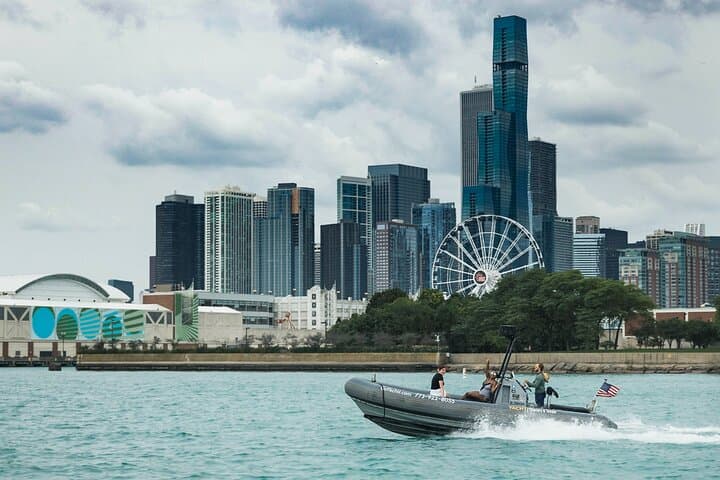
By the time the skyline resolves itself into a serrated silhouette, you already know the city is doing what it always does: claiming the horizon. The Willard Marine vessel hums beneath your feet—a former military hull retuned for tourism—its stainless frame vibrating with the promise of speed. You push away from the dock at Navy Pier and the Loop peels away like a postcard being flipped. The wind finds every seam of your jacket; spray stitches cool lines across your face. Then the pilot thumbs the throttles and the boat leans into a turn, carving a wake that seems to dare the shoreline to keep up.
This is not the languid architecture cruise most Chicago visitors expect. It’s an urban roller coaster that marries local history to a brisk shot of adrenaline: 90 minutes that combine high-speed runs (up to 35 knots when conditions allow), tight spins, and calmer stretches where the city’s story is told—its industrial past, its lakefront parks, and the architecture that turned a marsh into a metropolis. The experience works because it’s honest about what it is: part sightseeing, part thrill ride, all of it staged against one of the country’s most muscular skylines.
Geology and history are part of the script. Lake Michigan is a pocket of post-glacial water—an inland sea carved and fed by ice and melt—and Chicago sits on the edge of that story. The lake shaped shipping routes and industry, and the shoreline became the stage for Chicago’s rebirth after the 1871 fire. The city’s signature architecture—skyscrapers by Burnham and Mies van der Rohe, the civic lingering of the 1909 Plan of Chicago—reads differently from the water. Seen from the lake, the Loop is both spectacle and map: grain elevators, old piers, modern towers, and the scars of commerce.
Culturally, the shoreline is an extension of the city’s democratic public realm. Beaches, parks, museums, and Navy Pier (opened in 1916 as a shipping and recreational hub) bring locals and visitors into purposeful collision. The tour itself plays off that energy; the narration anchors the speed with context—where the sandbar once forced ships into narrower channels, where the Illinois & Michigan Canal once connected the heartland to the Atlantic, and how the reversal of the Chicago River dramatically altered both city planning and public health in the 19th century.
Practical notes matter here, because the experience is at once casual and kinetic. The boat holds firm in open water but the front-row seats will get you wet; rear seating is calmer and better for photos. The operator runs a tight ninety-minute itinerary—the tour is instant-confirmation and priced from $90—and it’s well-rated by guests for both safety and storytelling. The vessel’s military lineage is visible in the build: sturdy, responsive, designed to handle speed without drama, which is useful if you’re the sort who likes the sensation of momentum without losing your composure.
Timing is everything. Summer afternoons bring the warmest water and the longest days, but the best light is early evening when the sun angles off glass and steel and the lake takes on that low, cool blue Chicago photographers covet. If you want to avoid bigger crowds on the pier, book a midweek morning or an early evening slot. Bring a windproof layer and sunglasses with a strap; the light off Lake Michigan is honest and strong.
Safety is pragmatic: life jackets are on board, the crew briefs riders on seating and movement, and the boat’s rating and inspection history are solid. If you’re prone to motion sickness, consider medication or a seat near the centerline. For families, teens and most adults will find the ride invigorating rather than overwhelming—operators rate the experience as accessible, but mobility limitations should be checked at booking.
Beyond the tour itself, the shoreline invites a longer itinerary. Pair the ride with a walk along the Riverwalk or an afternoon at the Art Institute. Stop for a deep-dish slice or a Chicago-style hot dog afterward: the city’s food culture is as much a part of the shoreline’s draw as its stone and steel. For photographers, the combination of speed, skyline, and changing water light is a rare, dynamic canvas.
If you love the smell of lake spray, the geometry of buildings, and the sensation of being both close to a city and far enough away to feel the scale of the Great Lakes, the Chicago Shoreline Adventure Boat Tour is a precise fix. It’s not a slow Sunday float, and it doesn’t pretend to be. It’s engineered to show you the shoreline’s stories quickly—and memorably—so you leave both wet and informed.
What to know before you go: the tour is ninety minutes, runs on a former military Willard Marine hull capable of 35 knots, and is priced from $90 with instant confirmation and free cancellation. Dress in layers, secure loose gear, and pick your seat according to how much spray you want. Leave a camera with a wrist strap at the ready, and plan time before or after to explore Navy Pier and the nearby riverfront. For anyone wanting a condensed, kinetic narrative of Chicago’s relationship to the lake, it’s a smart, spirited way to see the city from the water.
Trail wisdom
Small choices, better day.
Choose Your Seat Intentionally
Front seats deliver spray and the best thrill; rear seats are more sheltered and better for steady photos.
Dress in Layers and Wear a Windproof Shell
Lake Michigan’s breeze strips heat quickly; a windbreaker keeps spray and chill at bay.
Secure Cameras and Sunglasses
Use straps—wind and spray can take loose items overboard in a heartbeat.
Consider Motion Sickness Prep
If you’re sensitive to motion, take preventative meds or sit near the boat’s center for less movement.
Local knowledge
Read the place, not just the route.
Watch for native species including Ring-billed Gull, Double-crested Cormorant.
Keep an eye out for wildlife during the transition between areas and habitats. Respect distance guidelines.
Lake Michigan faces invasive species and shoreline erosion; stick to marked access points, avoid feeding wildlife, and pack out all trash.
Follow the guide's instructions on size limits, ethical handling, and leave-no-trace practices.
Sculptured shoreline north of Navy Pier where small lighthouses and pilings make compelling photo compositions. A short detour past the historic 53rd Street beaches offers quieter views and local birdlife in season
Locally recommended viewpoints and quiet spots known best to local operators.
Chicago’s lakefront was reshaped after the 19th-century river reversal and the 1909 Plan of Chicago, turning industrial shoreline into extensive public parks and piers.
Maritime roots and regional tradition shape the waterways and working coasts.
Seasonal guide
Four versions of the same landscape.
Spring
Best forCool, clear light · Migratory birdwatching
ChallengesChoppy water from spring storms · Cool winds off the lake
Spring brings brisk air and migrating waterfowl; expect sharper light but occasional wind-driven chop—dress warm.
Summer
Best forWarm water and long days · Evening skyline light
ChallengesCrowded piers and peak bookings · Hot sun and glare
Summer is peak season—book early for evenings when the skyline glows and days are long, but expect crowds and strong sun.
Fall
Best forCalmer water · Crisp, clear vistas
ChallengesCooling temperatures · Shorter daylight hours
Fall offers crisp air and clean, blue-hued views; temperatures drop quickly after sunset, so layer up.
Winter
Best forQuiet shoreline photography · Off-season perspective
ChallengesLimited operations · Cold, raw winds and ice conditions
Winter tours are rare and often curtailed by weather—check operator schedules and expect serious cold if available.
Operator details
What the booking data adds.
Included
- ✓Fuel surcharge
Good to know
- ✓Service animals allowed
- ✓Infants are required to sit on an adult’s lap
- ✓Not recommended for travelers with spinal injuries
- ✓Not recommended for pregnant travelers
- ✓Not recommended for travelers with poor cardiovascular health
- ✓Suitable for all physical fitness levels
Pack with intention
What to bring.
Good to know
Common questions.
The tour runs approximately 90 minutes.
Plan the edges
The details that make the day easier.
Lake Michigan is the only one of the Great Lakes located entirely within the United States.
After the tour, stroll the Navy Pier for local vendors and live music, grab a Chicago-style deep-dish slice at Lou Malnati’s or a classic hot dog at Portillo’s, then walk the Riverwalk for craft breweries and riverfront bars—perfect to decompress after a high-speed outing.
- Closest airports
- O'Hare (ORD) or Midway (MDW); Departure dock: Navy Pier area; Driving from downtown Loop: 5–15 minutes; Cell service: generally good near shore, may drop further on open water; Permits: none required—book through operator.
This tour operates on Lake Michigan—avoid single-use plastics, pack out trash, and respect no-wake zones near wildlife habitats to minimize disturbance.
Explore by topic
Follow the threads.
Keep exploring
Make the story part of the trip.
Set out from Bass Harbor for a private, customizable day on Blue Hill Bay — lighthouses, puffins, seals, and the chance to feel Acadia from the water. Small groups, local captains, unforgettable views.
In four hours you can move from shaded canyon ferns to wind-scoured coastal ridgelines, guided by someone who knows where the light—and the hidden views—live. This private half-day hike on the Monterey Peninsula or Big Sur is compact, curated, and perfect for travelers who want depth without a multiday commitment.
 Related story
Beneath a sky of shifting light, Skaftafell’s ice reads like a map of time. This three-hour guided glacier hike mixes technical instruction with geology and culture: compact, safe, and unforgettable.