
What the day feels like
The wind off Frenchman Bay starts the conversation before anyone says a word. It whispers through spruce and fir, sprints across granite ledges, and rushes to meet the ocean’s thrum. Then Thunder Hole speaks—and the Atlantic answers. A swell barrels into the narrow cleft, compresses, and erupts with a hollow boom that you feel in your sternum, a salty mist leaping skyward as if the sea is grinning at its own trick. On a crisp morning in Acadia National Park, the coast has agency. The park invites; the ocean insists.
This four-hour, fully narrated circuit through Acadia strings together the park’s greatest hits with just enough quiet corners to let the place sink in. It’s the kind of outing that folds geology into your memory without a textbook and hands you New England’s maritime history as easily as a lighthouse postcard. Book the [4 Hour Acadia National Park Tour](https://app.advcollective.com/local-experts/4-hour-acadia-national-park-tour) and you’ll board in Bar Harbor, tracing a route that slips past Gilded Age “cottages”—mansions, really, built when titans of industry sought cool sea breezes and a bit of privacy at the edge of Maine.
Acadia is granite and grit. The pink-hued bedrock underfoot is the exposed top of a magma chamber that cooled slowly deep underground nearly 400 million years ago. A mile-thick glacier later carved U-shaped valleys, left kettle ponds, and smoothed the park’s rounded domes. You’ll touch that story at your first major stop: Cadillac Mountain. The summit, at 1,530 feet, is the highest point on the North Atlantic seaboard, a bald crown of granite whalebacks and low-lying blueberry scrub that turns the whole mountaintop a shock of crimson in fall. On clear days, the view slaloms between islands like buoys in a painter’s palette. The wind arrives from every direction up here—it tests your layers, nudges you to the railing, and dares you to stay just a minute longer.
Down the mountain, the itinerary threads toward Ocean Drive and the famous rumble of Thunder Hole. The sea here is always working; even on calm days it throws its shoulder into the coastline. At mid-to-high tide, the blowhole performs, sending spray arcing into the air against a chorus of oohs from the overlook. On wild days, it’s a spectacle best admired from a safe distance; the Atlantic has a way of reminding you who’s in charge. Guides point out Sand Beach, where cold Gulf of Maine currents keep swimmers honest, and the imposing bulk of Otter Cliffs—a granite headwall beloved by climbers when seabirds cede the real estate.
Between dramatic edges, Acadia tends to you in smaller, quieter gestures. At Sieur de Monts Spring, the [Wild Gardens of Acadia](https://app.advcollective.com/local-experts/4-hour-acadia-national-park-tour) gather native plants in a tidy microcosm of the park’s habitats. Boardwalks tiptoe over delicate wetlands, the air laced with balsam and a hint of peat. This is the park’s heartbeat—a place to learn the names of things and to slow your steps. The nearby Nature Center pulls back the curtain on how glaciers shaped these valleys, why fog is a summer regular, and what lives in the spruce-fir forest at dawn.
Jordan Pond is the day’s exhale: a crystal-clear glacial pool backed by the rounded humps of the Bubbles. The shoreline path is level and tastefully boardwalked in places to protect sensitive roots. Bald eagles draft on thermals overhead; loons thread the water’s surface as if drawing a needle through silk. If timing and appetite align, the Jordan Pond House tempts with popovers—the stuff of Downeast lore—served with butter and jam on a lawn that spills toward the water. It’s a civilized pause in a rugged place.
Between each stop, the guide narrates a cultural map that stretches from the Wabanaki People, who have paddled these waters in birchbark canoes for millennia, to French explorer Samuel de Champlain, who came ashore in 1604 and named the island Île des Monts Déserts for its bare mountain tops. You’ll hear how philanthropists and visionaries like George B. Dorr and John D. Rockefeller Jr. fought to create and protect a national park here, and how Rockefeller’s carriage roads—with their granite “coping stones” called Rockefeller’s teeth—still lace the interior and invite serene walks and rides. The Great Fire of 1947, which scorched much of Mount Desert Island, is part of the story too; its legacy is evident in the tapestry of second-growth spruce and hardwood now sweeping the slopes.
What makes this tour work is pacing. Four 30-minute stops deliver time to wander, photograph, and breathe without the pressure of bagging miles. It’s approachable for families and casual walkers yet satisfying for seasoned outdoors folks who want context with their views. The route is intentional: high vantage points for orientation, dynamic coastline for drama, intimate gardens for detail, and a glacial pond for calm. It’s a sampler that tastes complete.
Planning-wise, coastal Maine rewards preparation. Fog can roll in like a curtain, offering mood over panoramas; layers are non-negotiable, especially on Cadillac where wind bites even in July. Footing is generally easy—paved paths and boardwalks dominate—but closed-toe walking shoes make photo detours comfortable. Bring water; even on a cool day, the ocean salt and granite glare ask more of you than you expect. And if Thunder Hole is on your must-see list, aim for a visit within a couple hours of high tide when the boom is most likely to show off.
There’s a practical rhythm to this half day: start with curiosity, layer on knowledge, and finish with confidence about what to explore next. If you’re short on time, it’s the smartest way to decode the park. If you’re here for a week, it’s the perfect prologue. Either way, the narration gives you the keys. When you’re ready to go deeper—perhaps a carriage road bike ride or a sunrise return to Cadillac—you’ll know where and why. Until then, the coast keeps talking, and Acadia keeps answering. Start the conversation with the [4 Hour Acadia National Park Tour](https://app.advcollective.com/local-experts/4-hour-acadia-national-park-tour)—a compact, essential introduction to Maine’s crown jewel.
Trail wisdom
Small choices, better day.
Time Thunder Hole Right
For the signature boom, aim to visit within 1–2 hours of high tide. At low tide the blowhole is quieter and spray is minimal.
Dress For Cadillac Wind
Even in summer, temperatures and wind on Cadillac Mountain can be 10–15°F cooler than town—bring a windproof layer.
Wear Real Walking Shoes
Paths are easy, but granite ledges and wet boardwalks can be slick. Closed-toe shoes with traction are safer for photo stops.
Respect Ocean Power
Rogue waves happen—stay behind railings at Thunder Hole and avoid wet, dark rocks that signal recent wave wash.
Local knowledge
Read the place, not just the route.
Watch for native species including Bald eagles, Harbor seals.
Keep an eye out for wildlife during the transition between areas and habitats. Respect distance guidelines.
Stay on designated paths and boardwalks to protect fragile plant communities. Riding with a tour outfit reduces vehicle congestion on the Park Loop Road.
Follow the guide's instructions on size limits, ethical handling, and leave-no-trace practices.
Otter Cove pullout at low tide for tidepooling and a quieter angle on Otter Cliffs. Hemlock-laced boardwalk loops in the Wild Gardens of Acadia near Sieur de Monts
Locally recommended viewpoints and quiet spots known best to local operators.
Acadia’s roots trace to the Wabanaki People and to Samuel de Champlain’s 1604 voyage; the park was later shaped by conservationists like George B. Dorr and John D. Rockefeller Jr., whose carriage roads still define the interior.
Maritime roots and regional tradition shape the waterways and working coasts.
Seasonal guide
Four versions of the same landscape.
Spring
Best forWildflowers · Cool hiking temps
ChallengesBlack flies · Unpredictable fog
May–June brings blooming trails, cool air, and fewer crowds. Expect rapid weather changes and occasional trail closures as the park emerges from winter.
Summer
Best forOcean views · Family outings
ChallengesCrowds · Parking congestion · Humidity and haze
July–August is peak season with long daylight and lively Bar Harbor evenings. Plan ahead for traffic and book tours early.
Fall
Best forFoliage · Crisp air
ChallengesCooler, windy summits · Shorter days
Late September to mid-October offers dazzling color, clear skies, and comfortable temps. Layer up for sharp winds on Cadillac.
Winter
Best forSolitude · Snowy vistas
ChallengesLimited services · Icy conditions · Road closures
Many park roads close, but coastal views and select carriage roads can still shine on calm days. Check conditions before you go.
Pack with intention
What to bring.
Good to know
Common questions.
Expect light walking at four stops—typically paved paths and boardwalks with gentle grades—totaling up to a mile.
Plan the edges
The details that make the day easier.
At 1,530 feet, Cadillac Mountain is the highest point on the North Atlantic seaboard and, seasonally, among the first places in the U.S. to see sunrise.
Post-tour, stroll Bar Harbor’s waterfront for lobster rolls at Side Street Cafe or classic popovers at Jordan Pond House. Sample Maine craft beer at Atlantic Brewing Company and wander the Shore Path at sunset to watch schooners ghost across Frenchman Bay.
- Closest airports
- Hancock County–Bar Harbor (BHB, ~12 mi) and Bangor (BGR, ~50 mi). Tour departure: 49 West St, Bar Harbor. Drive time from downtown Bar Harbor to Park Loop Road: 5–15 minutes. Cell service: Reliable in town, spotty in the park. Permits: Park entrance fee required; Cadillac vehicle reservations are seasonal but commercial tours handle access.
This coastal ecosystem is sensitive—stay behind railings at wave-exposed viewpoints, keep off cryptogamic soils and fragile vegetation, and pack out all trash. Joining a guided tour reduces traffic and emissions compared to multiple private vehicles.
Explore by topic
Follow the threads.
Keep exploring
Make the story part of the trip.
In four hours you can move from shaded canyon ferns to wind-scoured coastal ridgelines, guided by someone who knows where the light—and the hidden views—live. This private half-day hike on the Monterey Peninsula or Big Sur is compact, curated, and perfect for travelers who want depth without a multiday commitment.
 Related story
Beneath a sky of shifting light, Skaftafell’s ice reads like a map of time. This three-hour guided glacier hike mixes technical instruction with geology and culture: compact, safe, and unforgettable.
 Related story
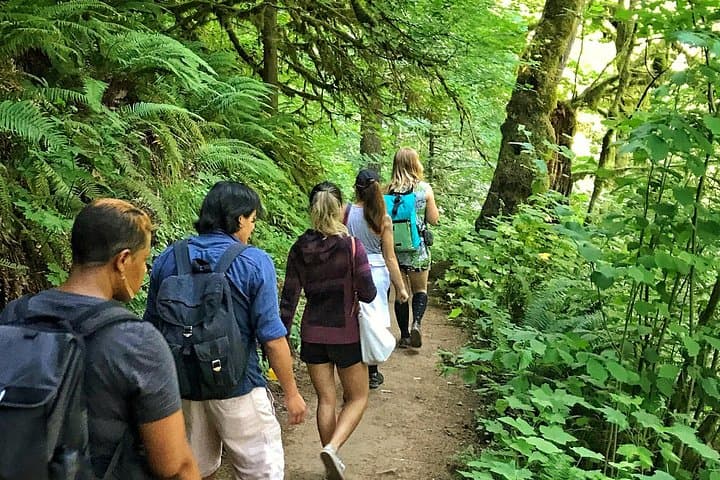
Lose the city for a few hours without leaving it: this 5-mile, 900-foot-gain Forest Park loop threads old-growth pockets, city viewpoints, and cultural landmarks for a compact taste of Portland’s wild side. Expect moss, roots, and stories.