
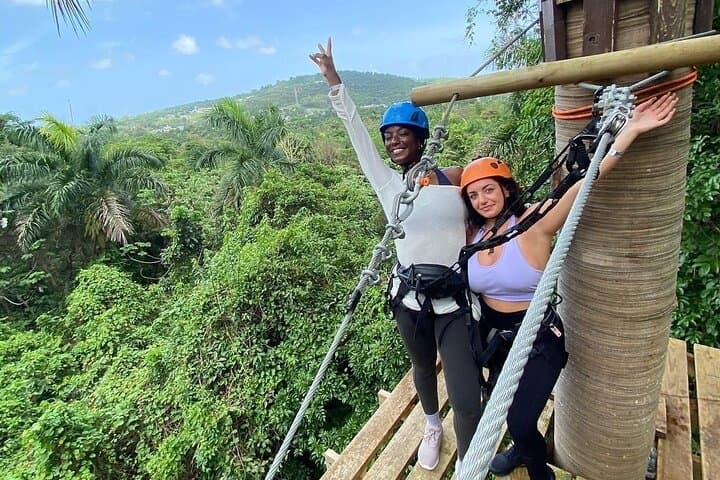
What the day feels like
You step off the van and the air changes—warm, heavy, alive. Leaves clap softly above you; a distant river threads the valley with silver light. For the next hour the forest will press close, an ecosystem that moves with you: vines that beckon, roots that test your footing, and a chorus of birds that punctuate the silence. The Adventure Trail Tour in the foothills of the National Rainforest is a quick, concentrated taste of El Yunque’s lower slopes—designed for families, first-time hikers, and anyone who wants an intense nature fix without a multi-day commitment.
This is a guided walk rather than a summit push. The itinerary is compact—roughly a 1–2 mile loop with 200–400 feet of elevation gain—tailored to fit the 60-minute window advertised. But distance doesn’t equal depth here. Guides pause at freshwater streams, explain the role of endemic trees like tabonuco and ceiba, and point out tropical lichens and frogs that use the understory as a nursery. Kids as young as eight are welcome, which shapes the pace: deliberate, story-rich, and attentive to safety.
El Yunque occupies a unique place in the American landscape. It’s the only tropical rainforest in the U.S. National Forest System, an archive of living biodiversity and Taíno folklore. The foothills you walk through were once dotted with small farms and selective logging roads; today the trails serve conservation and education. The tour threads a story that ranges from geology—ancient volcanic soils and steep ridgelines—to culture: how local communities in Luquillo and the surrounding municipalities have long relied on mountain water for agriculture, and how more recent eco-tourism helps fund protection.
Geologically the area is young enough to feel raw: quick-draining soil, jagged outcrops, and streams that have carved terraces into the valley. Rainwater here moves with purpose. On the trail the water dares you to notice it—trickling over stones, pooling beneath ferns, and slipping into underground channels that feed coastal aquifers. Guides will demonstrate how small watersheds in the foothills matter for coastal health: what happens on the ridge doesn’t stay there.
What you’ll feel is the rainforest’s personality—humid, capricious, and oddly domestic. Trees are sculpted by wind and cloud, and light filters in matted patterns that change by the minute. When the sun breaks through, leaves shimmer as if the forest has been catching its breath. When it rains, the canopy becomes a roof that drums and the understory becomes a cathedral. The guides—local, often born within an hour’s drive—link natural history to daily life. Expect stories about the Taíno gods associated with El Yunque, the narrow specialty crops of nearby farms, and how hurricanes have rewritten landscapes in visible ways.
Practical detail matters. Footing will vary from packed dirt to slippery rock where streams cross the trail; expect roots, short stair sections, and occasional muddy patches after rain. The trail is family-friendly but not stroller-friendly. There are no technical climbs or exposed ridgelines, but you’ll be glad you have steady footwear and a daypack. The tour is an excellent option if you’re short on time in San Juan or Luquillo but want to leave the beaten beachfront behind for something greener and cooler.
Timing is everything. Early morning brings the clearest light and the most active birdlife; late afternoon carries softer color and the chance of a brief, tropical downpour. Hurricane season—roughly June through November—means tours operate with an eye on conditions; guides adjust routes to avoid washed-out sections.
Beyond the walk itself, the trip connects to a local economy that’s gaining momentum. Many operators source guides locally and work with nearby eateries that serve mofongo, fresh fish, and cold local cervezas—a perfect way to close an hour spent in the forest. If you’ve got an extra half-day, combine this one-hour tour with a visit to Luquillo’s kiosks or a drive up PR-191 to higher vantage points in El Yunque.
For travelers, this tour is an accessible introduction with a strong educational angle. It’s one of those trips where the ratio of insight to effort is unusually high: you don’t need to train for weeks, but you do need to come prepared to engage—listen, look, and slow down. That makes it ideal for parents introducing children to trail culture, for photographers wanting controlled, intimate rainforest scenes, and for anyone who wants to understand how tropical uplands stitch into coastal life.
If you go: wear grippy trail shoes, bring a light rain shell, hydrate before you start, and leave room in your schedule to linger afterward in Luquillo. The forest will give you an hour, but it also offers a cue: these foothills are not a backdrop; they’re a neighbor. Treat them as such—curious, respectful, and ready to tell a story if you’ll listen.
Trail wisdom
Small choices, better day.
Wear grippy shoes
Trail surfaces include wet rock and exposed roots—trail-running shoes or light hikers give the best traction.
Bring a light rain shell
Cloud bursts are frequent; a packable rain shell keeps you dry without weighing you down.
Hydrate in advance
The humidity makes exertion feel harder—drink water before the tour and carry a small bottle.
Keep noise low
Guides point out small wildlife best heard rather than chased—soft voices increase wildlife encounters.
Local knowledge
Read the place, not just the route.
Watch for native species including Puerto Rican tody (San Pedrito), Coquí frogs.
Keep an eye out for wildlife during the transition between areas and habitats. Respect distance guidelines.
Tours support education and local stewardship; stick to trails, avoid disturbing plants and wildlife, and pack out all trash.
Follow the guide's instructions on size limits, ethical handling, and leave-no-trace practices.
Small freshwater pools below minor cascades that warm slightly in shallow sunlight. Nearby roadside kiosks in Luquillo offering seafood and local fritters (kioskos)
Locally recommended viewpoints and quiet spots known best to local operators.
El Yunque is the only tropical rainforest in the U.S. National Forest System and has been a culturally important landscape for Taíno communities.
Maritime roots and regional tradition shape the waterways and working coasts.
Seasonal guide
Four versions of the same landscape.
Spring
Best forBirdwatching · Wildflower blooms
ChallengesUnpredictable showers · High humidity
Spring brings active birdlife and lush growth; expect warm, humid conditions with intermittent showers.
Summer
Best forDense canopy photography · Family outings
ChallengesHurricane-season storms · Hotter, stickier afternoons
Summer offers full foliage and good light in the morning, but tours monitor weather closely during hurricane season.
Fall
Best forCalmer trails post-summer · Fewer crowds
ChallengesResidual storm activity · More muddy trails
Fall can be quieter and green, though occasional tropical systems can still affect trails.
Winter
Best forCooler mornings · Clearer visibility from ridge spots
ChallengesHigher rainfall in some years · Cooler, damp nights
Winter brings slightly cooler mornings and clear, crisp air—ideal for focused nature walks, though rain is still possible.
Operator details
What the booking data adds.
Included
- ✓Professional guide
- ✓Bottled water
- ✓Use of helmet, harness and gloves
- ✓Tour escort/host
Not included
- —Gratuities
- —Hotel pickup and drop-off
- —Food and drinks
Good to know
- ✓Public transportation options are available nearby
- ✓Not recommended for travelers with spinal injuries
- ✓Not recommended for pregnant travelers
- ✓Not recommended for travelers with poor cardiovascular health
- ✓Suitable for all physical fitness levels
- ✓What to wear: Pants or leggings (short or long), close shoes (sneakers, hiking shoes), if long hair use a low bun or pony tail.
- ✓What NOT to wear: Bathing suits, sandals, water shoes or skirts
Pack with intention
What to bring.
Good to know
Common questions.
The guided trail is designed to last about 60 minutes, covering roughly 1–2 miles with gentle elevation gain.
Plan the edges
The details that make the day easier.
El Yunque is the only tropical rainforest in the U.S. National Forest System and contains species found nowhere else in the world.
After the tour, head into Luquillo’s kiosks for freshly fried bacalaítos or a plate of grilled fish and plantains, then grab a cold Medalla at a seaside bar—local guides often recommend specific stalls for the best flavors.
- Closest airport
- Luis Muñoz Marín International (SJU)
- Driving distance
- ~45–60 minutes to Luquillo
- Cell service
- intermittent on trails
- Permits
- None for guided short tours, but check with operator for group specifics
This area is ecologically sensitive—stay on marked trails, avoid single-use plastics, and support guides who contribute to conservation and local community projects.
Explore by topic
Follow the threads.
Keep exploring
Make the story part of the trip.
Set out from Bass Harbor for a private, customizable day on Blue Hill Bay — lighthouses, puffins, seals, and the chance to feel Acadia from the water. Small groups, local captains, unforgettable views.
In four hours you can move from shaded canyon ferns to wind-scoured coastal ridgelines, guided by someone who knows where the light—and the hidden views—live. This private half-day hike on the Monterey Peninsula or Big Sur is compact, curated, and perfect for travelers who want depth without a multiday commitment.
 Related story
Beneath a sky of shifting light, Skaftafell’s ice reads like a map of time. This three-hour guided glacier hike mixes technical instruction with geology and culture: compact, safe, and unforgettable.