
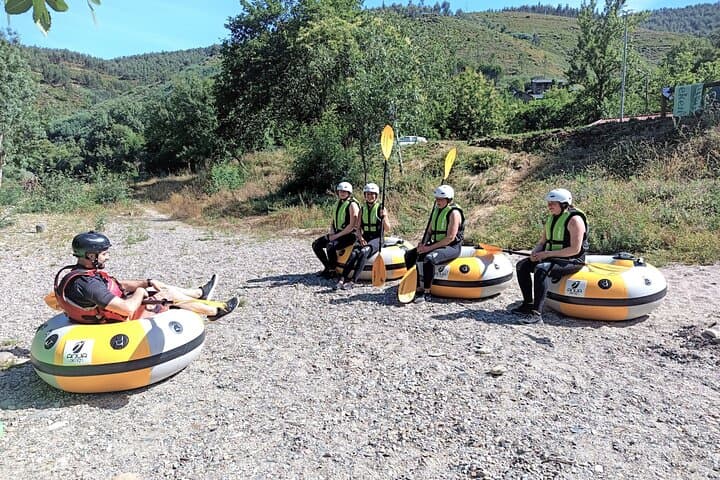
What the day feels like
The river meets you first as a sound: a rush that slips under the trees and gathers heat into sudden white lines between boulders. You climb into an inflatable tube, shoulder the weight of sunscreen and a grin, and let the Paiva take its workmanlike time deciding your pace. It nudges, tugs, and then—without ceremony—pulls you into a small, playful rapid that flips the world sideways for a moment. Laughter is the only sensible response. Between the rapids the tube becomes a lounger; the water laps like a patient neighbor. The cliffs go vertical, the oaks and chestnuts hang over their edges, and the valley narrows until your camera can’t quite capture the scale.
River tubing on the Paiva is an approachable, slightly unpredictable way to read a landscape. The trip advertised from Arouca runs about four hours and is built around the river’s summer temperament: clear, cold in places, fast in others, and honest about where adventure begins. You will float through a sequence of short rapids—enough to deliver adrenaline and quick jumps you can take at your own risk—and long, quiet pools where the rock shelves invite sunning. Guides set you up with tubes, helmets, and life jackets; they know where to avoid when the currents stack and where to pull for a safe cliff jump.
This gorge is carved through schist and granite, a geological narrative that reads in steep layers and broken bedrock. The Paiva’s course funnels water through narrow canyons and over ledges, creating the micro-rapids that make tubing fun but also keep the river honest. The surrounding territory sits inside the broader Arouca Geopark, an area recognized for its dramatic tectonic scars and fossil-rich outcrops. The landscape has been used and shaped by people for centuries—small farms and hamlets cling to the upland terraces, and stone bridges mark old routes between valleys.
Culturally, Arouca is quiet but full-bodied: monasteries and local crafts speak to a history of rural resilience. The river’s name crops up in local lore and menus, too—the valley’s forests have long supported chestnut harvests and trout, and there are simple taverns in town offering grilled river fish and regional cheeses to refuel on after time in the water. If you’re leaving from Porto for a day trip, the road winds into a different tempo—urban rush gives way to steady bends and then to a slower clock where the river calls the shots.
Practicalities are straightforward but worth respecting. The advertised duration is four hours door-to-door on the water; that includes safety briefings, a guided float, and chances to swim or jump at supervised spots. Expect minimal elevation change in the sense of hiking—this is primarily a water descent—but bring footwear that stays on and dries quickly (lace-up neoprene shoes or sturdy sandals). A wetsuit is sometimes provided by operators in cooler months; in high summer it’s often optional.
Safety is simple in principle: stay with the group, respect the guide’s instructions at rapids and jumps, and choose conservative options if you’re unsure. Hydrate before you get in; river descents feel cool but sun and exertion add up fast. Pack any medication you might need in a small dry bag, and keep an eye on younger participants—this activity skews toward approachable fun, but the Paiva is a real river with currents and rocks.
For photographers, the Paiva rewards compactness. A waterproof camera or phone case that stays clipped to your person will get the best angles—overhead cliffs, under-leaf shafts of light, and the mid-river expression of a friend about to run a rapid. Expect patchy cell service down in the gorge; post your best shots later and relish the slow upload.
Logistically, many travelers base themselves in Arouca or make a day trip from Porto (roughly 60–90 minutes by car depending on route). Tours are often instant-confirmation bookings and include equipment and guides; reservations are wise on summer weekends when local traffic and demand rise. There are no special permits required for guided tubing, but always check with your operator about minimum age and weight restrictions, and whether they include pickup from central points in Arouca.
In the end, tubing the Paiva is about calibrated risk and big scenery. The river gives you moments—an unassuming rapid that becomes a highlight, a cliff that begs a practiced jump, a pool whose glassy surface reflects the valley’s geometry. It’s social without feeling crowded, physically engaging without requiring technical river skills, and intimately connected to a landscape that has been reading its course for millennia. For anyone who wants a day that’s part adrenaline, part meditation, and wholly place-driven, the Paiva delivers with a grin and a current that won’t let you dawdle.
After the water, plan for a slow meal: grilled trout or a regional stew paired with vinho verde or a local craft beer. Walk the short streets of Arouca to find a café with a shaded terrace. If you have extra time, loop some of the Passadiços do Paiva—wooden walkways that offer another perspective of the river’s geology—or visit a local bakery for sweet chestnut pastries that taste like the valley itself. The river’s edge is social in a different register: where adventure meets a table.
Trail wisdom
Small choices, better day.
Secure Footwear
Wear lace-up neoprene shoes or sturdy river sandals to protect toes on rocky entries and exits.
Hydrate Before Launch
Drink water and eat a light meal beforehand—cold river water masks exertion and sun adds up quickly.
Listen to Guides
Follow instructions for rapids and jump spots; guides know the safest lines and pull-out zones.
Protect Electronics
Use a clip-on dry bag or waterproof case for phones and cameras to keep them secure on the tube.
Local knowledge
Read the place, not just the route.
Watch for native species including European otter, Common kingfisher.
Keep an eye out for wildlife during the transition between areas and habitats. Respect distance guidelines.
Operators emphasize leave-no-trace practices; avoid polluting the river and stick to established launch and exit points to protect riparian habitats.
Follow the guide's instructions on size limits, ethical handling, and leave-no-trace practices.
Short side trails along the Passadiços do Paiva for elevated river views. Small pools and cascades upstream that are quieter than main tubing sections
Locally recommended viewpoints and quiet spots known best to local operators.
The Paiva Gorge cuts through schist and granite and is part of the Arouca region—a landscape shaped by tectonic activity and centuries of local agricultural life.
Maritime roots and regional tradition shape the waterways and working coasts.
Seasonal guide
Four versions of the same landscape.
Spring
Best forWildflowers and green valley vistas · Lower crowds · Cooler water flows
ChallengesChilly water temps · Unpredictable spring rains
Spring brings lush colors and fewer visitors but water remains brisk; a wetsuit is recommended on early-season trips.
Summer
Best forWarm sunny pools · Full tubing schedule · Ideal cliff-jumping conditions
ChallengesWeekend crowds · Stronger sun exposure
Summer is peak tubing season—water warms between rapids, making long floats and jumps most inviting.
Fall
Best forAutumn foliage · Quieter riverside trails · Milder temperatures
ChallengesCooler water and air temps · Shorter daylight hours
Fall tones down the heat and the crowds; expect cooler water and bring insulating layers for post-float comfort.
Winter
Best forDramatic river moods · Low visitor numbers
ChallengesVery cold water · Many operators suspend tubing
Winter is off-season for tubing; check operator schedules and expect much colder conditions and limited services.
Operator details
What the booking data adds.
Included
- ✓Bottled water
- ✓Delight yourself with a typical meal (included on option "With Lunch") on a Riverside Terrace Bar.
- ✓Personal Accident Insurance
- ✓All the necessary equipment
- ✓Snacks
- ✓All Fees and Taxes
- ✓Experienced and Certified Guides
- ✓Photo Report
Good to know
- ✓Not recommended for travelers with spinal injuries
- ✓Not recommended for pregnant travelers
- ✓Not recommended for travelers with poor cardiovascular health
- ✓Travelers should have at least a moderate level of physical fitness
Pack with intention
What to bring.
Good to know
Common questions.
The guided experience runs about four hours total, including briefing, the float section on the Paiva, and return logistics.
Plan the edges
The details that make the day easier.
The Paiva River valley lies within the Arouca Geopark, known for its dramatic geology and the Passadiços do Paiva wooden walkways that showcase the river’s rock formations.
After a float, head into Arouca for grilled trout or a chestnut-based dessert at a local tasca; pair with vinho verde or a regional craft beer and stroll the town’s stone streets to decompress.
- Closest airport
- Porto (OPO) ~60–90 min drive; trailhead
- launch
- river access points near Arouca; driving from Arouca town typically under 30 minutes; cell service: spotty in the gorge; permits: none for guided tours but check operator requirements
This river corridor supports sensitive riparian habitat—use reef-safe sunscreen, pack out all trash, and use established launch points to avoid bank erosion.
Explore by topic
Follow the threads.
Keep exploring
Make the story part of the trip.
Set out from Bass Harbor for a private, customizable day on Blue Hill Bay — lighthouses, puffins, seals, and the chance to feel Acadia from the water. Small groups, local captains, unforgettable views.
In four hours you can move from shaded canyon ferns to wind-scoured coastal ridgelines, guided by someone who knows where the light—and the hidden views—live. This private half-day hike on the Monterey Peninsula or Big Sur is compact, curated, and perfect for travelers who want depth without a multiday commitment.
 Related story
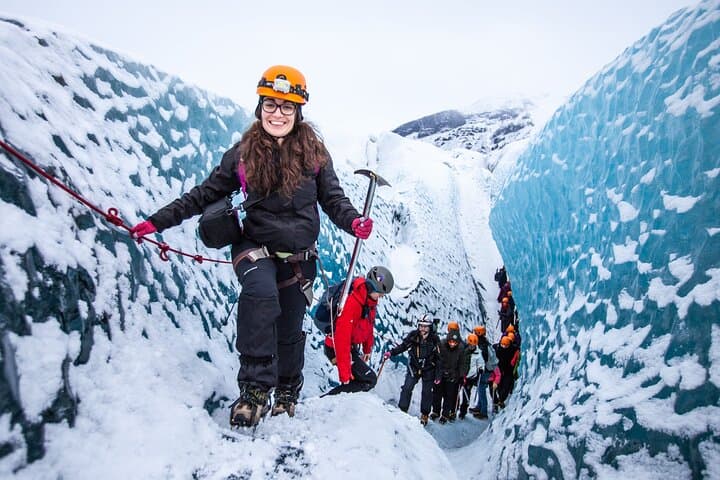
Beneath a sky of shifting light, Skaftafell’s ice reads like a map of time. This three-hour guided glacier hike mixes technical instruction with geology and culture: compact, safe, and unforgettable.