
What the day feels like
The jungle announces itself before you see it: a press of humidity, the metallic scent of wet leaves, and the constant, low hum of insects stitched into the canopy. On a morning when the air tastes like green, the zipline platform perches above the forest like a wooden promise. You clip in, feel the harness cinch, and for a few seconds you’re a creature of momentum—wind drafting past, trees folding beneath you, the world stretched into a clean line of speed. That first plunge sets the tone for a five-hour loop of contrast: sky to soil to water, adrenaline to quiet, engineered thrills woven into ancient limestone.
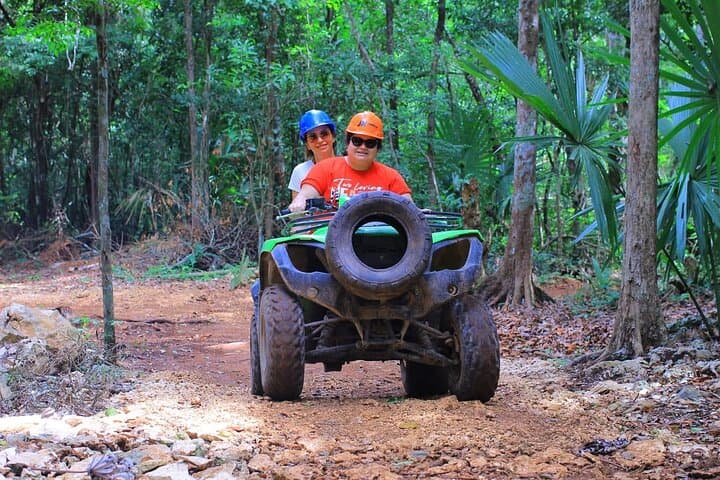
This is the compact, social, and sweaty joy of the Ziplining, ATVs and Cenote Swim with Lunch Cancun Adventure Tour. In five hours you’ll clear multiple ziplines, throttle across jungle trails on ATVs, and slide into the cool of a freshwater cenote—then refuel with a local lunch and a short tequila tasting. It’s the kind of day that reads like a highlights reel but moves at a human pace: not an endurance test, but not a spa day either.
The setting is the Yucatán’s limestone karst, a landscape with little surface water and plenty of secret plumbing. Cenotes—collapsed sinkholes connected to underground rivers—dot the peninsula. For the Maya, they were portals between worlds and sources of ritual life; today they’re restorative plunge pools after a morning on the trail. Geologically, the region is porous: rain filters through limestone, carving caves and caverns that feed those crystalline caverns you’ll swim in.
That juxtaposition—adrenaline above, ancient water below—gives the tour a pleasing narrative arc. Ziplining asks you to trust gravity; ATVs put you in control; the cenote asks you to slow down and listen to the sound of your breath underwater. Along the way, guides narrate practicalities and local color: a banana tree leaning over the trail, the call of a distant bird, the fact that tequila tasting is a playful nod to Mexico’s broader spirits culture (tequila is produced in central Mexico, but sampling is a friendly, modern addition to many Riviera Maya experiences).
Practical details matter here. The tour is roughly five hours and commonly includes hotel pickup from Cancun’s hotel zone; expect a 30–45 minute transfer depending on traffic and your hotel’s location. The cost starts from about $50 USD—an economical price for a day stitching together three high-value experiences and a meal. Group sizes vary, but the vibe skews social: you’ll share rigs, ropes, and a picnic-style lunch, so it’s a good fit whether you’re traveling solo or in a small group.
Terrain is mixed. Zipline platforms sit above sloped jungle; ATV trails can be dusty, root-strewn, and occasionally rutted; the cenote involves a rocky entry and possibly steps down to a viewing platform. Footwear should be closed-toe with decent tread; swimwear and a quick-dry top are useful since the cenote comes at the end. Guides provide safety briefings and life vests for the water, and reputable operators include helmets and harnesses, with staff to help secure lines.
If you’re timing it, aim for mornings in the dry season (November–April) when humidity is lower and the sky cleaner for photos. Late spring and fall bring heat and short, heavy rain showers—still doable, but bring a lightweight rain shell. The cenote water is usually pleasantly cool; it’s a shock at first and then a welcome reset.
Why book it? Because this tour compresses a classic Riviera Maya sample platter into a single, well-run half-day. It’s social enough for friendly groups, physically engaging without being extreme, and offers an accessible window into the geology and cultural resonance of cenotes.
On logistics: confirm weight and age limits (common on ziplines and ATVs), ask about insurance coverage, and check whether your operator offers hotel pickup. For photographers, the zipline gives motion shots; the cenote delivers stills—clear water, rock formations, shafts of light. For anyone planning the day, hydrate before you go, bring sun protection, and carry a small waterproof bag for essentials.
When the day ends and the motor hums back toward Cancun, you’ll notice the simplicity of the feeling: a little tired, a little exhilarated, and oddly grounded. The canyon of the zipline, the grit of an ATV trail, the blink of sunlight through cave water—these are small contrasts that add up to a memorable day in a landscape that quietly refuses to be just one thing.
Final note: respect the places you pass through. Cenotes are fragile ecosystems and culturally important; use biodegradable sunscreen, follow your guide’s lead, and pack out what you bring in. Do that, and you’ll leave the place as it should be: a little quieter for the next person, and a little wilder for yourself.
Trail wisdom
Small choices, better day.
Hydrate Before and After
The Yucatán’s humidity and activity levels dehydrate quickly—drink water before the tour and carry a refillable bottle.
Wear Closed-Toe Shoes
ATV trails can be rocky and zipline platforms require stable footing—sturdy sneakers or trail shoes are best.
Use Reef-Safe Sunscreen
Avoid harming cenote ecosystems by using biodegradable, reef-safe sunscreen and applying it before arrival.
Bring a Waterproof Case
Protect your phone and small valuables when moving between ATVs and the cenote—waterproof pouches are compact and effective.
Local knowledge
Read the place, not just the route.
Watch for native species including Iguana, Coati.
Keep an eye out for wildlife during the transition between areas and habitats. Respect distance guidelines.
Use biodegradable sunscreen, stay on marked trails, and avoid touching stalactites or delicate rock formations to limit disturbance to fragile cenote ecosystems.
Follow the guide's instructions on size limits, ethical handling, and leave-no-trace practices.
Climb a shaded observation platform near the zipline for a quieter canopy view. Ask your guide about local plant uses—many guides share knowledge of traditional medicinal plants
Locally recommended viewpoints and quiet spots known best to local operators.
Cenotes were sacred to the Maya and served as freshwater sources and ceremonial sites; the Yucatán’s karst geology created these natural sinkholes over millennia.
Maritime roots and regional tradition shape the waterways and working coasts.
Seasonal guide
Four versions of the same landscape.
Spring
Best forFewer crowds than peak winter · Warm water for swimming
ChallengesIncreasing heat · Occasional afternoon showers
Late spring offers warm temperatures and lively foliage; expect hotter days and the chance of short, intense rain.
Summer
Best forLower prices · Lush jungle scenery
ChallengesHigh humidity · Summer storms and heat
Summer is hot and humid—great for swimmers but bring extra water and prepare for sudden showers.
Fall
Best forFewer tourists after summer · Comfortable mornings
ChallengesHurricane season overlaps early fall · Unpredictable rain
Fall can be quieter but also more meteorologically fickle—check weather advisories during peak storm months.
Winter
Best forDry, cool weather · Clear skies for photos
ChallengesHigher tourist demand · Cooler cenote water
Winter (dry season) provides the most reliable weather and crisp light—ideal for photography and comfortable trails.
Operator details
What the booking data adds.
Included
- ✓Roundtrip Transportation
- ✓Lunch
- ✓Tequila Tasting
- ✓Ziplines Circuit, Hanging Bridges
- ✓Minute ATV Ride Through The Mayan Jungle
Not included
- —Insurance ATV
- —Photos
- —Alcoholic Beverages
Good to know
- ✓Public transportation options are available nearby
- ✓Infants are required to sit on an adult’s lap
- ✓Suitable for all physical fitness levels
- ✓max weight 124 kg
Pack with intention
What to bring.
Good to know
Common questions.
Most departures include pickup from Cancun’s hotel zone—confirm pickup point and time when you book.
Plan the edges
The details that make the day easier.
The Yucatán Peninsula contains thousands of cenotes—natural sinkholes formed by collapsed limestone—and they were central to Maya life and ceremony.
After the tour, head back to Cancun for fresh ceviche and cold cerveza—La Habichuela and local beachfront cevicherías are good bets. If you have more time, visit a market like Mercado 28 for souvenirs and street food; the region’s cuisine emphasizes fresh seafood, citrus, and achiote-seasoned dishes.
- Closest airport
- Cancun International (CUN). Typical drive from hotel zone: 30–45 minutes. Cell service: reliable en route, spotty at cenote sites. Permits: none for typical tours; weight
Cenotes are fragile and culturally significant—use biodegradable sunscreen, follow guide instructions, and avoid introducing plastics or pollutants into the water.
Explore by topic
Follow the threads.
Keep exploring
Make the story part of the trip.
Set out from Bass Harbor for a private, customizable day on Blue Hill Bay — lighthouses, puffins, seals, and the chance to feel Acadia from the water. Small groups, local captains, unforgettable views.
In four hours you can move from shaded canyon ferns to wind-scoured coastal ridgelines, guided by someone who knows where the light—and the hidden views—live. This private half-day hike on the Monterey Peninsula or Big Sur is compact, curated, and perfect for travelers who want depth without a multiday commitment.
 Related story
Beneath a sky of shifting light, Skaftafell’s ice reads like a map of time. This three-hour guided glacier hike mixes technical instruction with geology and culture: compact, safe, and unforgettable.