
What the day feels like
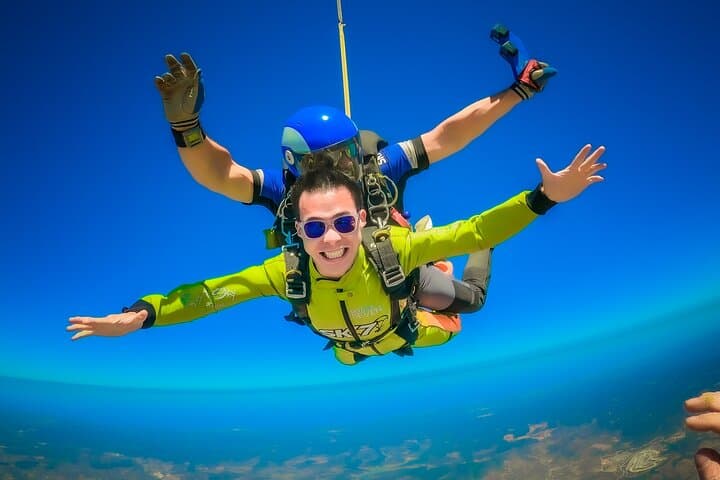
The plane door slides open and the Algarve exhales: a sweep of scalloped coves, white stork nests balanced on chimneys, the Atlantic laid out like hammered blue metal. Wind presses at your cheeks, teasing the edges of your jumpsuit. Down below, the Portimão coastline gleams—limestone cliffs standing in crisp ranks, beach umbrellas stippling the sand. Your instructor taps your shoulder. The world tilts. You fall. And the sky—confident, unblinking—catches you, then hurls you into the pure, bright rush of a 70-second freefall.
Tandem skydiving in the Algarve starts small and human: a check-in at the Portimão Municipal Aerodrome in Alvor, a calm briefing on body position, a snug harness and double-checks that click like punctuation marks. The whirr of a turboprop carries you through layers of view: the Ria de Alvor’s silver estuary tracing calligraphy through marsh, the ocher cliffs of Praia da Rocha, the long curve of Meia Praia, and—on clear days—the far teeth of the Monchique hills. At 15,000 feet, the ocean looks deliberate and patient. The door opens. Gravity takes the lead.
The Algarve is a coast of edges, sculpted by time and tide. You’ll see that geometry best from above: sea caves puncturing the limestone, honeycombed headlands, reefs and ridgelines stitched by surf. Those golden cliffs, born of ancient marine sediments and lifted into light, have been carved by Atlantic swells into the famous arches and stacks that draw beachgoers from Lagos to Carvoeiro. The region’s human story tracks along the same edge—Phoenicians and Romans traded here, Moorish navigators named it al-Gharb, and later, Portuguese sailors learned to read the wind on waters that trained an empire. These days, the coast’s boldness expresses itself in a different rite of passage: clipping into a harness and stepping cleanly into the sky.
Despite the drama, the practicalities are straightforward. Skydive Algarve operates from the aerodrome just outside Portimão, pairing first-timers with veteran instructors for a 15,000-foot tandem—the highest commercial altitude commonly offered in Europe. Freefall lasts about a minute, reaching speeds near 200 km/h, a full-body sensation that feels less like falling and more like leaning into the firmest wind of your life. When the parachute opens, the mood shifts. The canopy breathes, the Algarve exhales again, and you float. From here, it’s a quiet drift over the Ria de Alvor’s marsh mosaics, fishing skiffs tracing thin wakes, and beaches that look like brushstrokes on a big blue canvas. You might even spiral gently, steering under your instructor’s direction, before lining up the landing—a smooth slide onto the drop zone back at the aerodrome.
Local rhythm helps. Morning slots often mean smoother winds and clearer light. Summer days can bring brisk sea breezes by midafternoon; winter brings crisp air and startling visibility, though occasional fronts require patience. The operation runs with tight safety protocols, weight checks, and professional video teams. It’s worth noting that Skydive Algarve’s tandem weight limit is 100 kg (including clothing and shoes). Guests over 90 kg may incur a surcharge and are subject to wind conditions. Minimum age is 16 with parental consent; otherwise 18. No scuba diving within 24 hours of your jump, no alcohol or drugs, and bring a valid photo ID.
You can’t bring your own camera on the jump unless you’re a licensed skydiver, but the in-house camera flyers know their craft—wide-angle lenses, steady formations, and the unrepeatable moment you look down and actually smile. Back on the ground, the day opens up in that post-adrenaline glow. The boardwalks of Alvor wander through protected dunes and saltmarsh. Praia dos Três Irmãos hides caves and arches that feel like a secret if you catch low tide. In Portimão, the riverside grills still honor the sardine, smoky and simple, with local bread and tomato salad. The region’s cataplana—shellfish steamed in a clamshell copper pot—delivers the ocean back to your table.
This coast has long trained people to trust both the elements and themselves. Up in the plane, the Atlantic looks steadfast and the cliffs pragmatic, chiseled into workable angles. The sky invites, then demands. When you step into it, the Algarve answers in kind—winds urging you forward, currents of air shaping your descent, salt haze softening the edges of towns that were once navigational dots on a mariner’s chart. It’s a clean kind of thrill, as focused as it is audacious. And it lingers—later on, when you walk the quay at Portimão or watch white storks tilt their beaks into dusk, you’ll find your internal altimeter still running, the memory of the fall replaying in your bones.
Planning is the difference between a good jump and a great day. Book an early slot for calmer winds and richer light. Dress in snug layers and lace-up shoes. Eat light; keep hydration steady. Build in a flexible window—weather can pause operations for safety, and you’ll want time to savor the afterglow. If you can, travel in the shoulder seasons: late spring and early fall pair warm water and quiet beaches with excellent visibility. The Algarve averages over 300 days of sunshine a year; chances are good the sky will show up for you.
Then again, it always does here. The Algarve has made a habit of greeting those who step boldly—sailors once, skydivers now. The jump is a handshake with the wind, a pact with the view. You’ll walk away lighter, a little salt tucked into your smile, the cliffs looking different because you know how they look from the sky.
Trail wisdom
Small choices, better day.
Book the first flight
Morning jumps often enjoy smoother winds, better visibility, and shorter wait times—ideal for first-timers.
Dress close-fitting
Wear snug layers and lace-up shoes; loose clothing flaps and can interfere with harness comfort and video quality.
Eat light, hydrate smart
A light meal 2–3 hours before your slot helps; avoid alcohol and skip heavy, greasy foods.
Know the rules
Weight limit is 100 kg (with clothing), under-18s need parental consent, and no diving within 24 hours before your jump.
Local knowledge
Read the place, not just the route.
Watch for native species including Bottlenose dolphins off the coast, White storks nesting on chimneys and cliffs.
Keep an eye out for wildlife during the transition between areas and habitats. Respect distance guidelines.
The Ria de Alvor is part of the Natura 2000 network—stay on boardwalks, respect bird nesting areas, and opt for reusable water bottles to cut plastic use.
Follow the guide's instructions on size limits, ethical handling, and leave-no-trace practices.
Praia dos Três Irmãos’ low-tide caves and arches. Alvor Boardwalk at sunrise across the Ria de Alvor marshes
Locally recommended viewpoints and quiet spots known best to local operators.
Portimão evolved from sardine canning and shipbuilding to a modern harbor town; the region’s Moorish name, al-Gharb, reflects centuries of maritime trade and navigation.
Maritime roots and regional tradition shape the waterways and working coasts.
Seasonal guide
Four versions of the same landscape.
Spring
Best forClear views · Mild temps
ChallengesVariable showers · Occasional wind shifts
Late March–May offers crisp air and lush greens around the Ria de Alvor. Morning slots shine for stable conditions.
Summer
Best forBeach time after your jump · Long daylight
ChallengesMidday sea breezes · Higher crowds
June–August brings warm temps and busy beaches. Book early and aim for morning to beat winds and queues.
Fall
Best forStable weather · Warm water
ChallengesOccasional Atlantic fronts
September–October are sweet-spot months with smooth air and golden light. Keep flexibility for weather holds.
Winter
Best forCrisp visibility · Lower crowds
ChallengesCool temps · Weather-related delays
November–February can deliver glassy views and quick operations, but bring layers and patience for fronts.
Operator details
What the booking data adds.
Included
- ✓All Skydiving Equipment for the Tandem Skydive
- ✓Skydiving activity insurance
- ✓Certificate of the Tandem Skydive
- ✓All Taxes, Fees and Handling Charges
Not included
- —Video or photos (available to purchase)
- —Hotel transfer services (available to book, contact us)
Good to know
- ✓Wheelchair accessible
- ✓Infants and small children can ride in a pram or stroller
- ✓Public transportation options are available nearby
- ✓Specialized infant seats are available
- ✓Transportation options are wheelchair accessible
- ✓All areas and surfaces are wheelchair accessible
- ✓Not recommended for pregnant travelers
- ✓Not recommended for travelers with poor cardiovascular health
- ✓Suitable for all physical fitness levels
- ✓Valid passport or ID with Photo is mandatory
- ✓Minimum age is 16-years-old
- ✓Maximum weight is 220lbs (+90kg have extra fees)
- ✓No alcohol prior to the jump
- ✓No water diving 24 hours before jump
Pack with intention
What to bring.
Good to know
Common questions.
Flights depart and land at Portimão Municipal Aerodrome (Alvor). Tandem jumps land on the drop zone at the airfield.
Plan the edges
The details that make the day easier.
The Algarve averages more than 300 days of sunshine each year, making it one of Europe’s sunniest regions.
Post-jump, grab grilled sardines at Taberna da Maré on Portimão’s riverfront or a cataplana feast in Alvor. For a celebratory toast, watch sunset at NoSoloÁgua Portimão on Praia da Rocha, feet in the sand and a cold fino in hand.
- Closest airport
- Faro (FAO), about 70 km
- 45 mi east. Trailhead (drop zone)
- Portimão Municipal Aerodrome, Alvor. Driving: ~10 minutes from central Portimão; 25 minutes from Lagos. Cell service is solid on the ground; in-air comms are via your instructor. Bring photo ID; under-18s need parental consent. No permits required beyond provider booking and safety waivers.
This coastline is edged by protected marsh and dune systems—pack out everything, keep to boardwalks after your jump, and choose train or car-share when possible to reduce travel emissions.
Explore by topic
Follow the threads.
Keep exploring
Make the story part of the trip.
 Related story
Less than two hours from Nairobi, Kereita Forest pairs hands-on canopy adventure with quiet montane trails and a sobering colonial history—perfect for families, teams, and curious travelers seeking a full-day pulse of nature.
Set out from Bass Harbor for a private, customizable day on Blue Hill Bay — lighthouses, puffins, seals, and the chance to feel Acadia from the water. Small groups, local captains, unforgettable views.
In four hours you can move from shaded canyon ferns to wind-scoured coastal ridgelines, guided by someone who knows where the light—and the hidden views—live. This private half-day hike on the Monterey Peninsula or Big Sur is compact, curated, and perfect for travelers who want depth without a multiday commitment.