
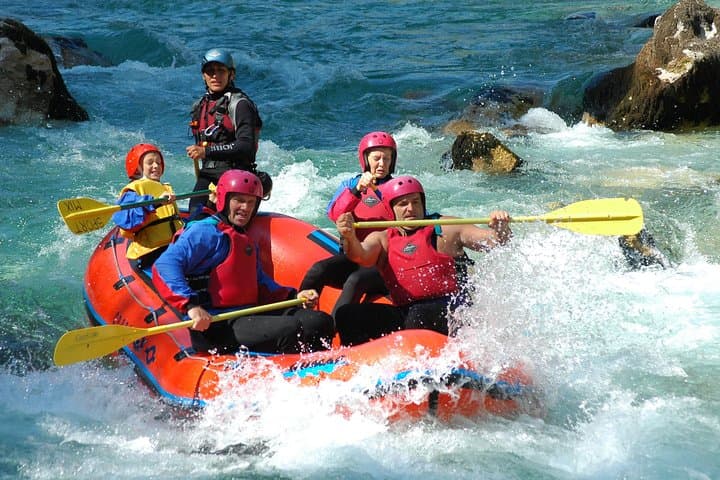
What the day feels like
The raft tips, the guide’s shout—"Everybody all together—forward!"—bounces off limestone walls and folds into the river’s voice. For a moment the world narrows to paddle blades and a band of water the color of a green jewel. The Soča doesn’t ask for humility so much as attention: it dares you into its pools, pushes you through its riffles, and rewards you with views of Triglav’s granite shoulders standing like a weathered monarch over the valley. By the time the three-hour run slows into calm current, you arrive wetter, louder, and somehow more awake to the landscape that has shaped this place for millennia.
Rafting the Soča is an exercise in balance—between adrenaline and scenery, speed and stillness. The river that slices through Slovenia’s Soča Valley is famed for an almost unnatural emerald clarity, a result of glacial melt, mineral chemistry, and centuries of mountain runoff carving through limestone and dolomite. Geologically, the Soča is young and energetic; its channel has been scoured and re-sculpted since the last ice age, leaving dramatic boulders and narrowing gorges that make for lively rapids and serene, trout-rich pools.
Human history around the Soča is equally layered. The valley was a frontline during World War I—trenches and mountaintop fortifications still punctuate ridge lines—and that history sits alongside farming traditions and alpine culture preserved in villages like Bovec. Past the technical jargon and guidepoint safety briefings, you’re floating through a corridor that has always connected people to the mountains: shepherds, soldiers, and now outdoor travelers seeking a clean hit of river and sky.
This Viator-operated run from Bovec is built to be accessible without being tame. Over roughly three hours you’ll meet a mix of class II–III rapids—punchy but navigable for newcomers paired with an experienced guide—and quieter segments where the raft becomes a floating theater seat for the surrounding peaks. The route leans into the valley’s best dramatic framing: craggy boulders, emerald pools inhabited by Soča trout, and vantage points where Triglav lifts like an alpine king into the sun. The experience is social—groups cheer and cough river water in equal measure—but it also delivers stretches of quiet where the sound of the raft is the only thing between you and the current.
Practical notes matter here. The run lasts about 180 minutes, and tours include guided instruction, safety gear, and round-trip transfer from central Bovec. The price point is competitive—about USD 85 per person—and the operation holds strong user ratings, signaling experienced guides and reliable logistics. Tours are available for private groups, and many operators run multiple departures daily in summer; booking is usually instant with a final confirmation step.
Packing for the Soča is about embracing wetness strategically: quick-dry layers, a secure dry bag for phones or cameras, footwear that grips on wet rocks, and a sensible sun kit. Footwear choices and a conscientious attitude toward local regulations—leave no trace, avoid disturbing shoreline habitats—will make the difference between a memorable run and a frayed experience. Guides will brief you on paddling technique and on how to handle flips or swims; listen closely and trust the person steering the raft.
Culturally, the Soča Valley is quietly proud. After rafting, most groups drift toward Bovec’s cafés and mountain inns where hearty stews, smoked meats, and polenta keep local culinary tradition alive. Craft beers and regional wines are common; sitting in a sunlit terrace with a cold drink is the non-negotiable bookend to any Soča day.
For planning: summer is the peak season for rafting—high water, predictable operations, and long daylight. Spring and early summer often bring higher flows from snowmelt, making some runs livelier; autumn offers cooler air and crisper light; winter sees limited activity as the river calms and operators reduce trips. Temperatures and river conditions vary, so check with operators for daily water-level updates.
This run is not a wilderness expedition in the technical sense, but it is wild enough to require respect. Don’t overpack valuables, commit to the guide’s commands, and be ready to laugh and sputter. If you’re looking for a short, full-throttle way to connect with the Slovenian Alps—one that combines geology, history, and a palpable sense of place—the Soča delivers. You will leave with wet shoes, an exhausted grin, and the kind of memory that keeps folding you back into a valley where water has been an inheritant storyteller for ages.
Why go now? Because the Soča, even with its popularity, still feels like a discovery: a river with a distinct personality—cool, clear, occasionally irreverent—that refuses to be polite. It will ask you to paddle, to lean in, and in return it gives a landscape that’s both intimate and grandeur-filled. For a three-hour run out of Bovec, that’s a high return on investment of time and courage.
Trail wisdom
Small choices, better day.
Hydrate before you go
Drink water before boarding—cold river water won’t cancel dehydration after exertion and sun exposure.
Secure valuables
Use a small dry bag or leave cameras and phones with the operator to avoid losing them in a swim.
Wear grippy footwear
Closed-toe water shoes with good soles reduce slips during entry, exit, or shore breaks.
Follow the guide
Your guide controls lines, pace, and safety procedures—listen to commands to avoid risky maneuvers.
Local knowledge
Read the place, not just the route.
Watch for native species including Soča trout (Salmo marmoratus), Common buzzard.
Keep an eye out for wildlife during the transition between areas and habitats. Respect distance guidelines.
The Soča is ecologically sensitive—operators emphasize leave-no-trace practices and discourage touching or disturbing aquatic life to protect native trout populations.
Follow the guide's instructions on size limits, ethical handling, and leave-no-trace practices.
Slap Vir waterfall—a short detour downstream with a photogenic wooden walkway. Soča Trail viewpoints near the village of Kobarid for panoramic valley perspectives
Locally recommended viewpoints and quiet spots known best to local operators.
The Soča Valley was a major frontline during World War I; remnants of trenches and memorials dot the surrounding ridges and small towns.
Maritime roots and regional tradition shape the waterways and working coasts.
Seasonal guide
Four versions of the same landscape.
Spring
Best forHigher flows · Lush valley scenery · Fewer tourists
ChallengesCold water temperature · Unpredictable meltwater levels
Spring brings higher snowmelt flows that make rapids livelier; expect chilly air and water and variable conditions—dress warmer and confirm run status with the operator.
Summer
Best forStable operations · Warm air temps · Long daylight
ChallengesHigher visitor numbers · Stronger sun exposure
Summer is peak season for predictable, regularly scheduled runs and warmer evenings—book in advance and plan sun protection and hydration.
Fall
Best forCrisp light for photos · Smaller crowds · Cooler paddling
ChallengesShorter days · Colder mornings
Autumn offers clear weather and fewer people; water levels are typically lower and the valley’s colors add a different kind of drama.
Winter
Best forQuiet valley views · Off-season mountain access
ChallengesMost rafting operations limited or closed · Cold conditions
Winter sees significantly reduced rafting activity—operators may still run private trips in suitable conditions but expect limited availability.
Operator details
What the booking data adds.
Included
- ✓Locker
- ✓Equipment
- ✓Professional guide
- ✓Straps for glasses
- ✓Transport from meeting point to activity location
- ✓Action camera mount for helmets
- ✓Changing room and toilet
Not included
- —Hotel pickup and drop-off
- —River permit from EUR 10.5 to
Good to know
- ✓Not recommended for travelers with spinal injuries
- ✓Not recommended for pregnant travelers
- ✓Not recommended for travelers with poor cardiovascular health
- ✓Suitable for all physical fitness levels
- ✓Children must be accompanied by an adult
- ✓May be operated by a multi-lingual guide
- ✓A minimum of 2 people per booking is required
- ✓Swimming knowledge is mandatory for everyone.
- ✓Not recommended for guests with BMI higher than: for women 30, for men 40.
Pack with intention
What to bring.
Good to know
Common questions.
The advertised trip duration is about 180 minutes (three hours) including transfers and safety briefings.
Plan the edges
The details that make the day easier.
The Soča River is known for its distinctive emerald color and is home to the indigenous Soča trout (Salmo marmoratus), an important species for local biodiversity.
Post-raft, head to Bovec’s riverside inns for jota (hearty bean-and-sauerkraut stew) or smoked trout; local microbreweries pour crisp lagers, and small bakeries serve fresh potica for a sweet finish.
- Closest airport
- Ljubljana Jože Pučnik (approx. 2–3 hour drive); Trailhead
- meeting point
- central Bovec; Driving distance from nearest town: tours include local transfers; Cell service: generally good in Bovec, patchy in gorges; Permits: none required for recreational rafting but check operator rules.
The Soča’s high water quality and native trout populations require care—follow guides’ instructions, pack out waste, and avoid introducing non-native gear or bait to waterways.
Explore by topic
Follow the threads.
Keep exploring
Make the story part of the trip.
Set out from Bass Harbor for a private, customizable day on Blue Hill Bay — lighthouses, puffins, seals, and the chance to feel Acadia from the water. Small groups, local captains, unforgettable views.
In four hours you can move from shaded canyon ferns to wind-scoured coastal ridgelines, guided by someone who knows where the light—and the hidden views—live. This private half-day hike on the Monterey Peninsula or Big Sur is compact, curated, and perfect for travelers who want depth without a multiday commitment.
 Related story
Beneath a sky of shifting light, Skaftafell’s ice reads like a map of time. This three-hour guided glacier hike mixes technical instruction with geology and culture: compact, safe, and unforgettable.