
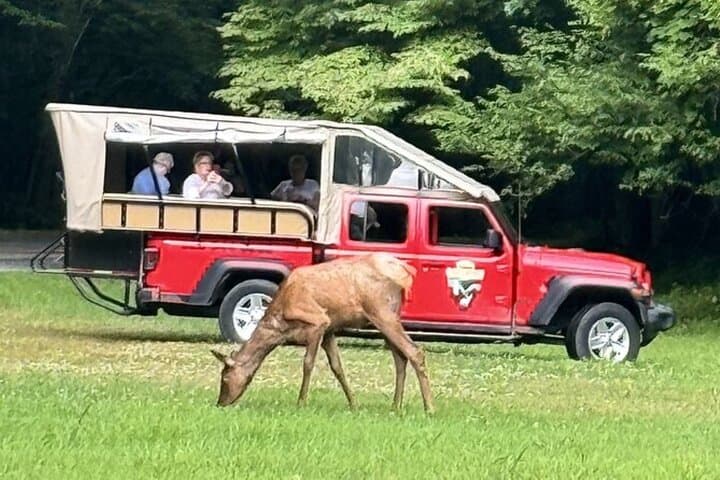
What the day feels like
The morning air feels unhurried in Cherokee, North Carolina, as the river whispers along the roadside and fog drapes the ridgelines like a shawl. A red-tailed hawk patrols the corridor of sycamores and, somewhere up the valley, an elk bugles—a wild, tremulous note that turns the landscape from quiet postcard to living habitat. You climb into an open-air Jeep, the kind that welcomes breeze and birdsong, and the Smokies answer with movement: rivers slipping over greenstone boulders, clouds pushing their shadows uphill, elk stepping out of the woods like they own the place—because here, they do.
This guided 3 to 3.5-hour eco safari threads together the region’s best contrasts: the Blue Ridge Parkway’s broad views, the Great Smoky Mountains National Park’s river flats and elk meadows, and the living culture of the Eastern Band of Cherokee Indians. It’s less a tour than a sequence of carefully timed windows. Dawn and dusk are when elk take center stage, but mid-morning light can be just as generous to waterfalls and high-country overlooks. The Jeep rolls with the day, pausing at remote cascades and slow bends in the Oconaluftee River, where kingfishers dare you to keep up. Your guide layers it all with Cherokee stories and Appalachian lore—the kind of narratives that turn scenery into place.
The Smokies are ancient, their schists and gneisses pressed and crumpled over a billion years. You feel that age in the rounded summits and moss-softened logs, in the way rhododendron tunnels clutch the road like polite gatekeepers. Then the Blue Ridge opens things wide: long sightlines to wave after wave of blue hills, a name born from the haze that often hovers here, courtesy of tree-emitted hydrocarbons scattering light just so. On the Parkway, the Je¿p eases into overlooks where the horizon does the talking; back down near Cherokee, it slips into river valleys where elk graze in amber grass and the air smells like rain.
Wildlife sets the rhythm. Elk were reintroduced to the Smokies in 2001 and 2002 after a long absence, and they’ve settled into these bottoms with authority. Cows browse alongside calves in summer; come fall, bulls strut and bugle as if the valley were a stage built for them. The park’s rules are clear: stay at least 50 yards from elk and 150 yards from bears. Your guide keeps everyone dialed; patience and distance pay off with calmer animals and better behavior to photograph. Black bears do wander these edges, more rumor than certainty on any given day, though the moment the forest decides to reveal one, the Jeep hushes itself without being asked.
Between meadows, the tour often stops at a historic church whose congregation dates to the mid-1800s—simple, white-painted, and spare inside, where sunlight and silence do most of the preaching. Nearby, Mingus Mill’s hand-hewn timbers remind you that gravity can grind corn if you give it a flume and time. When the Cherokee Trout Hatchery is open, the crew dips in for a look at the facility that keeps local waters stocked. Even the rivers feel engaged—the Oconaluftee shouldering along its rounded stones, the trail beside it inviting a short, quiet wander.
The Cherokee story threads through everything here. This is the Qualla Boundary, homeland of the Eastern Band of Cherokee Indians, where language, craft, and tradition live in the present tense. Place names are teachers. Stories about the origin of the mountains drift into conversations about stewardship and the way the elk’s return reshaped these fields. Your guide doesn’t push; they interpret. And the landscape answers back in the small ways that matter: a flock of turkeys slipping between trunks, a pileated woodpecker carving punctuation into a dead snag, a sudden view from a Parkway overlook that makes the day feel longer than the clock will admit.
Practically, this adventure is designed for ease. The Jeep does the climbing; you step out for short walks to waterfalls and viewpoints. Wear layers—the mountains carry their own weather—and closed-toe shoes for damp ground. A lightweight rain shell is smart even on bright days. Bring water and a snack, though you’ll stop often enough that the ride never feels long. Wildlife is never guaranteed, but the timing and terrain tilt the odds in your favor, and a free photo and video package means you can pocket your phone when the moment arrives.
If you’re plotting the day, early or late departures are best for elk activity, with blue-hour light that does right by antlers and mist. Summer means lush forest and long days; fall brings the rut and color that climbs from valley to ridge; winter pares the forest back to reveal stone and shape; spring arrives with wildflowers and rushing water. Whenever you come, the Smokies do what they do best: move at their own pace and invite you to match it.
By the time you roll back into Cherokee, the river is talking louder, and the sun is riding higher or easing down, depending on your start. Either way, the Jeep feels like a front-row seat to a living museum—one where the exhibits move, call, and carry on as if you’re not there. That humility is part of the pull. The mountains don’t perform; they continue. You get to witness it, unhurried, wind in your face, the hush of a meadow and the edge of a waterfall sharing the same map. And the elk—well, they’ll tell you when it’s time to stop and listen.
Trail wisdom
Small choices, better day.
Give Wildlife Space
Stay at least 50 yards from elk and 150 yards from bears. Use zoom lenses or binoculars instead of stepping closer.
Layer Up
Temperatures can swing 10–20°F between valley and parkway. Wear breathable layers and bring a light rain shell.
Quiet Wins Photos
Keep voices low when approaching meadows and river bends. Calm behavior keeps animals relaxed and visible longer.
Mind the Motion
Open-air Jeeps can feel breezy on curves. If you’re prone to motion sensitivity, request a front seat and look toward the horizon.
Local knowledge
Read the place, not just the route.
Watch for native species including Elk, Black bear.
Keep an eye out for wildlife during the transition between areas and habitats. Respect distance guidelines.
Observe strict wildlife distances and stay on established paths to protect sensitive meadow and river habitats. Pack out all trash; the Smokies’ popularity magnifies even small impacts.
Follow the guide's instructions on size limits, ethical handling, and leave-no-trace practices.
Kituwah Mound (Mother Town of the Cherokee), a quiet cultural site near Bryson City. Thomas Divide Overlook on the Blue Ridge Parkway for sweeping, less-crowded views
Locally recommended viewpoints and quiet spots known best to local operators.
This is the Qualla Boundary, homeland of the Eastern Band of Cherokee Indians. Elk were reintroduced to Great Smoky Mountains National Park in 2001–2002 after more than a century’s absence.
Maritime roots and regional tradition shape the waterways and working coasts.
Seasonal guide
Four versions of the same landscape.
Spring
Best forWaterfalls at peak flow · Wildflowers and fresh foliage
ChallengesRain showers · Cool mornings
Expect rushing creeks, blooming dogwood, and changeable weather. Layers and a shell are smart.
Summer
Best forLong daylight · Lush forest and river stops
ChallengesAfternoon thunderstorms · Humidity and bugs
Green tunnels and warm temps dominate. Start early or late for elk activity and bring water and bug spray.
Fall
Best forElk rut and bugling · Peak color on the Parkway
ChallengesCrowds at popular overlooks · Cool, breezy rides
Crisp air and brilliant leaves. Book early and dress warm—mornings and evenings can be chilly.
Winter
Best forOpen views through bare trees · Quiet roads and wildlife tracks
ChallengesCold temps · Occasional road closures or frost
Clear sightlines and solitude. Check closures, bring hot drinks, and wear insulated layers.
Operator details
What the booking data adds.
Included
- ✓Scenic Blue Ridge Parkway drive
- ✓Multiple photography opportunities throughout the adventure
- ✓Visit to breathtaking 120-foot Mingo Falls
- ✓Panoramic mountain views and scenic overlooks
- ✓Local Cherokee & Appalachian descendant guides
- ✓Additional lodging or transportation outside the guided Jeep tour experience
- ✓Scenic exploration of Cherokee, North Carolina
- ✓Exploration of prime elk and wildlife habitat
- ✓Guided safari-style Jeep tour through Great Smoky Mountains National Park
- ✓Authentic Smoky Mountain history, heritage, culture, and storytelling
- ✓Wildlife viewing opportunities throughout the tour
- ✓Scenic drive across Soco Gap at 4,340 feet elevation
- ✓Travel through 5 historic mountain tunnels
- ✓99% elk sighting success rate on PM Elk Tours
- ✓Visit to historic Oconaluftee Baptist Church
- ✓Small-group immersive experience
Not included
- —Gratuities
- —Bottled water
- —Hotel pickup or drop-off
- —Rain gear or cold-weather clothing
- —Child safety seats unless arranged in advance
- —Guaranteed wildlife sightings during the tour
Good to know
- ✓Infants and small children can ride in a pram or stroller
- ✓Service animals allowed
- ✓Not recommended for travelers with poor cardiovascular health
- ✓Suitable for all physical fitness levels
Pack with intention
What to bring.
Good to know
Common questions.
Elk sightings are common around Cherokee and the Oconaluftee area, especially at dawn and dusk, but wildlife is never guaranteed.
Plan the edges
The details that make the day easier.
The National Park Service reintroduced 52 elk to the Smokies in 2001–2002, primarily in Cataloochee Valley; today the herd has grown and is often seen near Cherokee’s Oconaluftee area.
After the safari, try frybread tacos or trout at local, Native-owned spots in Cherokee, then grab coffee at Qualla Java. For craft beer, head 20 minutes to Sylva’s Innovation Brewing. If time allows, visit the Museum of the Cherokee People for deeper context before or after your drive.
- Closest airport
- Asheville Regional (AVL), ~1.25 hours to Cherokee. Typical meeting area near Cherokee
- Oconaluftee Visitor Center. Driving time from downtown Cherokee
- 5–10 minutes. Cell service: limited to spotty in the park; better in town. Permits: none for the tour; Great Smoky Mountains NP has no entrance fee. Check Parkway and park alerts for occasional closures.
Elk meadows are fragile. Stay off tall grasses, never feed wildlife, and follow Leave No Trace. The Smokies are America’s most visited national park—your small choices have big ripple effects.
Explore by topic
Follow the threads.
Keep exploring
Make the story part of the trip.
In four hours you can move from shaded canyon ferns to wind-scoured coastal ridgelines, guided by someone who knows where the light—and the hidden views—live. This private half-day hike on the Monterey Peninsula or Big Sur is compact, curated, and perfect for travelers who want depth without a multiday commitment.
 Related story
Beneath a sky of shifting light, Skaftafell’s ice reads like a map of time. This three-hour guided glacier hike mixes technical instruction with geology and culture: compact, safe, and unforgettable.
 Related story
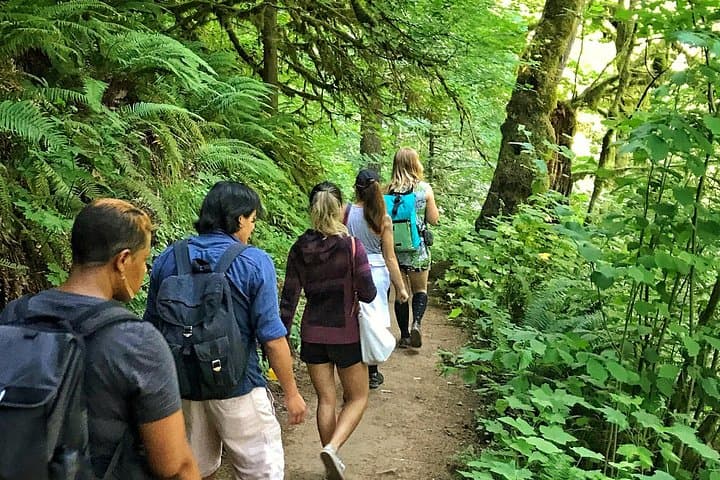
Lose the city for a few hours without leaving it: this 5-mile, 900-foot-gain Forest Park loop threads old-growth pockets, city viewpoints, and cultural landmarks for a compact taste of Portland’s wild side. Expect moss, roots, and stories.