
What the day feels like
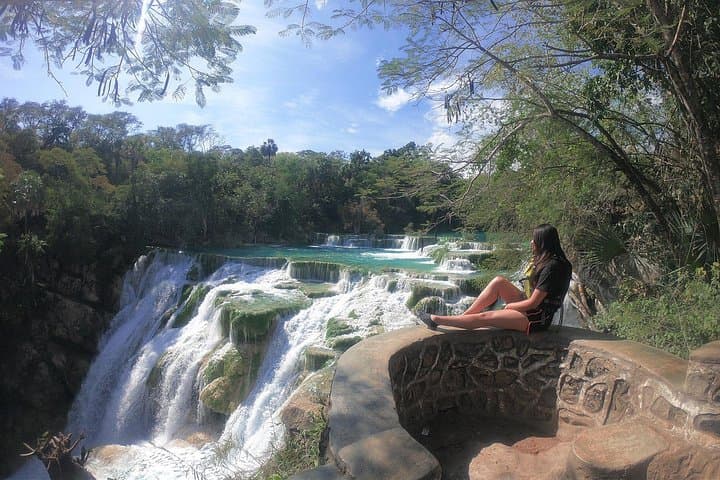
The river finds you before you find it. Beyond the cane fields and sleepy roadside puestos, the Gallinas River gathers into a turquoise convoy and pushes toward the lip of Cascada El Meco. You hear it first—an unwavering hiss that thickens into a roar—and then the view opens at the mirador: a 30-meter curtain unspooling in tiers, the kind of blue that makes cameras lie. Mist lifts and wanders across the viewing deck, cool as shade. The jungle leans in to watch. This is the Huasteca Potosina’s signature scene, the one that makes commercials and stirs daydreams, and yet it still surprises in person.
El Meco is limestone country. The water filters through karst, picking up minerals that paint the river Caribbean-bright. The stone is busy, too; calcium carbonate builds travertine ledges the way coral builds reefs, and the river steps itself into terraces that look designed. In a single day, this tour threads two of the region’s headliners—El Meco and El Salto—giving you both sides of the Huasteca’s personality: the photogenic thunder and the intimate swim.
Morning is for El Meco’s mirador, where the falls drop in multiple veils. On some days, you’ll see local fishermen casting in the quiet pockets along the bank. Birds skim the falls—green kingfishers, herons—and butterflies treat the mist like a slow carousel. The river does the talking, daring you to get closer, to follow the short paths down to calmer pools and let the day slow. Your guide keeps the rhythm: time to shoot from the deck, time to move along. This is a 10-hour outing, paced but unhurried.
By midday you’re tracing the river upstream toward El Salto. Here the story changes with the seasons. A hydroelectric dam above the falls plays conductor: in the wet months (roughly June to October), the gates open and El Salto reappears in full song, a powerful wall of water no one argues with. In the drier months, the gates close, and a chain of travertine pools remains—emerald troughs where the current nudges rather than commands. The river invites you in. You feel the limestone sift underfoot; water shoes earn their keep. The current pulls, playful but persistent, as if it wants you to drift farther and see what’s around the bend.
It’s the contrast that makes this route unique in Mexico. Plenty of places have big drops or swimmable pools. The Huasteca does both, with the kind of water color you don’t expect hours from the coast. And it does it within a living landscape. Sugarcane trucks rumble past; in nearby towns you’ll hear Tenek (Huastec) conversations in market aisles and see zacahuil—the massive, celebratory tamal—shared on weekends. Water is the through line. For generations it powered mills and now feeds the grid; it also anchors afternoons like this one, where you slip into the river’s cool blue and watch the canopy rewrite the light.
Your guide knows the safe jumps and the spots to avoid. They’ll talk about the limestone—slippery when you first step, grippy once wet—and the difference between calm reaches and hidden hydraulics. Safety is simple: life jackets for swimming sessions, no dives into unknown depths, and a healthy respect for rain. Weather moves quickly here; a sudden storm can put the river in a mood. In the rainy season, swimming may be limited or shifted to safer coves, and that’s not a compromise—it’s good judgment.
Practicality makes this tour accessible. It’s a day trip from Ciudad Valles, the region’s underrated hub, with road time broken up by scenic stops and small-town snacks. Expect door-to-door transport, entrance fees handled, and a guide who times the day for light and crowds. Hydration matters; San Luis Potosí’s lowland heat builds by midday, and the humidity can sneak up on you. Quick-dry layers keep you comfortable. Sunscreen should be biodegradable to protect the river, and a dry bag saves your phone when you forget the canoe you didn’t board is actually your own two feet.
Season dictates feel. Summer means volume—the falls in command, trails humid but alive. Spring and fall deliver those crystalline blues with warm air and fewer storms; it’s prime time for swimming the travertine steps below El Salto. Winter cools the nights and quiets the crowds; midday sun warms the pools enough for unhurried dips, and the light cuts sharper across El Meco’s tiers. Whatever the calendar, the river keeps the day honest.
Why go now? Because Huasteca Potosina still feels like a region you discover rather than consume. Because waterfalls here aren’t amusement-park tidy; they’re working water—dynamic, seasonal, and part of people’s lives. Because standing on the El Meco deck as the mist bows and lifts, you’ll realize you didn’t travel for a single photo; you traveled for the rhythm of a day shaped by moving water.
You leave as the afternoon softens, pockets of shade lengthening along the bank. The Gallinas River, having shown you both its muscle and its mercy, keeps moving. It doesn’t say goodbye. It just urges forward, as rivers do, confident you’ll hear it again before you see it.
Trail wisdom
Small choices, better day.
Wear grippy water shoes
Limestone ledges are slick at first and textured once wet. Proper water shoes beat flip-flops for traction and toe protection.
Time your visit for color or power
Dry season brings turquoise pools; rainy season brings roaring falls. Ask your guide which conditions you’ll meet.
Bring a dry bag
Phone, keys, and snacks stay safe during swims and on misty viewpoints. A small roll-top bag is plenty.
Respect currents and closures
If guides restrict swimming after rain or dam releases, heed it. Conditions can change quickly on the Gallinas River.
Local knowledge
Read the place, not just the route.
Watch for native species including Green kingfisher, Iguana.
Keep an eye out for wildlife during the transition between areas and habitats. Respect distance guidelines.
The river’s travertine forms are delicate. Use reef-safe sunscreen, avoid trampling algae-covered ledges, and pack out all trash.
Follow the guide's instructions on size limits, ethical handling, and leave-no-trace practices.
Hotel deck mirador at El Meco for a unique angle of the main drop. Travertine ledges just below El Salto where the current forms natural jacuzzis in dry season
Locally recommended viewpoints and quiet spots known best to local operators.
Hydropower and sugarcane shaped this corridor; Tenek communities have long relied on these rivers for irrigation and fishing.
Maritime roots and regional tradition shape the waterways and working coasts.
Seasonal guide
Four versions of the same landscape.
Spring
Best forTurquoise water clarity · Warm, swimmable pools
ChallengesStrong sun · Occasional windy afternoons
March–May offers bright water and manageable heat—ideal for swimming below El Salto and clear views from El Meco.
Summer
Best forPeak waterfall flow · Lush jungle scenery
ChallengesHigh humidity · Storms and stronger currents
June–August is dramatic and green. Expect powerful cascades, possible swim restrictions, and brief but intense downpours.
Fall
Best forBalanced flows · Fewer crowds
ChallengesVariable dam releases · Warm days
September–November blends volume and clarity. Great for photos and shoulder-season calm, with warm afternoons for a dip.
Winter
Best forQuiet trails · Cool, clear days
ChallengesCooler water · Shorter daylight
December–February is calmer and cooler. Midday swims are still comfortable; pack a light layer for mornings.
Operator details
What the booking data adds.
Included
- ✓Guide Service
- ✓Flotation vests and safety helmets
- ✓Air-conditioned vehicle
- ✓Entrance fees to tourist sites
- ✓Medical Expense Insurance
- ✓1 full meal at the end of the tour
Not included
- —Alcoholic Beverages
- —Tips
Good to know
- ✓Infants are required to sit on an adult’s lap
- ✓Infants and small children can ride in a pram or stroller
- ✓Suitable for all physical fitness levels
- ✓Wheelchair accessible
Pack with intention
What to bring.
Good to know
Common questions.
Swimming is typically allowed in the calmer pools near El Salto during dry months; El Meco is mainly for viewing. Guides choose safe spots based on conditions.
Plan the edges
The details that make the day easier.
El Salto’s flow is regulated by an upstream hydroelectric dam—when gates close in the dry season, the waterfall recedes to reveal swimmable travertine pools.
In Ciudad Valles, celebrate the day with zacahuil and bocoles at the local mercado, then cool off with a tamarind agua fresca. For a cultural detour, visit the Museo Regional Huasteco to ground the scenery in Tenek history.
- Closest airports
- San Luis Potosí (SLP) or Tampico (TAM) ~3.5–4.5 hrs by road. From Ciudad Valles, it’s ~1.5–2 hrs to El Meco
This river system builds fragile travertine over centuries. Stick to established paths, avoid chemical sunscreens, and never leave trash or food scraps behind.
Explore by topic
Follow the threads.
Keep exploring
Make the story part of the trip.
Set out from Bass Harbor for a private, customizable day on Blue Hill Bay — lighthouses, puffins, seals, and the chance to feel Acadia from the water. Small groups, local captains, unforgettable views.
In four hours you can move from shaded canyon ferns to wind-scoured coastal ridgelines, guided by someone who knows where the light—and the hidden views—live. This private half-day hike on the Monterey Peninsula or Big Sur is compact, curated, and perfect for travelers who want depth without a multiday commitment.
 Related story
Beneath a sky of shifting light, Skaftafell’s ice reads like a map of time. This three-hour guided glacier hike mixes technical instruction with geology and culture: compact, safe, and unforgettable.