
What the day feels like
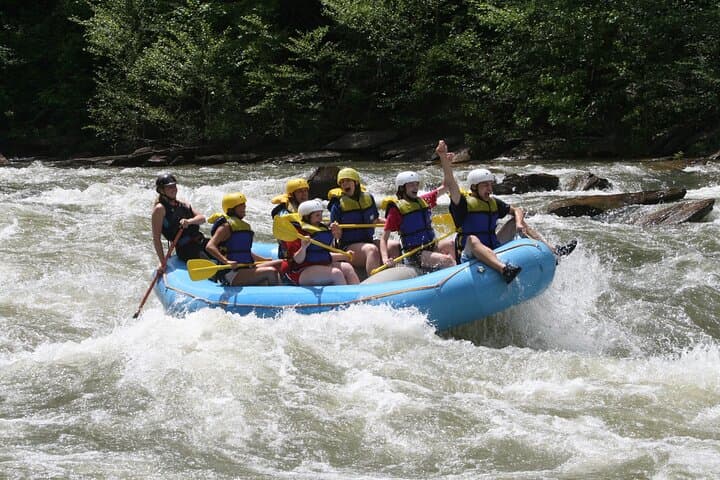
The morning light slices into the canyon in thin, bright ribbons. Pine needles glitter where they catch it; the river beneath seems darker for the contrast, a moving vein of glass and teeth. You can hear the Middle Ocoee before you see it — a distant roar that grows into the buzz of water hitting rock, then the crisp punctuation of a rapid. Guides in neon spraysuits move with calm purpose, checking straps and pointing downriver where the current will take you. When your raft launches, that first drop feels less like falling and more like joining a conversation with the river: the Ocoee daring you, the boat answering back.
The Middle Ocoee run is short on distance but long on decision points — three hours on the water, and each rapid asks for attention. This stretch is famous for being deliberate: the river was engineered by TVA in the 20th century with dam releases that, when open, turn otherwise tame water into a textbook of hydraulics. That makes it a training ground for rafters and a place for outfitters to push boundaries safely. OAR, the outfitter on many commercial trips here, highlights that their guides complete EMR certifications and Swiftwater Rescue courses; that emphasis on training is why companies can run guests through more dynamic lines than on many other commercial runs.
Geology and history braid through the landscape. The Ocoee carves a narrow gorge through the unglaciated Appalachian Plateau; stacked layers of sandstone and shale show how time pressed and folded this land. The river valley also carries human history — Cherokee footpaths once traced these hollows, and later the area became a hub of copper mining and small mill towns. The 1996 Atlanta Olympics left a modern imprint: the Ocoee hosted the Olympic canoe and kayak slalom events, an international affirmation of the river’s world-class whitewater. Today small towns like Copperhill and Ducktown wear that industrial past and the outdoor present side by side.
On the water, the experience is immediate. Rapids in the Middle run are short, punchy, and technical: boils that can pin a boat, waves that will test your timing. Guides call strokes in tight, efficient commands. If you’ve paddled before, you’ll be surprised at how fast lines move here; if this is your first real run, expect an adrenaline calibration — loud, immediate, and perfectly coached. Between rapids the river becomes conversational again: eddies that let the boat rest, cliffs where trees lean in and scrub the sky, and riffles where trout dart in the shallows. The gorge does a lot of the storytelling for you — every bend reveals another facet of the Ocoee’s personality.
Why come for the Middle Ocoee? It’s the combination of accessibility, engineering, and drama. Commercial runs condense high-quality whitewater into a half-day experience that still feels like stepping into something remote. The cost is modest (check current pricing; trips listed from about $54), the time commitment reasonable (this outfit’s trip runs roughly three hours from gear-up to final float-out), and the infrastructure around the river means you can pair a run with a long weekend in Chattanooga or a night in a cabin by the gorge.
Practical considerations: the run is best for people comfortable with quick bursts of exertion and not afraid of wet, noisy environments. Guides handle steering and safety but expect to paddle hard and to hold on through drops. Outfitters will provide PFDs and helmets; bring quick-dry clothing, river shoes with good grip, and a lightweight waterproof layer if the morning is cool. Expect limited cell service in the canyon. Weather matters: spring releases can be powerful and chilly; summer releases often bring warmer water but more crowds.
Safety and stewardship sit beside the thrill. The Middle Ocoee is managed through a mix of TVA infrastructure and federal and state recreational planning, so operators follow strict rules about timing and shore access. Leave-no-trace applies even where the river feels built for adventure: pack out all trash, avoid disturbing shoreline vegetation, and follow guide instructions for swim and rescue practice. If you want a little local flavor afterward, stop in Copperhill for barbecue or drive out to Chattanooga for breweries, riverfront parks, and museums — the transition from gorge to city feels like switching between two very different rhythms.
For travelers making the trip: mornings are quieter and cooler; late summer releases make for warm swims; reservations matter, especially on holiday weekends; and an experienced guide makes the difference between a memorable run and an awkward, soggy day. If you’ve ever wanted whitewater that feels big in a tight package, where every rapid has a name and a consequence, the Middle Ocoee gives it to you in a focused, accessible dose. The river asks for your attention; it pays you back with a few hours of pure, electric motion and a canyon that keeps its stories close to the current.
Trail wisdom
Small choices, better day.
Wear secure footwear
Use river shoes or old sneakers that won’t slip off — rocks are slippery on shore and in swims.
Hydrate before you go
Bring water and drink well before launch; paddling is a short, intense workout and water is not practical while on the raft.
Protect small electronics
Leave phones in your vehicle or use a chest-mounted dry box — expect spray and occasional immersion.
Listen to your guide
Commands are concise and practiced — follow them immediately for best safety and fun.
Local knowledge
Read the place, not just the route.
Watch for native species including American bald eagle, Brook trout.
Keep an eye out for wildlife during the transition between areas and habitats. Respect distance guidelines.
The river corridor runs adjacent to Cherokee National Forest lands; follow leave-no-trace principles and use established access points to reduce shoreline erosion.
Follow the guide's instructions on size limits, ethical handling, and leave-no-trace practices.
Hike the short trails around the Ocoee Whitewater Center for canyon viewpoints. Drive the Cherohala Skyway nearby for panoramic overlooks and quiet pullouts
Locally recommended viewpoints and quiet spots known best to local operators.
The Middle Ocoee flows through valleys once trafficked by the Cherokee and later shaped by regional copper mining; the river hosted the 1996 Olympic slalom events.
Maritime roots and regional tradition shape the waterways and working coasts.
Seasonal guide
Four versions of the same landscape.
Spring
Best forHigh flows · Fresh snowmelt thrills
ChallengesCold water temperatures · Unpredictable weather
Spring releases can be powerful and technical; dress warmly in layers and expect colder swims.
Summer
Best forWarm water · Reliable scheduled releases
ChallengesHigher crowds · Hot parking lots
Summer is the most popular season for guided runs — expect warmer water and more people on peak days.
Fall
Best forFewer crowds · Crisp air · Scenic foliage
ChallengesShorter daylight · Cooler mornings
Fall offers quieter runs and colorful canyon views; bring an insulating layer for early launches.
Winter
Best forOffseason solitude (if water released) · Cold-weather training
ChallengesRare releases · Very cold water
Winter releases are uncommon and water is cold; only experienced paddlers with suitable gear should consider it.
Operator details
What the booking data adds.
Included
- ✓Lunch is provided on our "Full" excursion.
- ✓All required gear
Good to know
- ✓Wheelchair accessible
- ✓Not recommended for pregnant travelers
- ✓Suitable for all physical fitness levels
Pack with intention
What to bring.
Good to know
Common questions.
The guided commercial trip typically runs about three hours from gear-up to final float-out; factor in travel and shuttle time for a half-day excursion.
Plan the edges
The details that make the day easier.
The Middle Ocoee hosted the canoe and kayak slalom events during the 1996 Atlanta Olympic Games.
After a run, head to Copperhill or Ducktown for hearty Appalachian barbecue and local hospitality; for a bigger night out, drive back to Chattanooga’s Southside for breweries, riverfront dining, and live music.
- Closest airport
- Chattanooga Metropolitan Airport (CHA). Typical drive from Chattanooga: ~70 miles
- 1.5 hours. Cell service
- intermittent in the gorge. Permits: no personal permits required for commercial runs, but operators run on TVA schedules—reserve through your outfitter.
The Middle Ocoee runs alongside federally managed lands — pack out trash, stay on designated access points, and follow guides’ shore-use practices to minimize erosion and wildlife disturbance.
Explore by topic
Follow the threads.
Keep exploring
Make the story part of the trip.
Set out from Bass Harbor for a private, customizable day on Blue Hill Bay — lighthouses, puffins, seals, and the chance to feel Acadia from the water. Small groups, local captains, unforgettable views.
In four hours you can move from shaded canyon ferns to wind-scoured coastal ridgelines, guided by someone who knows where the light—and the hidden views—live. This private half-day hike on the Monterey Peninsula or Big Sur is compact, curated, and perfect for travelers who want depth without a multiday commitment.
 Related story
Beneath a sky of shifting light, Skaftafell’s ice reads like a map of time. This three-hour guided glacier hike mixes technical instruction with geology and culture: compact, safe, and unforgettable.