
What the day feels like
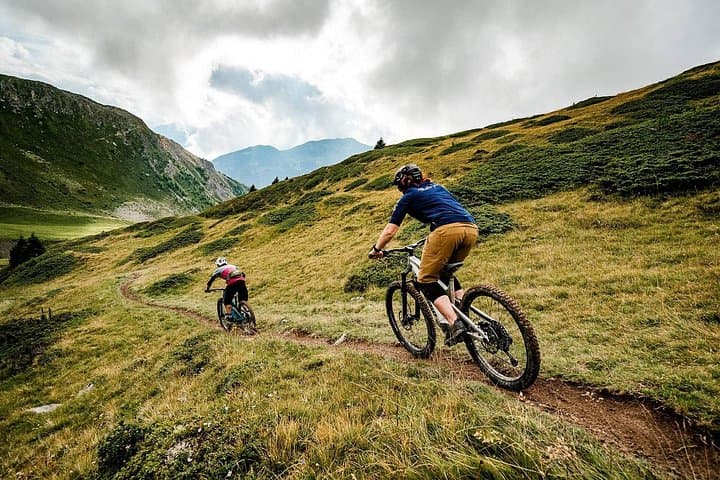
By the time the first sun finds the ridgelines above Garmisch-Partenkirchen, the forest is awake. Spruce shadows lean long over gravel lanes, cowbells mark the meadows, and your e-mountain bike hums under you like a friendly conspirator. Pedal, whir, breathe—the rhythm climbs with the path. The Wetterstein massif—which locals say broods and beams in equal measure—keeps watch over the valley while you point your front wheel uphill, knowing the motor is there to nudge you through the steep bits so you can save your legs for the fun.
This is the promise of a guided e-MTB tour in Garmisch: trade a little grind for a lot of glide without losing the pulse that makes riding in the Alps so rewarding. Over roughly four hours, you’ll climb out of town on well-built forest roads, traverse soft-needled trails under fir and pine, and stitch together small viewpoints that become big ones—glimpses of the Loisach River flashing silver, the pyramid of Alpspitze, and the serrated backbone running to Germany’s highest peak, Zugspitze. The guide sets a steady pace and folds in choices along the way: stick to the main track for confident cruising or dip onto short, chunkier lines with roots and small, rollable features where speed and skill can play. The mountain reads your mood and raises an eyebrow: feeling bold today, or just in it for the views?
The motor’s assistance doesn’t replace effort so much as negotiate with it. You’ll still be working—expect 500 to 900 meters of elevation gain depending on the route and the group—but the power turns long hauls into rolling conversations: about line choice, about the weather patterns slipping over the limestone, about where to stop for a late-morning bite. In Bavaria, that often means an alpine hut perched above a meadow, where a bench waits, wood worn smooth by decades of hikers and riders. Order a pretzel the size of a steering wheel, a hearty Kaiserschmarrn if you’re lucky, and an Apfelschorle that snaps with cold. From the terrace, the valley spreads like a relief map of the morning—switchbacks you’ve climbed, forests you’ve threaded, the town now scaled to toy size.
Garmisch-Partenkirchen is built for this kind of day. The town sits at the seam of two histories: Garmisch and Partenkirchen were once separate, joined for the 1936 Winter Olympics. The legacy shows in the ski jumps and Olympic ice stadium, but step back further and you’re on Roman roads that once cut across Partenkirchen’s old main street. The mountains themselves are older still—Wetterstein limestone lifted and carved by ice and time, steep faces and gullies that collect snow and thunder with meltwater in spring. Ride through these forests and you feel the geology under the tires—crushed rock on climbs, root-laced loam where spruce push close, the occasional limestone outcrop testing your balance.
Culture here still feels anchored to place. Trail etiquette is crisp: slow for hikers, yield on narrow cuts, keep noise down in the meadows where cattle graze and ground-nesting birds keep to the grass. Your guide will point out where bikes are welcome and which paths are foot-only, and where the forest asks for a quiet tread because erosion bites quickly on steep slopes. It’s a good reminder that the assistance in your bottom bracket carries a responsibility: smooth power, smooth behavior.
The descent is where the ride cashes in all that patient climbing. The main line flows like a sentence that knows exactly where it’s going—predictable corners, firm gravel, visibility through the switchbacks. If you want more spice, short side trails add moments of bite: a rock step here, a root fan there, optional rollers that let your tires skip and sing. The forest leans in, moss glows after a shaded rain, and the current of the trail pushes you forward. Even the wind gets in on it, tugging your jersey on the exits. It can get wild, as the guide warned with a half-smile at the start—but wild within your limits, with coaching on braking points and body position when you want it.
A tour like this works for mixed groups because the technology softens differences in fitness without erasing the ride’s character. If you’re newer to mountain biking, the e-assist buys you time to practice fundamentals—looking through corners, staying light over obstacles—without arriving at each section wrung out. If you’re more seasoned, you’ll find you can tack on extra punchy detours, chase little speed lines, and still finish with legs that feel like exploring town instead of collapsing. Expect 15 to 30 kilometers of terrain, depending on group pace and route choice, with plenty of stops for views. Battery anxiety stays low when you ride in eco or trail modes most of the day; your guide will set a cadence that protects the range.
Back in town, the transition from alpine singletrack to painted facades is pleasantly abrupt. Frescoes—Lüftlmalerei—wash across the gables of traditional houses, and a bakery window might derail you with butter-rich pastries. It’s the kind of place where a ride blends easily into an afternoon: a stroll across the old Ludwigstraße, a peek at the ski jump that flies above the town, maybe a train plan forming in your head for another day to Partnach Gorge on foot. The mountains don’t insist you do it all; they simply keep the door open.
When to go? Summer and early fall serve up the widest menu of open trails and dry surfaces, with July and September often offering the best combination of daylight and stable weather. Spring can be brilliant too, especially late May and June when the forest smells new and snow still clings to the highest faces. Winter riding is limited and conditions-dependent; some operators pause tours until the thaw. Whatever the season, come with respect for the terrain, an appetite for a good descent, and the sense that the Alps aren’t just scenery—they’re a partner on the ride, steadying your line and nudging you onward.
The practical takeaways are simple: helmets on, eyes up, and let the motor help you find more mountain in a morning than your legs might manage alone. In return, Garmisch offers a day where the climb is a conversation, the descent a grin you can’t quite wipe away, and the valley below a map of everything you managed to stitch together—one quiet revolution at a time.
Trail wisdom
Small choices, better day.
Manage Your Battery
Ride in eco or trail mode on climbs and flats; save boost for short, steep pitches so you finish with plenty of range.
Dial Your Brakes Early
Before the first descent, test lever reach and modulation; German alpine roads can be fast with tight corners.
Mind Shared Trails
Yield to hikers and announce politely; some footpaths are bike-free—follow your guide’s route and posted signs.
Layer For Elevation
Temps can swing 10–15°F between town and the mid-mountain; a light shell keeps you comfortable on shady descents.
Local knowledge
Read the place, not just the route.
Watch for native species including Chamois on rocky slopes, Alpine choughs circling high ridges.
Keep an eye out for wildlife during the transition between areas and habitats. Respect distance guidelines.
Stay on signed bike routes to minimize erosion on steep limestone soils, and yield to hikers—shared-trail etiquette protects access for everyone.
Follow the guide's instructions on size limits, ethical handling, and leave-no-trace practices.
Pflegersee’s quiet shoreline for a post-ride stroll. Kramerplateauweg benches above town for sunset views
Locally recommended viewpoints and quiet spots known best to local operators.
Garmisch and Partenkirchen were unified for the 1936 Winter Olympics; the town’s Olympic ice stadium and ski jump remain iconic landmarks.
Maritime roots and regional tradition shape the waterways and working coasts.
Seasonal guide
Four versions of the same landscape.
Spring
Best forCool, grippy trails · Snow-draped views
ChallengesLingering snow at higher elevations · Occasional closures for thaw
Late May and June bring fragrant forests and quieter paths; expect variable conditions and check route availability.
Summer
Best forDry trails · Longest daylight
ChallengesAfternoon thunderstorms · Busier routes near town
July–August serve up prime riding with alpine meadows in full color—start early to beat heat and crowds.
Fall
Best forCrystal-clear views · Stable weather
ChallengesShortening days · Cool mornings
September–October offer crisp air and golden larch; pack warmer layers and lights for late finishes.
Winter
Best forOccasional low-elevation forest rides
ChallengesSnow/ice on trails · Limited tour availability
Many operators pause tours in midwinter; if conditions allow, expect only plowed forest roads and cold temps.
Operator details
What the booking data adds.
Included
- ✓Equipment: e-bike, helmet
- ✓Guided e-mountain bike tour
Not included
- —Lunch
Good to know
- ✓Public transportation options are available nearby
- ✓Not recommended for travelers with spinal injuries
- ✓Not recommended for pregnant travelers
- ✓Not recommended for travelers with poor cardiovascular health
- ✓Travelers should have at least a moderate level of physical fitness
Pack with intention
What to bring.
Good to know
Common questions.
Basic bike handling is needed. The tour follows forest roads and beginner-friendly trails, with optional technical sections for more experienced riders.
Plan the edges
The details that make the day easier.
Zugspitze, rising above Garmisch-Partenkirchen, is Germany’s highest peak at 2,962 meters (9,718 feet).
After the ride, head to a traditional Wirtshaus in Partenkirchen—Gasthof Fraundorfer is a classic—for roast pork, dumplings, and a stein of Mittenwalder Helles. For something sweet, find a café along Ludwigstraße and refuel with Apfelstrudel while admiring Lüftlmalerei frescoes.
- Closest airport
- Munich (MUC). Train: ~1h20 to Garmisch-Partenkirchen, then ride from town. Driving: ~90 km
- B2. Cell service
- Good in town, spotty in dense forest. Permits: None for standard routes; obey bike access signs and seasonal closures.
Stick to designated bike routes and brake smoothly to reduce trail wear; alpine soils erode quickly. Pack out all trash and keep noise low near pastures and nesting areas.
Explore by topic
Follow the threads.
Keep exploring
Make the story part of the trip.
Set out from Bass Harbor for a private, customizable day on Blue Hill Bay — lighthouses, puffins, seals, and the chance to feel Acadia from the water. Small groups, local captains, unforgettable views.
In four hours you can move from shaded canyon ferns to wind-scoured coastal ridgelines, guided by someone who knows where the light—and the hidden views—live. This private half-day hike on the Monterey Peninsula or Big Sur is compact, curated, and perfect for travelers who want depth without a multiday commitment.
 Related story
Beneath a sky of shifting light, Skaftafell’s ice reads like a map of time. This three-hour guided glacier hike mixes technical instruction with geology and culture: compact, safe, and unforgettable.