
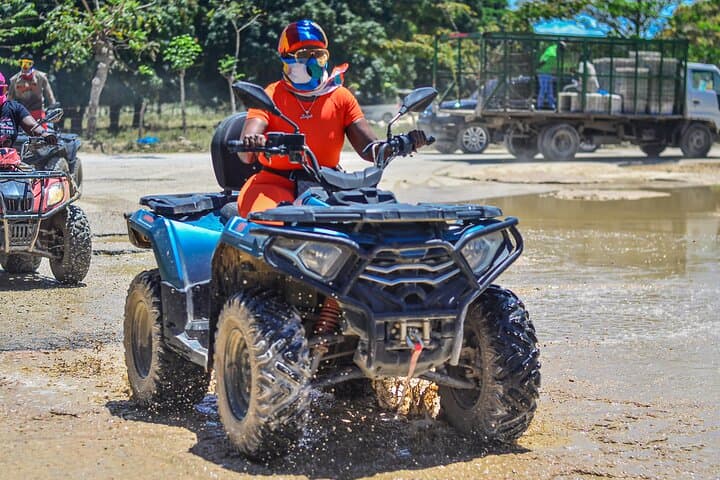
What the day feels like
You slide into the buggy and the guide clicks the helmet strap into place with the practiced ease of someone who spends more time with sand in their boots than behind a desk. The engine growls, a compact, eager heartbeat, and the first track sends you across a mosaic of rutted trails, coastal scrub, and a few daring sugar-sand dunes that dare you to push a little harder. This is Punta Cana in motion — not the postcard stillness of resort pools, but the loud, kinetic version where surf and soil meet, and the landscape keeps you guessing.
In 3–4 hours the tour stitches together three very different Dominican slices: a shaded limestone cave where clear, cool water collects, an intimate stop at a traditional Dominican house for a tasting of local products, and the wide-open curve of Playa Macao, a public beach known for raw Atlantic swell and a dramatic horizon. It’s a short loop, but it feels like a thorough orientation to eastern Hispaniola — geology, culture, and coast layered into a single afternoon.
Geology is subtle here but telling. The low hills and pocketed caves are the result of porous limestone bedrock dissolving over millennia; rainwater and underground streams have hollowed the island into caverns that suddenly open to daylight. When you stand at the cave and look into the water, you’re seeing groundwater history: filtered, mineral-heavy, and startlingly clear compared with the frothing surf a short ride away. The beach itself is a product of longshore processes where the Atlantic throws bigger swells than the Caribbean side of the island, making Macao one of the few Punta Cana beaches with surfers and serious surfable waves.
Culturally, the tour keeps things simple and grounded. At the traditional house stop you meet a local family — the type of encounter that trips packaged for dozens of people can still make authentic when done with restraint. Expect tastings of fresh tropical fruit, perhaps a spoonful of sweetened coconut jam, and often a sample of mamajuana, the Dominican infusion of rum, honey, and tree barks that locals swear by. Guides explain the everyday: how fishing seasons shape local menus, why palms are used for roofing, and how tourism has threaded through these coastal towns in the past few decades.
Why go? Because this is the kind of trip that balances thrill and texture. The off-road sections are physically satisfying — steering a buggy through a soft corner, feeling the vehicle’s weight work through a rut — but you’re not doing anything that requires advanced technical skill. The swimming stop in the cave is a genuine reward: cool, still water after the sun and engine heat. Playa Macao is scenic enough for photos and honest enough to show the raw side of Punta Cana beyond manicured resorts.
Practicalities matter. The advertised duration is 180–240 minutes; factor in hotel pickup and the safety briefing, and budget a half day. Dress for heat and salt: light, quick-dry clothing is best; carry a change of clothes and a dry bag for valuables. Closed-toe shoes with good tread are non-negotiable — sand and rocks will test flip-flops. Guides are bilingual and provide helmets and a safety orientation, but if you’re new to ATVs or buggies, go slow on the corners and let the guide set the pace.
Timing is tactical. Morning rides (before midday) give cooler temperatures and cleaner skies; late afternoon brings softer light for photos but can be windier, and the surf may pick up. If you want calmer cave water and fewer people at Playa Macao, book the earliest slot available.
Logistics are tidy: round-trip transportation from selected hotels and Airbnbs is included, and the tour generally accommodates a range of fitness and comfort levels. Price starts from about $40 USD, making it one of the more affordable ways to get an active, local-facing half-day in Punta Cana.
Safety and stewardship go together. The coastal caves and public beaches are important habitats — sea turtle nesting happens on some Dominican coasts — so stay on established paths, don’t leave trash, and keep noise reasonable at dawn and dusk. Follow the guide’s instructions for parking buggies off fragile dune vegetation.
For a traveler who wants a mix of motorized fun and cultural footnotes, this tour is a tidy, energizing package. You’ll come away with sand in your socks, a clearer sense of the land behind Punta Cana’s hotel strip, and a photograph or two that actually looks like travel instead of advertising. If you time it right and keep the practicalities in mind, it’s an afternoon that both wakes up your senses and helps you understand this part of the Dominican Republic a little better.
Trail wisdom
Small choices, better day.
Wear closed-toe shoes
Sturdy sneakers or light hiking shoes protect feet from sand, rocks, and the ATV floorboards.
Bring a dry bag
Keep your phone, passport, and camera safe from sand and water at the cave and beach stops.
Hydrate before you go
Carry water—heat and sun plus physical activity can dehydrate you quickly; refill options may be limited between stops.
Listen to your guide
Guides manage route choice and safety for mixed-skill groups — follow their instructions on speed and passing.
Local knowledge
Read the place, not just the route.
Watch for native species including Brown Pelican, Frigatebird.
Keep an eye out for wildlife during the transition between areas and habitats. Respect distance guidelines.
This coastal area sees nesting for marine species in parts—stay on marked paths, pack out all trash, and avoid disturbing shoreline vegetation.
Follow the guide's instructions on size limits, ethical handling, and leave-no-trace practices.
The shaded limestone cave’s shallow pools are often less crowded than the beach and ideal for a quiet dip. A short walk behind Playa Macao reveals dune grasses and informal local fishing spots where sunrise is especially photogenic
Locally recommended viewpoints and quiet spots known best to local operators.
The eastern Dominican coastline has been shaped by centuries of fishing communities and later by tourism; local architecture at the traditional house reflects vernacular techniques using palm and limestone.
Maritime roots and regional tradition shape the waterways and working coasts.
Seasonal guide
Four versions of the same landscape.
Spring
Best forFewer crowds · Comfortable temperatures · Cave swimming
ChallengesOccasional showers · Vegetation can be greener and slightly muddier
Spring brings comfortable heat and fewer tourists—water in the cave is usually cool and inviting, with a chance of brief showers.
Summer
Best forWarm water · Long daylight hours · Surf observation
ChallengesHot midday temperatures · Potential afternoon storms · Stronger Atlantic swells
Summer offers warm air and sea but can be hot—schedule early rides to avoid the strongest sun and afternoon storms.
Fall
Best forLess congestion after peak season · Good light for photography · Consistent tours
ChallengesHurricane season window (June–November) may affect operations · Possible rain
Fall can be quieter and photogenic, but pay attention to weather advisories during the hurricane season window.
Winter
Best forStable trade winds · Cooler mornings · Clear skies
ChallengesBusy tourist season around holidays · Stronger winds increasing surf
Winter delivers pleasant mornings and clear skies; expect more visitors and potentially windier surf at Playa Macao.
Operator details
What the booking data adds.
Included
- ✓Professional guide throughout the entire tour
- ✓Optional horseback riding available at the ranch ($30 USD per person)
- ✓Traditional Dominican house with local product tasting
- ✓Buggy or ATV vehicle (depending on your reservation
- ✓Macao Beach to relax and take photos
- ✓Natural cave with crystal-clear water (optional for swimming)
- ✓Free time at each stop
- ✓Round-trip transportation in a safari-style bus from hotels or Airbnbs...
- ✓Guided tour with 3 stops
Not included
- —Meals or additional snacks not included
Good to know
- ✓Not recommended for travelers with spinal injuries
- ✓Not recommended for pregnant travelers
- ✓Not recommended for travelers with poor cardiovascular health
- ✓Suitable for all physical fitness levels
Pack with intention
What to bring.
Good to know
Common questions.
No—guides provide a safety briefing and basic instruction; the route is suitable for beginners, though you should be comfortable with simple throttle and steering control.
Plan the edges
The details that make the day easier.
Playa Macao is one of Punta Cana’s few public beaches known for stronger Atlantic swells, making it popular with local surfers and photographers.
After the tour, head back toward Bávaro or the Punta Cana marina for fresh seafood, fried plantains, and cold Presidente beer. Try local roadside stands for empanadas or fried fish tacos—simple, salty, and authentic.
- Closest airport
- Punta Cana International Airport (PUJ). Typical drive from major Punta Cana resorts: 20–45 minutes depending on pickup. Cell service: reliable in resort areas, spotty in caves. Permits: none usually required for this commercial tour; operator provides equipment and briefing.
Respect nesting areas and dune vegetation—pack out trash, avoid lighting open fires on the beach, and follow guide instructions to minimize habitat disturbance.
Explore by topic
Follow the threads.
Keep exploring
Make the story part of the trip.
In four hours you can move from shaded canyon ferns to wind-scoured coastal ridgelines, guided by someone who knows where the light—and the hidden views—live. This private half-day hike on the Monterey Peninsula or Big Sur is compact, curated, and perfect for travelers who want depth without a multiday commitment.
 Related story
Beneath a sky of shifting light, Skaftafell’s ice reads like a map of time. This three-hour guided glacier hike mixes technical instruction with geology and culture: compact, safe, and unforgettable.
 Related story
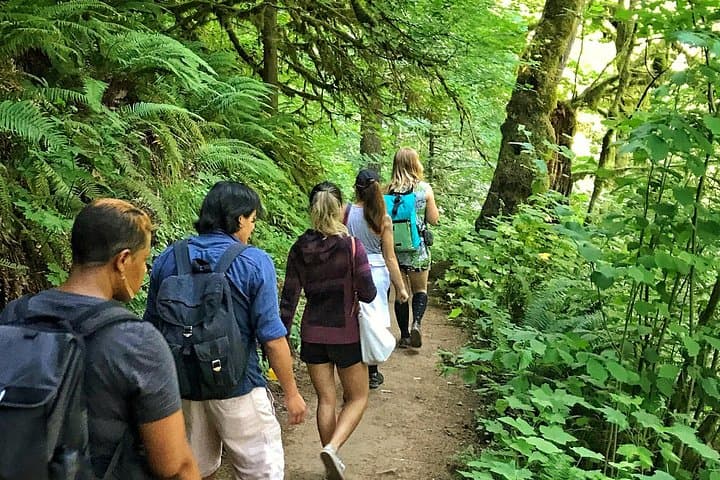
Lose the city for a few hours without leaving it: this 5-mile, 900-foot-gain Forest Park loop threads old-growth pockets, city viewpoints, and cultural landmarks for a compact taste of Portland’s wild side. Expect moss, roots, and stories.