
What the day feels like
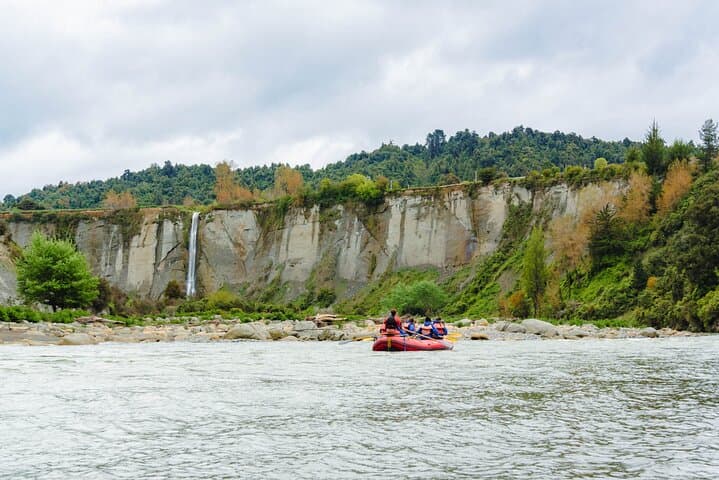
The Rangitīkei River doesn’t rush you. It nudges. It combs past the papa cliffs in long, green braids that flash silver when the sun tilts just right, coaxing you downstream toward a place that feels a little otherworldly: the Whitecliffs Boulders. Think a riverside boulder garden where the rocks are round as moons, scattered beneath willow shade as if rolled into place by some patient, geologic hand.
Your day starts simply—at a small riverside café beside the gorge, hot coffee breathing steam into cool morning air. The river waits below the bank, quiet but intent, carrying driftwood and birdsong along its back. Guides sort paddles and lifejackets while you tuck away a camera and a layer you’ll shed once the day warms. This is not a white-knuckle ride. It’s a scenic float, a half-day of slipping through time and rock with just enough current to keep you honest. The Rangitīkei asks you to pay attention: to the riffles that tug at your bow, to the wind that sneaks up-valley, to the way light paints stripes on the cliff faces.
Push off and the gorge gathers you in, blue herons lifting ahead like gatekeepers. The water is clear and cold, sliding over shingle bars that hum faintly under your hull. The cliffs—papa mudstone—stand pale and scalloped, soft as butter to a patient river over millions of years. In these sediments, mineral-rich waters once cemented sand and silt into hard, spherical concretions. The Whitecliffs Boulders are the most photogenic evidence, a cluster of perfect orbs as big as a person. You’ll meet them midday, when the river relents at a broad bank and the guides lay out lunch on driftwood tables.
Here the place grows quiet. Wind softens. The boulders seem to breathe under the willows. Step between them and scale shifts—what looked like stones from the river become giants at your knees, rounded and pitted like planets. Moss paints their seams. A fantail lands, cocks its head, and flickers away. You eat, wander, and try to make sense of what you’re seeing. Geology prefers slow explanations. The boulders don’t care. They sit where freeze and flood delivered them, letting the river do the narration in a steady, fluent voice.
This valley holds human memory, too. Long before the gorge road and riverside cafés, the Rangitīkei was a Māori highway—a route of food, travel, and connection for hapū like Ngāti Hauiti, who trace stewardship through these reaches. The river carried stories between settlements long before it carried holidaymakers and drift boats. Later, shepherds and shearers learned its moods, and the region grew into classic sheep-country, where high stations met swift water in long, folded hills. As you float, that history shadows the cliffs: a white-eye flits across. A farm dog barks from a distant paddock. The present fits over the past like a light jacket over a warm day.
After lunch, the current finds its rhythm again. Little swirls dimple the surface; the river leans around a bend and urges your craft forward. You watch the water’s language: the V’s that show where rocks lurk, the smooth tongues that pull the bow dead-center, the braided riffles that tinkle and then vanish. In summer, swallows write loops above you. In spring, snowmelt swells the flow and the gorge deepens its voice. On quiet days you might hear a whio—the rare blue duck—whistle from a boulder seam, a reminder that pristine water is not a luxury here, it’s a lifeline.
When the take-out arrives, it does so politely—a gravel bar, a green bank, a shuttle to a waiting snack and a cuppa. You step onto shore with river-legs and a pleasant salt around your lips, warmed by sun and simple food, the mind still catching up to those round stones. It’s hard to leave. The boulders keep their counsel under the trees, and the gorge folds you back toward the world you came from. Yet the Rangitīkei has done its quiet work. It has dared you to slow down and let a landscape set the pace.
Logistically, this float is as approachable as multi-hour river time gets. It runs about four to five hours, with the Whitecliffs Boulders as the centerpiece. Expect mellow Grade I water—enough movement to feel the river’s hand, not enough to intimidate a first-timer. Lifejackets are standard, guides handle the route-finding, and the shuttle returns you to your starting point. You bring the curiosity; they bring the thermos.
Come in summer for warm air and soft light; bring a layer even then, because the Rangitīkei keeps its cool. Spring offers lush banks and a livelier flow; autumn brings crisp stability and burning poplars along the edges; winter strips the valley to its bones, beautiful in a spare way if you don’t mind cold fingers. Whatever the season, the river remains itself—patient, persuasive, and always moving.
It’s easy to call this outing a float trip—and it is. But it’s also an encounter with a geological quirk that feels more like an art installation by the earth itself. The boulders aren’t rare in New Zealand, but clustered like this, under trees and beside a clear river, they’re unforgettable. The Rangitīkei, for its part, never shouts. It lets you drift until you’re quiet enough to hear what the valley is saying.
Trail wisdom
Small choices, better day.
Dress to Get Splashed
Quick-dry layers and a windproof shell keep you comfortable when breeze moves up the gorge, even on sunny days.
Protect From New Zealand Sun
High UV is real—use broad-spectrum sunscreen, sunglasses with a strap, and a brimmed hat that won’t fly off in a gust.
Footwear Matters at Landings
Closed-toe water shoes or sturdy sandals with heel straps handle wet gravel bars and short walks among the boulders.
Keep Gear Dry and Handy
Bring a small dry bag for phone and camera; a microfiber towel helps after exploring the boulder garden.
Local knowledge
Read the place, not just the route.
Watch for native species including Whio (blue duck), Kārearea (New Zealand falcon).
Keep an eye out for wildlife during the transition between areas and habitats. Respect distance guidelines.
Practice Check, Clean, Dry protocols for gear to prevent freshwater pests, and respect private farm access by staying within guided areas and leaving gates as you find them.
Follow the guide's instructions on size limits, ethical handling, and leave-no-trace practices.
Mangaweka Old Suspension Bridge and short riverside walkway. Stormy Point Lookout on the Manawatū Scenic Route for sweeping plateau views
Locally recommended viewpoints and quiet spots known best to local operators.
The Rangitīkei River served as a key travel and trade corridor for Ngāti Hauiti and neighboring iwi long before modern roads followed the gorge.
Maritime roots and regional tradition shape the waterways and working coasts.
Seasonal guide
Four versions of the same landscape.
Spring
Best forLush riverbanks · Livelier flows
ChallengesChangeable weather · Cool water temperatures
Expect fresh greenery and moderate flows; pack an extra layer and be ready for occasional showers.
Summer
Best forWarm air temps · Long daylight
ChallengesStrong UV exposure · Afternoon winds on the gorge
Classic float conditions with mellow water; start early for calmer wind and bring robust sun protection.
Fall
Best forStable weather · Golden light and foliage
ChallengesCooler mornings · Shorter days
Crisp, settled days and quieter riverside banks make for photogenic, relaxed floats.
Winter
Best forClear water clarity · Solitude
ChallengesCold air and water · Limited departures
Beautiful but chilly; dress in warm layers and confirm tour availability and river levels in advance.
Operator details
What the booking data adds.
Included
- ✓Private transportation
- ✓Riverside Lunch and Drinks Included
- ✓All River Equipment
- ✓In-person guide
Good to know
- ✓Service animals allowed
- ✓Specialized infant seats are available
- ✓Suitable for all physical fitness levels
Pack with intention
What to bring.
Good to know
Common questions.
It’s a gentle scenic float on mostly Grade I water—suitable for beginners and families who are comfortable around water.
Plan the edges
The details that make the day easier.
At approximately 241 kilometers long, the Rangitīkei River is one of New Zealand’s longest rivers, cutting a dramatic gorge through soft papa mudstone before reaching the Tasman Sea near Tangimoana.
Refuel post-float at the riverside café where your trip begins and ends. For a classic road-stop pie or a farm-strong milkshake, Flat Hills Café on SH1 is a local favorite. If you’re driving to Palmerston North, plan a stop at Brew Union for a wood-fired pizza and a flight of Manawatū-brewed beer.
- Closest airport
- Palmerston North (PMR), about 1.5 hours by car. Start
- Finish
- Riverside café and river access near Mangaweka Gorge. Driving: Mangaweka is roughly 25 minutes from Taihape, 3 hours from Wellington. Cell service: Patchy to none in the gorge. Permits: Access to Whitecliffs Boulders via guided tour—no separate permits required.
This river corridor is ecologically significant and partly bordered by private farmland—pack out all waste, keep to guided access, and use Check, Clean, Dry protocols to protect New Zealand’s waterways from invasive pests.
Explore by topic
Follow the threads.
Keep exploring
Make the story part of the trip.
Set out from Bass Harbor for a private, customizable day on Blue Hill Bay — lighthouses, puffins, seals, and the chance to feel Acadia from the water. Small groups, local captains, unforgettable views.
In four hours you can move from shaded canyon ferns to wind-scoured coastal ridgelines, guided by someone who knows where the light—and the hidden views—live. This private half-day hike on the Monterey Peninsula or Big Sur is compact, curated, and perfect for travelers who want depth without a multiday commitment.
 Related story
Beneath a sky of shifting light, Skaftafell’s ice reads like a map of time. This three-hour guided glacier hike mixes technical instruction with geology and culture: compact, safe, and unforgettable.