
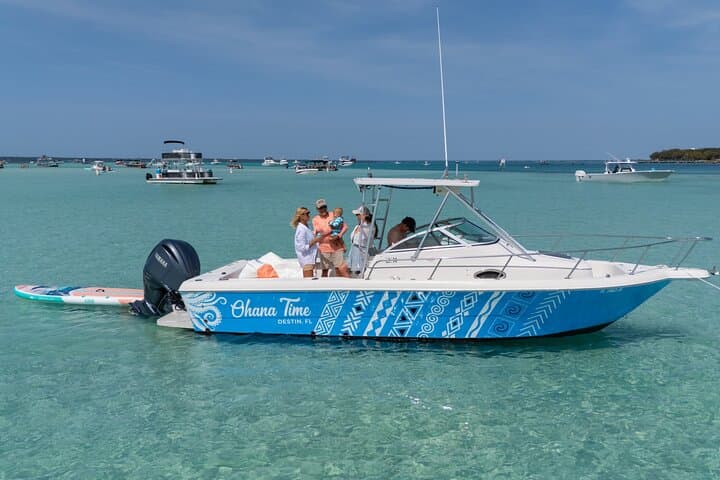
What the day feels like
The boat answers before you do. A throat-deep chug, the 300-horsepower hull rising and falling like a living thing as it eats the chop off the Gulf of Mexico. Salt stings your lips. Wind threads through the passengers' laughter. Within minutes the harbor falls away and the sky opens over water the color of polished aquamarine.
This is Destin by speedboat: concentrated, kinetic, and generous. The guide eases the throttle and the bow slices past white-capped swells. Dolphins arrive the way good stories do—sudden and unmistakable—arcing in a loose, gleaming school alongside the boat, their sleek bodies keeping pace like they’re taking you somewhere. Bottlenose dolphins are the regulars here; they seem to enjoy the boat’s wake the way children enjoy a backyard swing, launching themselves into flight and landing with theatrical splashes.
The tour marries two simple pleasures—speed and immersion. Island hopping drops you on sandbars where the water sits like glass and shells wait like tiny fossils. Snorkeling at nearshore, man-made reefs reveals bright, tropical life crowded around engineered structures: sergeant majors, snapper, the odd grouper hiding shadowed by coral. On calm days the captain will push into deeper blue for an open-Gulf run, the kind of ride that will make you feel, briefly, like you’re skimming the edge of the world.
There’s practical history under all that gloss. Destin began as a fishing village—Portuguese and New England fishermen laid the foundation in the 19th century—and that lineage still defines the town. The harbor and adjacent reefs are products of both natural processes and human intervention: dredged channels, breakwaters, and intentionally sunk structures have created concentrated habitats that feed both commercial fisheries and tour operators. The sugar-white sand dotting local sandbars is primarily quartz, ground fine and gleaming under the sun.
Culturally, Destin is a place of purposeful leisure: sport-fishing tournaments, family beach days, and seafood shacks where the catch-of-the-day moves from the boat to the plate. The people who work these tours—captains, deckhands, guides—speak fluent sea. They can read tides, know where the dolphins like to play by current and bait, and will give you a lesson in respect: watch but don’t feed; keep distance when animals are nursing. The ocean here is social but also sovereign.
If you come for the thrill, you’ll leave with particulars: the way sunlight fractures through green water; the hush when you slip into snorkeling goggles and the world flips to muffled light and darting fish; the sandbar silence where conversation drops to a background hum. If you come for planning, know this: the standard trip runs three to four hours, is private (up to six people), and is engineered for families and small groups who want a mix of wildlife viewing, snorkeling, and beach time. It’s fast in parts, gentle in others—and everything in between.
Practical pointers matter. Timing is everything: head out earlier in the day for calmer seas and better snorkeling visibility; late afternoon brings softer light for photos and often quieter sandbars. Pick reef-safe sunscreen and a snug-fitting snorkel mask. Expect a mix of sun and spray; a windbreaker that folds into a dry bag will be your friend on open-water runs. And while dolphins are common, they’re wild—encounters are never guaranteed, and respectful viewing is non-negotiable.
For the traveler who wants both story and logistics, this trip is an efficient package of the Gulf’s best hits. It’s adrenaline when the captain throttles up for open water, and it’s meditative when the boat anchors and the sea becomes something you penetrate with mask and snorkel. You’ll get good photographs—glossy dolphins in mid-leap, a child balanced on a sandbar with water lapping their ankles—and better memories: the tactile, immediate kind that comes from salt on skin and wind in your teeth.
On the calendar, May to early July is a sweet spot: warm water, high marine activity, and stable weather windows. But Destin is forgiving in shoulder seasons, when crowds thin and the water still carries enough warmth for comfortable snorkeling. The one hard rule is safety—captains will alter the plan if conditions make snorkeling or open-gulf runs risky. That judgment is part of the value you’re paying for with a private boat and an experienced crew.
After the ride, tie your plans into the town. Eat blackened fish at a pier-side restaurant, walk a sunset-streaked beach, or buy fresh shrimp at a local market. The boat tour is a good distillation of what makes Destin tick: a place where ocean and culture are braided together, where adventure is accessible without being reckless.
For anyone who likes water with their speed and wildlife with their itinerary, the Destin speedboat dolphin-and-snorkel trip is a compact, high-value way to sample the Gulf—a short, loud, sunburnable love letter to the sea that leaves you wanting to come back and read it again.
Trail wisdom
Small choices, better day.
Go early for calmer seas
Morning departures usually mean flatter water and better snorkeling visibility—plan for earlier pickup times if you prefer gentler conditions.
Use reef-safe sunscreen
Protect the water and your skin—choose a mineral-based, reef-safe SPF to limit harm to marine life and coral on snorkel stops.
Bring a small dry bag
Keep phone, keys, and a light jacket safe from spray—most boats have limited storage and no locked compartments.
Weight your camera choices
A waterproof point-and-shoot or smartphone in a floating case is ideal—large DSLRs are impractical on fast boats and sandy sandbars.
Local knowledge
Read the place, not just the route.
Watch for native species including Bottlenose dolphins, Sea turtles (occasionally observed).
Keep an eye out for wildlife during the transition between areas and habitats. Respect distance guidelines.
Operators emphasize no-touch viewing and discourage feeding wildlife; guests are encouraged to use reef-safe sunscreen and pack out all trash.
Follow the guide's instructions on size limits, ethical handling, and leave-no-trace practices.
Cowboy’s Beach Bar sandbar stops on calm days for shelling. Nearshore artificial reefs with abundant juvenile fish life—good for beginner snorkelers
Locally recommended viewpoints and quiet spots known best to local operators.
Destin started as a 19th-century fishing village and earned the nickname ‘The World’s Luckiest Fishing Village’ for its prolific catches—fishing culture still influences local cuisine and tourism.
Maritime roots and regional tradition shape the waterways and working coasts.
Seasonal guide
Four versions of the same landscape.
Spring
Best forMigratory birdwatching · Milder seas · Early-season snorkeling
ChallengesVariable spring storms · Cooler water early season
Spring brings fewer crowds and good wildlife activity—water may still be cool in March but improves rapidly by April and May.
Summer
Best forWarm water snorkeling · Consistent dolphin activity · Long daylight hours
ChallengesPeak crowds · Higher heat and sun exposure
Summer offers the warmest water and the most consistent marine life sightings but expect busier beaches and stricter sun protection needs.
Fall
Best forQuieter sandbars · Good offshore visibility · Comfortable temps
ChallengesHurricane season window early fall · Variable sea conditions
Fall can be calm and uncrowded with warm water lingering from summer—keep an eye on weather forecasts during hurricane season.
Winter
Best forOff-season rates · Calm, crisp days · Clear light for photos
ChallengesColder water for snorkeling · Less predictable wildlife patterns
Winter trips are possible and often less expensive, but snorkeling requires thicker exposure protection and dolphin sightings are less guaranteed.
Pack with intention
What to bring.
Good to know
Common questions.
No—dolphins are wild and common in the area, but sightings aren’t guaranteed; captains use local knowledge to maximize chances while keeping interactions respectful.
Plan the edges
The details that make the day easier.
Destin’s nickname is ‘The World’s Luckiest Fishing Village,’ a nod to its historic—and still active—fishing industry and prolific catches.
After the tour, head to HarborWalk Village for waterfront restaurants and bars—try fried grouper or grilled snapper at a pier-side shack, then grab local craft beer at a nearby brewery; pick up locally caught shrimp at the Destin Harbor Boardwalk for a casual, authentic meal.
- Closest airport
- Destin-Fort Walton Beach Airport (VPS); Typical departure: Destin Harbor (short drive from most beachfront hotels); Driving time from Fort Walton Beach: ~15–25 minutes; Cell service: generally good nearshore, spotty offshore; Permits: None required for passengers—follow operator safety briefings.
This area depends on healthy reefs and fisheries—use reef-safe sunscreen, avoid stepping on reef structures, and obey no-feed wildlife guidelines to reduce disturbance.
Explore by topic
Follow the threads.
Keep exploring
Make the story part of the trip.
Set out from Bass Harbor for a private, customizable day on Blue Hill Bay — lighthouses, puffins, seals, and the chance to feel Acadia from the water. Small groups, local captains, unforgettable views.
In four hours you can move from shaded canyon ferns to wind-scoured coastal ridgelines, guided by someone who knows where the light—and the hidden views—live. This private half-day hike on the Monterey Peninsula or Big Sur is compact, curated, and perfect for travelers who want depth without a multiday commitment.
 Related story
Beneath a sky of shifting light, Skaftafell’s ice reads like a map of time. This three-hour guided glacier hike mixes technical instruction with geology and culture: compact, safe, and unforgettable.