
What the day feels like
The bus leaves Scottsdale just as the sky is washing itself in honey. By the time the valley thins and the suburban grid gives way to stretches of creosote and saguaro, the Superstition Mountains loom like a weathered fortress—an armor of mesas, spires, and sun-faded seams where water once carved the stone.
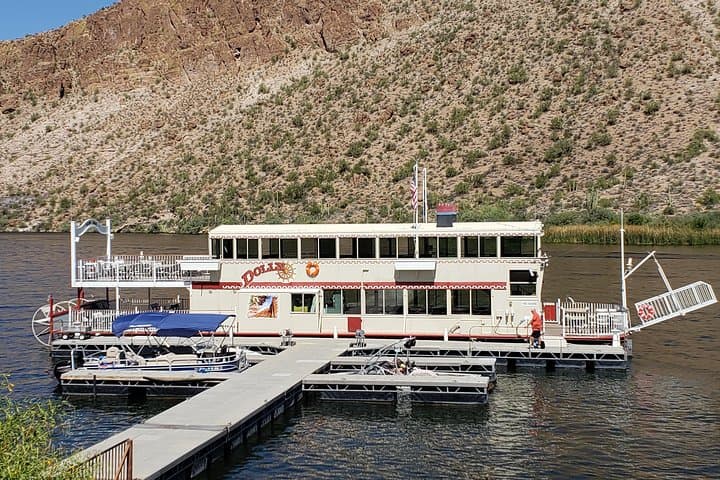
This is not a hike-first day. It’s a day that trades a long approach for concentrated, cinematic encounters: a driving ribbon of hairpin turns along the Apache Trail, the ghost-town theatrics of Goldfield, a wheel-swish across the quiet face of Canyon Lake on a ninety-minute sightseeing steamboat, and a stop at Tortilla Flat where the gift shop is as much the point as the pie. The rhythm of the tour is deliberate—short shocks of movement punctuated by stillness, and each stop peels back a different layer of human and geological history.
The Apache Trail—once a footpath used by the Western Apache and later a wagon route for 19th-century prospectors—threads a corridor through volcanic rock and basin-and-range country. The Superstition range is the flank of an ancient volcanic field; its basalt and rhyolite bluffs show the scars of ignimbrites and lava flows, the same rocks that create souring ridgelines and narrow canyons. The Lost Dutchman legend—about a purportedly rich gold vein hidden in the Superstitions—has embroidered the place with myth, but the power of the landscape doesn’t need superstition to be convincing. It is vivid on its own: columnar formations and knife-edge ridges that look like a ruin carved by time and wind.
Goldfield Ghost Town is a tangent into the area’s mining past. It’s been reconstructed as an attraction—saloons and old-timey storefronts—but the story it gestures toward is real: late-1800s prospectors, hard winters, and the boom-bust cycles that shaped the Desert Southwest. Tortilla Flat, with its single-story roadhouse and sun-baked porch, feels like a living postcard. And Canyon Lake, hemmed by red rock and desert scrub, flips the script: here the desert bends into water, and the steamboat’s slow churn becomes a meditation. On the lake you notice how the cliffs take on different colors as the sun moves, how wind pins ripples into a living, mirrored surface.
This tour is both interpretive and sensory. Expect local guides to point out the best vantage points, to tell a Lost Dutchman tale with a wink, and to thread in natural history—where the saguaros stand tallest, why the rocks fracture the way they do, or how flash floods can rearrange a wash overnight. They’ll also keep an eye on logistics: when to hike a short spur, when to stay hydrated, and when to linger for the light.
Practicalities are simple but crucial. The tour runs about eight hours door-to-door with pickup and drop-off in Scottsdale; the schedule includes multiple short stops and one longer sightseeing cruise on Canyon Lake. There’s minimal technical challenge—most walking is on flat, maintained paths and boardwalks or around the ghost-town exhibits—but southern Arizona heat is the wild card. Summer is intense; spring and fall offer the most comfortable conditions. The Lost Dutchman Museum closure window (closed Mon–Wed from May through October) is worth noting when you plan the itinerary.
Why take this with a guide instead of driving it yourself? The answer is context and efficiency. A seasoned driver knows the narrow, twisty stretches of the Apache Trail and the safe pullouts for photos; a local guide strings historical vignettes and natural-history notes to turns and overlooks, so every stop becomes a curated moment rather than a random roadside pause. The drivable beauty of the trail is further amplified by that lake crossing—the kind of still-water serenity that hits differently from the shore.
Who should book it? Families that want a full-day, low-effort immersion; photographers looking for dramatic, compressed scenery; travelers who want a quick primer on Arizona geology and history without self-driving logistics. It’s not a hardcore outdoor day—there are no long treks or technical climbs—but it is an authentic taste of Sonoran Desert character: the odor of creosote after a brief shower, the brittle silhouette of saguaro against late-afternoon light, and the surprising softness of water where you’d expect only stones.
Timing and gear make the day. Start early to avoid midday heat, wear a brimmed hat and sunshirt, and carry more water than you think you’ll need—desert sun is efficient at sneaking up on you. If you want the best photos, aim for mid-morning or late-afternoon light; the boat ride is a prime slot for reflections and layered canyon shots. And be realistic about mobility: the tour is friendly to most fitness levels, but if you need mobility assistance check with the operator in advance about vehicle access and the nature of stops.
The Apache Trail is a compact, layered experience: geology and legend folded into the rhythms of a day—driving, walking, floating, sampling. It’s an accessible way to step into the Superstitions’ story and surface with a durable sense of place. For a traveler who wants an afternoon of wild scenery married to pragmatic comfort—a day where someone else steers and someone else knows the best viewpoints—this tour is an efficient, satisfying option.
Trail wisdom
Small choices, better day.
Bring extra water
Carry at least 1–2 liters in addition to what the tour provides—Arizona sun is deceptively drying.
Sun protection is non-negotiable
Wide-brim hat, sunscreen, and UV sunglasses will keep you comfortable during roadside stops and on the boat deck.
Plan for light walking
Most stops are short and on flat ground—sturdy walking shoes are enough; no technical footwear required.
Check museum hours
The Lost Dutchman Museum closes Mon–Wed May–Oct—confirm if it's a must-see for your day.
Local knowledge
Read the place, not just the route.
Watch for native species including Coyote, Gila woodpecker.
Keep an eye out for wildlife during the transition between areas and habitats. Respect distance guidelines.
This is fragile desert terrain—stay on established roads and paths, pack out trash, and avoid disturbing native plants like saguaros which are protected in Arizona.
Follow the guide's instructions on size limits, ethical handling, and leave-no-trace practices.
Drive-by viewpoints near the Apache Trail switchbacks for unobstructed ridgeline photos. The small picnic areas along Canyon Lake less frequented by tour groups for quieter reflections
Locally recommended viewpoints and quiet spots known best to local operators.
The Apache Trail follows routes used by the Western Apache and later became a wagon and prospectors' road during the late 1800s mining boom.
Maritime roots and regional tradition shape the waterways and working coasts.
Seasonal guide
Four versions of the same landscape.
Spring
Best forWildflower displays · Milder daytime temperatures · Photogenic sunrise/sunset light
ChallengesVariable early-season rains · Higher weekend visitor numbers
Spring is ideal: comfortable temperatures, desert wildflowers in bloom, and excellent light for photography.
Summer
Best forLower crowds on weekdays · Extended daylight hours
ChallengesHigh heat (dangerous midday temperatures) · Possible monsoon storms causing flash floods
Summer is hot and can be hazardous mid-day; early mornings or cooler evenings are safer if traveling then.
Fall
Best forPleasant hiking temps · Clear skies · Fewer tourists than spring
ChallengesCooling nights and variable early-season rains
Fall offers stable, comfortable weather—another excellent season for timing a full-day trip.
Winter
Best forComfortable daytime temperatures · Crisp visibility for distant views
ChallengesCool mornings and occasional chilly winds · Shorter daylight hours
Winter days are comfortable for sightseeing—pack a warm layer for mornings and boat decks.
Operator details
What the booking data adds.
Included
- ✓Lost Dutchman Museum Admission
- ✓90 Minute Sightseeing Day Cruise
- ✓Professional guide
- ✓Hotel/port pickup and drop-off
Not included
- —Gratuities
Good to know
- ✓Suitable for all physical fitness levels
Pack with intention
What to bring.
Good to know
Common questions.
The tour is approximately 8 hours from pickup in Scottsdale to drop-off.
Plan the edges
The details that make the day easier.
The Superstition Mountains sit on remnants of volcanic activity and rhyolitic lava flows that formed about 20–25 million years ago—evidence of an ancient volcanic field beneath the range.
After the tour, head back toward Scottsdale or stop in Apache Junction for casual Southwestern fare—look for Sonoran-style Mexican restaurants that serve carne asada and local prickly pear margaritas; small roadhouse cafés near Tortilla Flat offer hearty pies and local crafts.
- Closest airport
- Phoenix Sky Harbor (PHX); Typical pickup: Scottsdale hotels; Driving distance to Apache Trail: ~45–60 minutes from central Scottsdale; Cell service: intermittent once on the Apache Trail; Permits: No special permits required for this commercial tour.
The Apache Trail passes through sensitive desert ecosystems—pack out all trash, avoid off-road driving, and respect signage protecting saguaros and nesting birds.
Explore by topic
Follow the threads.
Keep exploring
Make the story part of the trip.
Set out from Bass Harbor for a private, customizable day on Blue Hill Bay — lighthouses, puffins, seals, and the chance to feel Acadia from the water. Small groups, local captains, unforgettable views.
In four hours you can move from shaded canyon ferns to wind-scoured coastal ridgelines, guided by someone who knows where the light—and the hidden views—live. This private half-day hike on the Monterey Peninsula or Big Sur is compact, curated, and perfect for travelers who want depth without a multiday commitment.
 Related story
Beneath a sky of shifting light, Skaftafell’s ice reads like a map of time. This three-hour guided glacier hike mixes technical instruction with geology and culture: compact, safe, and unforgettable.