
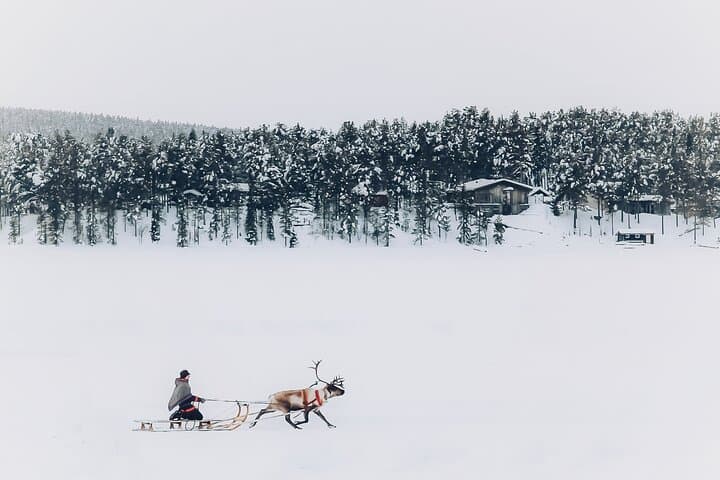
What the day feels like
When the sun hangs low and wide across the Arctic sky, the world simplifies into a palette of blue and white and the steady rhythm of runners on snow. You sit low in a wooden sleigh, bundled against a wind that smells faintly of pine and metal, and the reindeer ahead pick their feet with an easy, practiced gait. Their harnesses jingle like small bells; their breath clouds in the cold and then dissolves into the pale light. For three hours in Jukkasjärvi, the wilderness has a deliberate, human pace — and you are invited into it.
This is not a theme-park sleigh. The Sami day tour adventure is a short, tactile lesson in a world where people and reindeer still move in rhythm. Out here, a daylight sleigh ride doubles as a cultural exchange: you’ll meet handlers who are often reindeer herders, hear local stories about seasonal migrations, and learn how the herd is both livelihood and living heritage. The route pulls away from the main road and into quiet pine stands and flat river valleys, where you can hear the snow compress under antler and boot, and where the light turns everything sharp and generous.
Jukkasjärvi sits on the banks of the Torne River in northern Sweden’s Norrbotten County, a place that has been both a crossroads and a homeland for the Sami for centuries. The Icehotel, reconstructed each winter from Torne ice, draws curious travelers, but the real daily life here is quieter: reindeer herding, small communities, and deep knowledge of the land. Reindeer are at once practical — a source of meat, transportation, and income — and cultural symbols, tied to Sami language, stories, and survival strategies in an extreme environment.
Geologically, this part of Swedish Lapland is shaped by glaciers and rivers. The Torne River carved a wide valley of sediment and silt, punctuated by ridges and eskers. Forest patches — mostly Scots pine and birch — offer shelter for wildlife and herds. In winter the land is sculpted anew: drifting snow covers low shrubs and softens contours, and open water disappears under a skin of ice, waiting for spring melt.
Culturally, a sleigh ride with Sami hosts is both performative and genuine. Guides on these tours are often local herders who split their time between doing paid tourist activities and continuing traditional work. They’ll show you how reindeer are guided, how calves are recognized by markings, and why certain behaviors are reading the landscape in a language older than maps. You’ll learn practical, everyday details — how to start a fire in a drifted clearing, the best way to layer for Arctic sun, and how to respect animals that are at once tame and wild.
This particular experience is compact and friendly: a three-hour daytime outing that includes sleigh time, an opportunity to meet and photograph the reindeer, and a conversational introduction to Sami life. The group size tends to be small, and the pace allows for questions. It’s priced from about $271.65 USD and comes with instant confirmation — useful if you’re planning around weather windows or connecting trains and flights. Note that this offering is popular in winter and often sells out, so booking ahead is wise.
For practical planning: expect temperatures well below freezing in peak winter months, and plan clothing accordingly — base layer, insulating midlayer, and a windproof outer shell. Footwear should be warm, waterproof, and stable for icy approaches to the sleigh pickup area. Bring a camera, but keep it protected from battery drain in the cold. Snacks and a thermos of hot beverage are both comfort and real fuel; many groups include a short stop where you can warm up near a fire and sample local treats.
Etiquette matters here. The reindeer are working animals and should be treated with calm gestures — sudden movements can spook them. Ask permission before touching any animal, and follow your guide’s directions on where to stand for photos. Respect local knowledge: traditions about herding and land use are tied to centuries of practice and modern legal frameworks, including grazing rights and seasonal patterns.
Safety is straightforward but real. Trails are generally gentle, but ice conditions around rivers can change; guides assess the terrain before leaving the road. If you’re prone to cold-related issues, let your guide know. For photographers, control battery exposure — cold kills power — and bring spare batteries in an inner pocket.
Why do this? Because it breaks the distanced-frame of sightseeing. The sleigh ride is both small-scale and resonant: it gives the day a physical memory of sound and weight and breath, and adds context to a visit to the Icehotel or an Aurora-chasing night. Whether you’re a seasoned backcountry traveler or a curious city-dweller, the combination of gentle motion, animal companionship, and cultural storytelling makes for an approachable Arctic experience.
If you go, treat it like a conversation: arrive with questions, leave with a sense of how climate, economics, and tradition shape life in the far north. And when you return to Kiruna or the hotel, warm your hands on a mug of coffee and let the sound of runners on snow linger. This is an experience that resists being simply photographed — it’s best remembered in the slow cadence of a reindeer’s step.
Practical snapshot: three hours in daylight, small groups, instant confirmation, and a price point that reflects both the care of the animals and the value of local knowledge. Book early, dress warmly, and arrive curious.
Trail wisdom
Small choices, better day.
Layer smart
Use moisture-wicking base layers, an insulating midlayer, and a windproof outer shell — temperatures can be well below freezing.
Protect batteries
Keep camera and phone batteries warm in an inner pocket and bring spares; cold drains power fast.
Respect animal space
Ask guides before touching reindeer and follow instructions to avoid spooking the herd.
Bring a thermos
A hot drink during the stop keeps core temperature up and makes the outing more comfortable.
Local knowledge
Read the place, not just the route.
Watch for native species including Reindeer, Various winter birds such as ptarmigan.
Keep an eye out for wildlife during the transition between areas and habitats. Respect distance guidelines.
Respect grazing lands and follow guides; avoid disturbing reindeer and pack out all trash to support fragile Arctic ecosystems.
Follow the guide's instructions on size limits, ethical handling, and leave-no-trace practices.
Short walk to the old Jukkasjärvi church and cemetery with historic Sami graves. A quiet Torne River viewpoint a short drive from the meeting point for serene winter photography
Locally recommended viewpoints and quiet spots known best to local operators.
Jukkasjärvi has long been a seasonal center for Sami herding and is also home to the Icehotel, first constructed in 1989 from Torne River ice.
Maritime roots and regional tradition shape the waterways and working coasts.
Seasonal guide
Four versions of the same landscape.
Spring
Best forLonger daylight · Mild winter temperatures
ChallengesThawing ice patches · Slushy trails
Late winter into spring offers more daylight and slightly warmer temps, but expect changing snow conditions and variable ice.
Summer
Best forNot applicable for sleigh rides · Midnight sun experiences
ChallengesNo snow for sleighs · Different activities replace sleighing
Summer is not suitable for sleigh rides; the reindeer experience switches to summertime herding insights and hikes.
Fall
Best forAutumn colors · Fewer crowds
ChallengesUnstable early snow · Cooler nights
Early fall can be scenic, but sleigh operations depend on reliable snow — bookings are more common as winter approaches.
Winter
Best forSleigh rides · Snow-covered landscapes · Cultural winter activities
ChallengesExtreme cold · Short daylight hours early/late season
Winter is the optimal season for sleigh rides with stable snow and full winter operations; dress for Arctic cold.
Pack with intention
What to bring.
Good to know
Common questions.
The Sami day tour adventure runs approximately three hours in total, including sleigh time and an on-site cultural introduction.
Plan the edges
The details that make the day easier.
The Icehotel in Jukkasjärvi was founded in 1989 and is rebuilt each winter from ice harvested from the Torne River.
After the sleigh ride, head to the Icehotel Restaurant or a local café in Jukkasjärvi or Kiruna for reindeer stew, cloudberry desserts and strong coffee — many guides recommend a meal with locals to round out the cultural exchange.
- Closest airport
- Kiruna Airport (KRN)
- Meeting point
- Jukkasjärvi village (often near the Icehotel)
- Driving from Kiruna
- ~17–20 km
- Cell service
- Variable; good near towns, spotty in fields
- Permits
- None, but follow guide directions and local grazing rules
Support local Sami livelihoods by following guides’ instructions, avoiding feeding or harassing reindeer, packing out all waste, and choosing operators who prioritize animal welfare.
Explore by topic
Follow the threads.
Keep exploring
Make the story part of the trip.
In four hours you can move from shaded canyon ferns to wind-scoured coastal ridgelines, guided by someone who knows where the light—and the hidden views—live. This private half-day hike on the Monterey Peninsula or Big Sur is compact, curated, and perfect for travelers who want depth without a multiday commitment.
 Related story
Beneath a sky of shifting light, Skaftafell’s ice reads like a map of time. This three-hour guided glacier hike mixes technical instruction with geology and culture: compact, safe, and unforgettable.
 Related story
Lose the city for a few hours without leaving it: this 5-mile, 900-foot-gain Forest Park loop threads old-growth pockets, city viewpoints, and cultural landmarks for a compact taste of Portland’s wild side. Expect moss, roots, and stories.