
What the day feels like
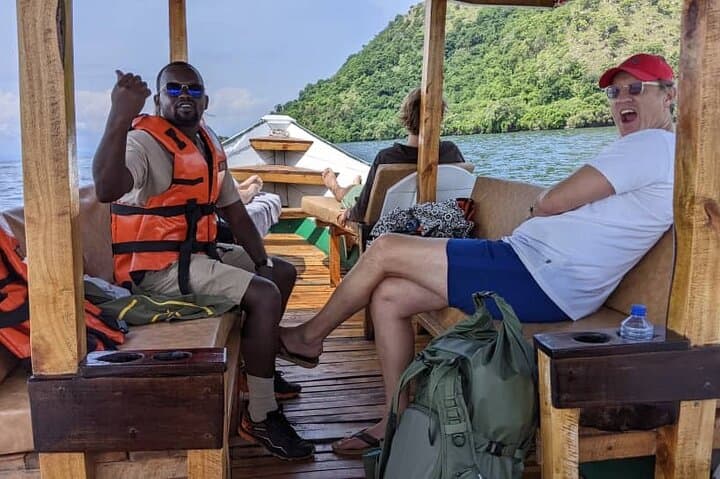
You leave Kigali before dawn, the city's rhythms still folding inward as your private driver threads the highway toward the western rim of the Albertine Rift. The road falls away into a patchwork of hills—tea terraces and banana groves stitched across the highlands—until the land untucks itself and a ribbon of water appears: Lake Kivu, broad and unexpected, like an inland sea that has been waiting for you.
By midmorning you’re in Musanze, where the tour pauses for a cultural cross-section: a walk through a town shaped by the shadow of the Virunga volcanic chain, a quick visit to a community craft market, the kind of place where coffee aromas gather in doorways and people trade news with a nod. It’s the connective tissue of the day—human details that give the lake context. Then the drive resumes down toward Gisenyi, the lakeshore town whose shoreline invites you to slow down. Planted on the edge of the water, lakeside cafés and fish stalls cluster near a volcanic backdrop that still feels geologic and raw.
Lake Kivu is not merely scenic. It’s a product of the East African Rift—a tectonic seam where the continent is gently splitting apart. The water sits at roughly 1,460 meters above sea level, a highland lake that behaves like an ocean: wind-steered waves, promontories, islands. Beneath the surface the lake holds a secret that has reshaped local industry and conservation planning—dissolved methane and carbon dioxide trapped in deep waters that scientists have worked to harness and monitor. That technical reality contrasts with uncomplicated pleasures up top: swimming in calm bays, skipping stones off black volcanic rock, and taking a slow boat to small islets where fishermen mend nets.
The cultural thread is equally strong. The route from Kigali to Lake Kivu slices through Rwanda’s Western Province, where history and livelihoods are tied to the land—coffee and tea fields, smallholder farms, and markets where local produce is bartered and sold. And because the itinerary stops in Musanze, you get a peek at a community shaped by proximity to Volcanoes National Park: gorilla conservation has changed the economic landscape here, and local guides and craftspeople have tapped into ecotourism in pragmatic ways.
Practically, this is a long day—expect 12 to 14 hours—but it’s structured to maximize the balance of travel, culture, and time on the water. The tour is private and offered with instant confirmation and a flexible cancellation policy, making it a reliable single-day escape if you’re based in Kigali and want to see a different face of Rwanda without the commitment of a multi-day trip.
Why go? Because Lake Kivu offers an accessible complexity: a geological wonder that’s readable even to casual travelers, a lakeside calm that feels restorative, and cultural touchpoints—markets, coffee, and fishing communities—that keep the visit grounded. For photographers it’s a palette of volcanic silhouettes, luminous early light over water, and portraits of everyday lakeside life. For families or mixed-ability groups, there are low-impact options: short boat outings, lakeside walks, and relaxed lunches.
Getting the most from the day requires a few simple decisions. Start early to beat late-afternoon winds on the lake and to allow time for a meaningful stop in Musanze. Bring layers—the highlands can feel cool in the morning and then hot by midday—and a lightweight rain jacket if you’re traveling during the rainy months. Shoes should be comfortable for short walks on uneven ground and for climbing onto small boats. Hydration is easy to manage if you bring a refillable bottle; many towns have safe bottled water and cafés where you can top up.
On the water, be respectful: don’t disturb fishermen’s nets, avoid leaving plastics behind, and follow the guide’s briefing on where swimming is safe. In town, support small vendors—buy coffee or a woven basket—and remember that tipping and reciprocity are appreciated but not expected at the scale of western norms. Finally, leave your schedule flexible enough to linger over a lakeside lunch; it’s where the day often becomes most memorable.
The Lake Kivu day trip is best framed as an invitation to slow exploration rather than conquest. You’ll cross landscapes, meet communities, and float briefly on a lake that will make you reconsider what “inland sea” can mean. There’s geology in the water and human history on the shore, and together they make a day that is both instructive and quietly restorative.
Practical snapshot: a private, full-day experience (12–14 hours) departing Kigali, with cultural stops in Musanze and extended time in Gisenyi and on Lake Kivu. The tour balances driving and gentle lakeside activities—boat rides, market visits, and short walks—and is priced as a premium private day (from USD 480). What you come home with will be less about the speed of travel and more about the texture of place: the hush of the lake, the cadence of market calls, and a clearer sense of Rwanda’s western edge.
Trail wisdom
Small choices, better day.
Start Early
Depart Kigali at first light to maximize calm waters, quieter markets, and daylight for the scenic drive.
Layer Up
Mornings can be cool at elevation; bring a lightweight insulating layer that packs away when it warms up.
Respect Fishing Areas
Follow your guide’s directions when boarding boats and avoid disturbing nets or shoreline fishers.
Cash & Small Purchases
Carry small RWF notes for market stalls and tips; remote vendors may not accept cards.
Local knowledge
Read the place, not just the route.
Watch for native species including African fish eagle, Great cormorant.
Keep an eye out for wildlife during the transition between areas and habitats. Respect distance guidelines.
Methane extraction projects and conservation programs work alongside local communities; visitors should minimize plastic use and support local guides and vendors.
Follow the guide's instructions on size limits, ethical handling, and leave-no-trace practices.
Walk the quieter western shore near Gisenyi at sunset for soft light and fewer crowds. Visit a small lakeside coffee stall to sample locally roasted beans and talk with producers
Locally recommended viewpoints and quiet spots known best to local operators.
Lake Kivu sits within the Albertine Rift—part of the East African Rift system—and its shores have been trade and settlement routes for centuries.
Maritime roots and regional tradition shape the waterways and working coasts.
Seasonal guide
Four versions of the same landscape.
Spring
Best forLush landscapes · Birdwatching · Lower tourist numbers
ChallengesLong rainy season (March–May) · Slippery trails and muddy roads
Spring corresponds to Rwanda’s long rains—expect green hills and occasional downpours that can shorten outdoor windows.
Summer
Best forCalm lake conditions · Clear views · Day trips
ChallengesCooler mornings · Higher demand in dry months
Summer (June–August) is drier—ideal for boating and clearer vistas—though mornings remain crisp at elevation.
Fall
Best forFewer crowds · Cultural market visits · Comfortable temperatures
ChallengesShort rains (Sept–Nov) · Intermittent road wetness
Fall brings brief rains and warm days—good for lakeside exploration if you pack a light rain layer.
Winter
Best forDry weather · Smooth driving conditions · Stable boat trips
ChallengesHigher daytime temperatures · Increased domestic travel during holidays
Winter is the short dry season (Dec–Feb) and offers reliable weather for a full-day itinerary from Kigali.
Operator details
What the booking data adds.
Included
- ✓pick up and drop of any where in kigali
- ✓Bottled water
- ✓Boat fees
- ✓professional driver guide
- ✓Transportation 4x4 jeep.
- ✓ibyiwacu culture tour fees.
Not included
- —Meals-Lunch: Guests cover their meal bills
- —Anything not explicitly mentioned
Good to know
- ✓Suitable for all physical fitness levels
Pack with intention
What to bring.
Good to know
Common questions.
Expect a 12–14 hour day with roughly 3–4 hours of driving each way total; time includes a stop in Musanze and lakeside activities in Gisenyi.
Plan the edges
The details that make the day easier.
Lake Kivu contains large quantities of dissolved methane and carbon dioxide in its deep waters; Rwanda has developed projects to extract methane for electricity production, making the lake both a natural wonder and an industrial resource.
After the day’s paddle and market browsing, head to a lakeside café or food stall for fresh grilled tilapia and local staples; try Rwandan coffee or a locally brewed banana beer and support vendors who rely on tourism dollars.
- Closest airport
- Kigali International Airport (KGL); Driving distance: ~2.5–4 hours one-way (~170 km); Cell service: Good in towns, patchy in remote bays; Permits: None required for the day tour
Support local guides and vendors, avoid single-use plastics around the shoreline, and follow guide instructions to reduce disturbance to fishers and shoreline habitats.
Explore by topic
Follow the threads.
Keep exploring
Make the story part of the trip.
Set out from Bass Harbor for a private, customizable day on Blue Hill Bay — lighthouses, puffins, seals, and the chance to feel Acadia from the water. Small groups, local captains, unforgettable views.
In four hours you can move from shaded canyon ferns to wind-scoured coastal ridgelines, guided by someone who knows where the light—and the hidden views—live. This private half-day hike on the Monterey Peninsula or Big Sur is compact, curated, and perfect for travelers who want depth without a multiday commitment.
 Related story
Beneath a sky of shifting light, Skaftafell’s ice reads like a map of time. This three-hour guided glacier hike mixes technical instruction with geology and culture: compact, safe, and unforgettable.