
What the day feels like
You step off the van into a soft, humid world where the air itself seems attentive. Leaves drip like they’ve been rehearsing for your arrival; orchids and bromeliads cling to trunks as if eavesdropping. The first part of the day is a cloud forest—San Ramón’s patchwork of emerald and mist—where the zipline platforms sit on ridgelines and the canopy hovers at head height. There is a whir of pulleys and the taut whisper of webbing; a guide walks you through a quick lesson, clips you in, and the forest dares you to fly. The rush is immediate—wind, the creak of cable, a bird’s indifferent call—and a different perspective of the same mountain you noticed from the road. The forest, for a moment, has agency: it stresses, it softens, it tests you.
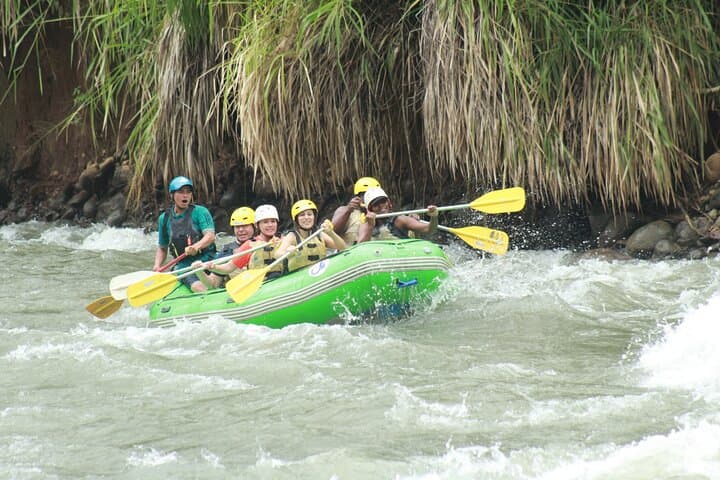
This is an efficient day designed for people who want to stack experiences without losing the texture of place. You’ll be picked up in San José early (the operators leave about 6:30 a.m.) and drive roughly 1 hour 45 minutes to the cloud forest near San Ramón. There, under a canopy crowded with orchids and ferns, the morning is measured in runs—the short, sharp arcs of the zipline courses and the steady, slower rope-bridge crossings that let the moss and sunlight reassert themselves. After a midday meal—an opportunity to taste local casados or sodas—you head northeast toward La Fortuna for a two-hour rafting run on a river that cuts through volcanic foothills toward Arenal’s basin. By evening, you’re back on the road headed to San José, carrying the precise ache of good exertion and the sticky-sweet scent of the forest.
Geology and culture thread through both halves of the day. The cloud forest here rides on the spine of Costa Rica’s highlands: uplift and volcanic sediment created the ridges, and a warm, humid ocean breeze condenses as it climbs, creating the perpetual mist that feeds epiphytes. Downstream, the rivers that feed your raft have been shaped by volcanic sands—swift, clear, and eager to push you forward. Culturally, the tour stitches together two different Costa Ricas: the Central Valley’s coffee-and-suburb rhythm around San Ramón and the more touristic, hot-spring–studded economy of La Fortuna. Guides you'll meet usually have grown up in the region or nearby, and they like to mix practical instruction with small local stories—about a favorite waterfall, a family farm that grows the best plantains, or where to find genuine artisanal coffee.
Why take a jam-packed day like this? It’s the nearest thing to a sampler plate of Costa Rica’s adventure identity: canopy and whitewater in one trip, with minimal logistics for travelers short on time but hungry for variety. It’s also a pragmatic choice: you cover more landscape and biome in 10 hours than you might in a week in a single town. For families or groups with mixed interests—some want speed and height, others want river rhythm—this circuit spreads the joy.
Practical notes you’ll appreciate: the itinerary is a long day (about 10 hours total), so pack for variability—light rain in the morning cloud forest, strong sun at midday, and splash on the river. Guides give a short safety lesson before each section: zipline basics, how to position your paddle, and what to do if you flip. The rafting section is two hours and suitable for people comfortable with basic swimming; most operators use Class II–III stretches that balance excitement and safety, but check with the provider if anyone in your party is a beginner.
If you’re planning this as a single-day plug-in between flights or as a first-day warm-up, timing is key. An early start from San José helps you beat heavier traffic and gives you the clearest morning light for photographs. Hydration and sun protection matter—Costa Rica’s sun can be fierce once the clouds thin. Finally, leave a little room in your schedule for the small moments: a guide pointing out a rare hummingbird; the smell of fresh coffee at a roadside stall; a cooling dip after the river run.
This trip is straightforward to book, often comes with instant confirmation, and sits in a sweet spot price-wise for Costa Rican adventure days. It’s not a wilderness expedition, and it doesn’t pretend to be: it’s a pragmatic, high-value day that stitches together two unforgettable activities with local color. For travelers who want to feel altitude in their chest and current under their hull before dinner, it’s a compact, reliable dose of Costa Rica’s best impulses: curiosity, motion, and a deep respect for the green things that keep drawing people back.
Timing, footwear, and a willingness to try both flying and floating will reward you handsomely. The forest will nudge you; the river will insist. Both will make you glad you answered back.
Trail wisdom
Small choices, better day.
Start Early
Pickup is about 6:30 a.m. from San José—early departure avoids traffic and delivers crisp morning light in the cloud forest.
Footwear Matters
Wear closed-toe, treaded shoes that can get wet; river shoes or sturdy sneakers work best for both zipline platforms and rafting.
Hydrate & Snack
Bring a refillable water bottle and light snacks—salty, quick-energy items—so you stay fueled through the long day.
Listen to Briefings
Guides give short safety lessons before each activity—follow them closely for a safe, smooth experience.
Local knowledge
Read the place, not just the route.
Watch for native species including Resplendent hummingbirds, Howler monkeys.
Keep an eye out for wildlife during the transition between areas and habitats. Respect distance guidelines.
The cloud forest and river corridors are sensitive ecosystems—stay on trails, avoid touching epiphytes, and follow guide instructions to minimize impact.
Follow the guide's instructions on size limits, ethical handling, and leave-no-trace practices.
Small roadside 'sodas' (local eateries) near San Ramón that serve authentic casado lunches. A short detour to a nearby viewpoint offers sweeping valley views and good birding before the zipline
Locally recommended viewpoints and quiet spots known best to local operators.
San Ramón and the Central Valley developed around coffee cultivation in the 19th and 20th centuries; the surrounding cloud forests have long supported local farming communities and small reserves.
Maritime roots and regional tradition shape the waterways and working coasts.
Seasonal guide
Four versions of the same landscape.
Spring
Best forLower crowds (early spring) · Cloud forest blooms · Comfortable temps
ChallengesTransitional rains · Variable trail conditions
March–May bridges the dry and wet seasons—expect lush growth and some afternoon showers; mornings are often best for canopy visibility.
Summer
Best forLush green scenery · Abundant wildlife · Long daylight hours
ChallengesFrequent afternoon rain · Mud on trails
June–August is part of the wet season; the forest is emerald and vibrant but plan for rain and slick footing after midday.
Fall
Best forFewer tourists · Strong river flows for rafting · Dramatic skies
ChallengesHeavier rains (September–November) · Occasional cancellations due to weather
September–November can be the wettest stretch; rivers are lively, which amps rafting but increases weather-related adjustments.
Winter
Best forDry, sunny days · Clear views from canopy · Reliable road conditions
ChallengesHigher tourist demand (Dec–Feb) · Hotter lowland temperatures
December–February is the driest and most reliable season for a full day of activities—expect clearer skies and firm trails.
Operator details
What the booking data adds.
Included
- ✓Air-conditioned vehicle
- ✓Equipment to make rafting and zip line
- ✓vegan diet
Not included
- —Tips
- —Souvernirs
Good to know
- ✓Service animals allowed
- ✓Not recommended for travelers with spinal injuries
- ✓Not recommended for pregnant travelers
- ✓Not recommended for travelers with poor cardiovascular health
- ✓Travelers should have at least a moderate level of physical fitness
Pack with intention
What to bring.
Good to know
Common questions.
Pickup from San José hotels begins around 6:30 a.m., and the full experience is approximately 10 hours total, returning to San José in the evening.
Plan the edges
The details that make the day easier.
Costa Rica protects roughly 25% of its territory in national parks and reserves—cloud forests like those near San Ramón are part of a national effort to conserve biodiversity.
After the day’s exertions, hit a local 'soda' in San José for a casado plate (rice, beans, plantain, salad, and protein) or in La Fortuna enjoy a soak at nearby hot springs—both are great ways to connect the adventure to Costa Rican food and community.
- Closest airport
- Juan Santamaría International Airport (SJO); Pickup: Hotel pickup in San José (approx. 6:30 a.m.); Driving to trailhead: ~1 hr 45 min to San Ramón; Cell service: intermittent in cloud forest; Permits: none typically required for this commercial tour
This route passes through sensitive cloud forest and river habitats—pack out trash, avoid removing plants or wildlife, and follow guide directions to prevent erosion and disturbance.
Explore by topic
Follow the threads.
Keep exploring
Make the story part of the trip.
Set out from Bass Harbor for a private, customizable day on Blue Hill Bay — lighthouses, puffins, seals, and the chance to feel Acadia from the water. Small groups, local captains, unforgettable views.
In four hours you can move from shaded canyon ferns to wind-scoured coastal ridgelines, guided by someone who knows where the light—and the hidden views—live. This private half-day hike on the Monterey Peninsula or Big Sur is compact, curated, and perfect for travelers who want depth without a multiday commitment.
 Related story
Beneath a sky of shifting light, Skaftafell’s ice reads like a map of time. This three-hour guided glacier hike mixes technical instruction with geology and culture: compact, safe, and unforgettable.