
What the day feels like
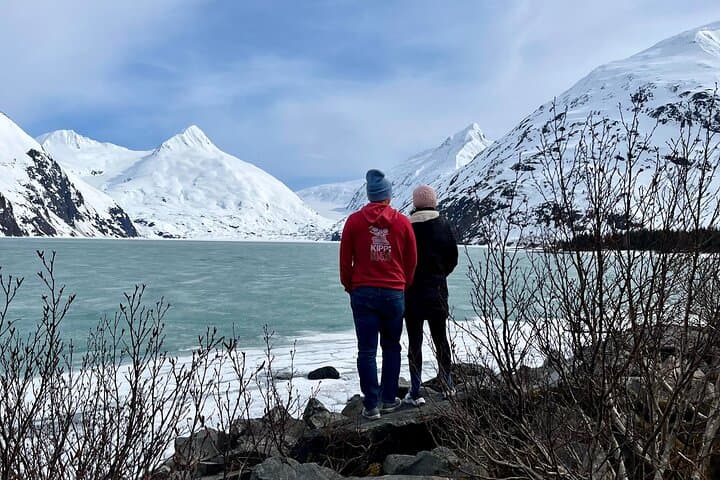
The day begins with the sound of meltwater whispering through Anchorage’s gutters. Winter loosens its grip one drip at a time, and the city wears a crust of grit and slush known locally as breakup—those fickle shoulder weeks when Alaska decides, slowly and messily, to turn the page. It’s not the postcard Alaska you imagined, but it comes with an invitation: drive south along Turnagain Arm and watch the season wake up in real time.
The highway hugs the coastline like a ribbon, cliffs on one side, a sprawling tidal flat on the other. Mountains shrug off their snow coats; waterfalls thread the rock faces with silver. The tide rolls in with muscle here, pushing a bore that races down the Arm like a living heartbeat. Even the wind seems intent, shouldering your day forward. You settle into the vehicle headed for the Alaska Wildlife Conservation Center—fifty miles of road that feels like a documentary unfolding outside the window.
This four-hour escape is built for the messy middle of spring, that slushy interlude when Anchorage locals tell you to keep your expectations as layered as your clothing. Which is exactly why it works: you skip the city’s melt and drive straight into a wildlife corridor framed by the Chugach Mountains. En route, keep an eye on the cliff bands for Dall sheep, and scan the sky for bald eagles that use the thermals like moving sidewalks. If the tide is right and luck leans your way, you may catch a glimpse of a beluga’s pale back sliding through the steely water—ghosts of the Arm, here year-round but seen on their own terms.
At the Alaska Wildlife Conservation Center, the season has its own script. Brown and black bears test the air, ambling from dens as the calendar tips toward May. Wood bison—the heavy lifters of Alaska’s conservation story—graze beyond the fenceline, ambassadors for a successful reintroduction that returned the species to the wild after more than a century’s absence. Musk ox carry ancient winters in their eyes. Moose flick their ears at ravens that argue from fence posts. The Center is not a zoo; it’s a sanctuary where injured and orphaned animals find permanent care or a path back to the wild. In breakup season, the mud keeps it honest. The boardwalks gleam with melt, and the place smells like thaw and pine and animal life getting on with it.
Guides narrate the thrum of the landscape with the sort of dry, practical humor you learn to trust in Alaska. They point out that this is the shoulder season for visitors but a pivotal time for wildlife behavior. They translate the tracks stitched into the slush and add necessary context: these animals are here because of human mistakes, weather, and wild luck; your job is to observe without intruding, to learn without claiming. The fences are there for safety; your camera will reach past them with a long lens and a steady hand.
On the return, the tour pauses in Girdwood, a forested town that has perfected the art of warming up. It’s a good place to chase down hot soup, a cinnamon roll, or a local beer while the town itself decides it’s just not that into winter anymore. Snowbanks slump; the boardwalks glitter with melt. The trailheads are half-frozen, half-muddy—proof that Alaska in April doesn’t try to be anything it isn’t.
Geologically, this corridor is young and restless. Turnagain Arm was carved by glaciers that retreated only yesterday in Earth time, leaving a long, narrow fjord with one of the world’s largest tidal ranges. The land still flexes in memory of the 1964 earthquake—the second-strongest ever recorded—which dropped sections of shoreline and reshaped the wetlands that now host migrating birds in obscene numbers come May. Cultural threads run just as deep: the Dena’ina Athabascan people have lived in these lands and waters for thousands of years, their knowledge mapping food, seasons, and safe passage long before any road cut a line along the shore.
For the traveler, the appeal is pragmatic and clear. You’re getting a guaranteed window into Alaska’s wildlife at a time of year when the backcountry can be unpredictable and the trails more ice rink than footpath. You’re also getting the kind of scenic drive that makes the act of getting there part of the experience. The Arm stares you down, daring you to keep your eyes on the road as the mountains tilt sunlight into new angles. The current pushes forward. The day gets lighter, brighter, and, yes, mushier.
Come prepared. Waterproof boots will make you a happier human. Layers are essential; the day can swing from bright to biting in a gust. A thermos with something hot turns a scenic overlook into a place to linger. Binoculars earn their space in your pack, letting you read the slopes for sheep or pick out the detail in an eagle’s feathers. A polarizing filter on your camera tames glare off wet snow and water. And patience pays—a five-minute wait often becomes your best shot of the day.
Despite the season’s middle-child reputation, breakup offers something clean and true: you see Alaska becoming itself. That’s worth the mud on your boots and the grit on the bumper. Back in Anchorage by afternoon, you’ll carry the salt smell of the Arm and the soft thunder of bison hooves like a soundtrack you didn’t expect but won’t forget. In the shoulder season, the state shrugs off its gloss and shows you the gears. The wild doesn’t mind. It invites you in, and asks only that you pay attention.
Trail wisdom
Small choices, better day.
Dress in layers you can shed fast
Breakup days swing from chilly to mild. A base layer, midlayer, and waterproof shell let you adapt on the fly.
Waterproof boots beat sneakers
Expect wet, slushy ground at viewpoints and around the Center. Ankle-high waterproof footwear keeps feet dry and warm.
Bring binoculars or a long lens
Wildlife can be distant along Turnagain Arm, and fences at the Center require reach for tight shots.
Mind the tides and pullouts
Scenic stops fill fast near high tide. Use designated pullouts and keep an eye on traffic along the Seward Highway.
Local knowledge
Read the place, not just the route.
Watch for native species including Bald eagles, Dall sheep.
Keep an eye out for wildlife during the transition between areas and habitats. Respect distance guidelines.
Observe from a distance, never feed wildlife, and support AWCC’s nonprofit work through entry fees or donations—each helps fund animal care and reintroduction programs.
Follow the guide's instructions on size limits, ethical handling, and leave-no-trace practices.
Bird Point turnout for sweeping tide views and possible bore tide action. Winner Creek Gorge boardwalk in Girdwood for a quick, scenic leg-stretcher
Locally recommended viewpoints and quiet spots known best to local operators.
The Alaska Wildlife Conservation Center began in 1993 and later helped reestablish wood bison to the Alaskan wild after a 100-year absence.
Maritime roots and regional tradition shape the waterways and working coasts.
Seasonal guide
Four versions of the same landscape.
Spring
Best forBear activity ramping up · Eagles and migrating birds
ChallengesSlush, mud, and icy patches · Changeable weather and wind
Breakup season is messy but alive—expect thawing ground, active wildlife, and fewer crowds.
Summer
Best forLong daylight hours · Lush landscapes and peak access
ChallengesMore visitors · Glare and heat in vehicles
Green peaks, open trails, and extended hours at attractions make summer easy and popular.
Fall
Best forAutumn colors · Moose activity during the rut
ChallengesShortening days · Early-season frosts and rain
Vibrant tundra hues and crisp air; watch for wildlife prepping for winter.
Winter
Best forAlpenglow and snow scenes · Potential northern lights at night
ChallengesLimited daylight · Icy roads and cold temps
A quiet, starkly beautiful corridor; plan for cold, safety, and reduced operating hours.
Operator details
What the booking data adds.
Included
- ✓Admission to Alaska Wildlife Conservation Center
- ✓Air-conditioned vehicle
- ✓Admission to Chugach State Park
Not included
- —Gratuities
Good to know
- ✓Service animals allowed
- ✓Public transportation options are available nearby
- ✓Not recommended for travelers with spinal injuries
- ✓Not recommended for travelers with poor cardiovascular health
- ✓Suitable for all physical fitness levels
Pack with intention
What to bring.
Good to know
Common questions.
At the Alaska Wildlife Conservation Center you can see bears, moose, wood bison, musk ox, and more; along Turnagain Arm, watch for Dall sheep and bald eagles. Wild sightings vary with season and conditions.
Plan the edges
The details that make the day easier.
Turnagain Arm experiences one of the world’s largest tidal ranges—up to 40 feet—with a bore tide that can surge several feet high and travel at highway speeds.
Warm up in Girdwood at The Bake Shop for soup and sweet rolls, or grab a flight at Girdwood Brewing Company. Back in Anchorage, Moose’s Tooth serves legendary pizza and pints—perfect after a slushy-season day out.
- Closest airport
- Ted Stevens Anchorage International (ANC). Tour corridor: Seward Highway to Alaska Wildlife Conservation Center (~50 miles, 60–75 minutes). Cell service: Good in Anchorage, spotty along Turnagain Arm. Permits: None for this tour; AWCC entry handled as part of your visit.
Stay behind barriers, never feed animals, and pack out all trash. AWCC is a nonprofit sanctuary and reintroduction leader—your respectful visit helps fund wildlife care and conservation.
Explore by topic
Follow the threads.
Keep exploring
Make the story part of the trip.
Set out from Bass Harbor for a private, customizable day on Blue Hill Bay — lighthouses, puffins, seals, and the chance to feel Acadia from the water. Small groups, local captains, unforgettable views.
In four hours you can move from shaded canyon ferns to wind-scoured coastal ridgelines, guided by someone who knows where the light—and the hidden views—live. This private half-day hike on the Monterey Peninsula or Big Sur is compact, curated, and perfect for travelers who want depth without a multiday commitment.
 Related story
Beneath a sky of shifting light, Skaftafell’s ice reads like a map of time. This three-hour guided glacier hike mixes technical instruction with geology and culture: compact, safe, and unforgettable.