
What the day feels like
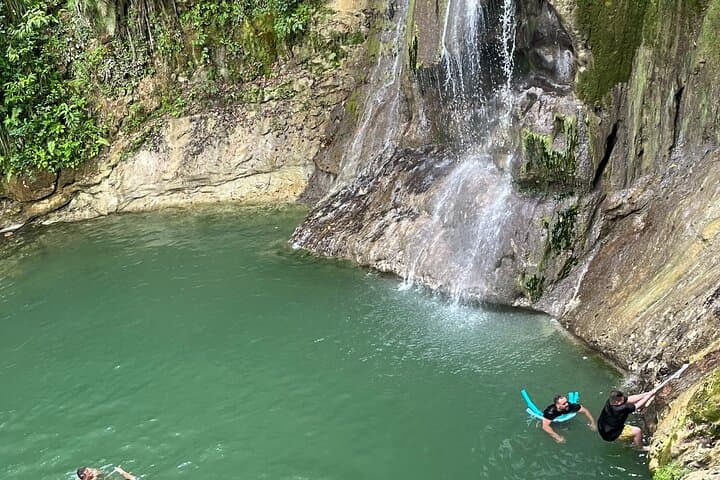
You arrive before noon with the ocean still ink-blue on the horizon and a rented SUV humming up narrow mountain roads. The air changes the moment you step off Highway 111: it becomes denser, green taking on a sound of its own. The guide points toward a cleft in the hills where a river has, for centuries, insisted on carving patience into stone. Gozalandia doesn’t announce itself in a single shout; it pulls you closer with small cries—birdsong, the slap of water on rock—until the first curtain of white appears through the trees. This is not a postcard stopover. It asks for a little sweat, a willingness to cool off in a natural pool, and a readiness to eat something excellent afterward.
Gozalandia, tucked into the municipal district of San Sebastián in northwest Puerto Rico, is the kind of place that exposes the island’s lesser-known identity. Most visitors measure Puerto Rico by its coasts and colonial streets, but inland the story is about limestone, fault lines, and rivers that dared to run through sugarcane and citrus groves. The waterfall itself sits where fractures in the rock funnel a mountain stream over a series of drops into emerald pools. Locals have long used these pools for bathing and celebration; in recent decades, small private stewards and local guides have shaped access into a family-friendly day trip that still feels authentic.
Geologically, the fall is a modest actor against a big backdrop. The hills around San Sebastián are old uplifted limestone, worn into terraces and sinkholes. Rain collects on the tablelands and funnels into narrow channels, which grow teeth and spill into plunge pools. The water's voice changes from threaded trickle to blunt, joyful roar as it moves from cliff to basin. That motion—water insisting on its path—gives the place personality. Rocks dare you to climb them; currents seem to nudge swimmers toward the center of the pools, daring and reassuring at once.
Culturally, a day here folds into Puerto Rico's food traditions. The tour route makes room for a gastronomic thread: roadside fritter stands, family-run diners serving mofongo and freshly fried empanadas, and coffee harvested from nearby hills. In San Sebastián itself, you’ll sense a more relaxed tempo than the capital—residents keep customary kiosks and bakeries, and the town hosts the famous Festival de la Calle San Sebastián every January, when streets fill with music and brass bands.
For travelers, the practical picture is simple and generous. This is a private full-day experience—about 8 to 9 hours—priced from about $160 per person. Expect a drive of roughly 1.5 to 2 hours from San Juan's Luis Muñoz Marín International Airport depending on traffic, a handful of short hikes (most trails are under a mile round-trip, but some sections are rocky and steep), and plenty of time to swim, explore, and sample local food. The tour is family-friendly and rated highly by those who’ve taken it; small-group formats feel independent but guided, balancing safety with local insight.
Terrain and logistics: the approach to the main pools is a rocky descent of roughly 100–200 feet of elevation on stone steps and natural paths. Surfaces get slippery—river-worn rock and moss—and the pools are deep in places. Guides often point out the safer ledges for jumping or lounging; heed their advice. Water flow varies by season; after heavy rains the falls are spectacular but currents grow stronger and jumping is sometimes restricted.
Packing and preparation are straightforward. Bring water and a hydration system for the drive and hike, quick-dry swimwear, water shoes with grip, reef-safe sunscreen, and a light waterproof layer if clouds are rolling in. Most travelers pair the waterfall visit with a local lunch and a short village walk, so bring a small daypack for essentials and for any local purchases. Cell service is patchy at the falls; download maps and arrange meeting logistics with your guide before you set off.
Sustainability and safety are part of the day. The site sits on privately managed land in places, and local operators emphasize respect for the pools and surrounding vegetation. Pack out trash, avoid using soaps or detergents in the water, and be mindful of the local communities you pass through. Guides typically handle entrance logistics and give context—when everybody listens, the experience is richer and the site stays accessible.
Why book this trip? It is a compact immersion into Puerto Rico’s interior: a physical cool-down in pristine pools, a look at the island’s geology and hydrology, and a culinary thread that ties landscape to table. For families, the controlled access and calm pools are inviting; for photographers and nature lovers, the combination of light, water, and tropical foliage yields satisfying frames. And for anyone who has only seen Puerto Rico from the shoreline, a day at Gozalandia recalibrates expectations: the island’s interior is not an afterthought—it’s a main course.
When you climb back into the vehicle at dusk you’ll notice the smell of roasted coffee and frying plantain in the air, and maybe the distant echo of a town preparing for evening. The river keeps going, indifferent and constant, already carving the next shape into its bed. That persistence is part of the appeal: these are small, intimate moments of a larger island story that invites repeated visits, each with its own season and intensity.
Practical snapshot: allow 8–9 hours, expect slippery rock and deep pools, budget for a private guide and a modest entrance contribution, and plan to combine swimming with a local food stop. Come ready to move, to cool off, and to meet a rhythm of place that is both calm and insistent. Gozalandia is an invitation—to climb, to jump, to listen to water that will not be hurried.
Trail wisdom
Small choices, better day.
Wear grippy water shoes
Rocks around the pools are wet and mossy; shoes with traction prevent slips and protect feet.
Bring reef-safe sunscreen
Protect your skin without harming aquatic life; avoid lotions that wash off into the pools.
Hydrate before and after swims
The sun and exertion add up—carry at least 1.5–2L of water per person for the day.
Follow your guide on jumping spots
Designated ledges are safer; refrain from cliff jumps where currents are strong.
Local knowledge
Read the place, not just the route.
Watch for native species including Tropical kingbird, Puerto Rican tody.
Keep an eye out for wildlife during the transition between areas and habitats. Respect distance guidelines.
The waterfall and surrounding forest are sensitive; operators emphasize 'pack out what you pack in' and discourage soaps or detergents in freshwater pools.
Follow the guide's instructions on size limits, ethical handling, and leave-no-trace practices.
A small nearby trail to an overlook for coastal views on clear days. Roadside kiosks in San Sebastián serving fresh empanadillas and local coffee
Locally recommended viewpoints and quiet spots known best to local operators.
San Sebastián grew as an agricultural center in the 19th century; streams like the one feeding Gozalandia were vital for farms and local settlements.
Maritime roots and regional tradition shape the waterways and working coasts.
Seasonal guide
Four versions of the same landscape.
Spring
Best forDry weather hikes · Stable swimming conditions · Local festivals
ChallengesHigher visitor numbers · Warmer midday temperatures
Spring (dry season) offers stable trails and pleasant water temperatures but expect more travelers, especially around festival dates.
Summer
Best forLush vegetation · Warm water swims · Long daylight hours
ChallengesAfternoon showers · Hotter temperatures
Summer brings dense green foliage and warm pools; plan earlier starts to avoid afternoon downpours and heat.
Fall
Best forFewer crowds · Comfortable temps · Vivid foliage contrasts
ChallengesOccasional tropical storms · Increased river flow after heavy rains
Fall can be quieter and scenic, but watch weather forecasts for tropical systems that can swell the falls.
Winter
Best forCooler hikes · Clear mornings · Dry season conditions
ChallengesShorter daylight hours · Cooler water temperatures
Winter is part of the dry season with crisp mornings and reliable access; water is cooler but often clearer.
Operator details
What the booking data adds.
Included
- ✓Bottled water
Not included
- —Dinner
Good to know
- ✓Infants and small children can ride in a pram or stroller
- ✓Public transportation options are available nearby
- ✓Infants are required to sit on an adult’s lap
- ✓Travelers should have at least a moderate level of physical fitness
Pack with intention
What to bring.
Good to know
Common questions.
Most approaches are short—typically under a mile round-trip—with rocky, sometimes steep sections; allow 20–40 minutes depending on pace.
Plan the edges
The details that make the day easier.
San Sebastián hosts the Festival de la Calle San Sebastián every January, one of Puerto Rico's most popular cultural street festivals.
After the hike, head into San Sebastián for roadside fritters and strong local coffee; family-run kiosks and small eateries offer authentic mofongo and empanadas—perfect for refueling after a day of swimming.
- Closest airport
- SJU (Luis Muñoz Marín Intl). Driving time: ~1.5–2 hours from San Juan. Trailhead: a short drive (10–20 minutes) from San Sebastián town center. Cell service: patchy near the falls. Permits: no formal permit, but small entrance contributions are common. Tour features: private guide, full-day itinerary, food stops, and managed access.
This site relies on local management and community stewardship—pack out all trash, use reef-safe sunscreen, and avoid jumping in restricted sections to preserve pools and safety.
Explore by topic
Follow the threads.
Keep exploring
Make the story part of the trip.
Set out from Bass Harbor for a private, customizable day on Blue Hill Bay — lighthouses, puffins, seals, and the chance to feel Acadia from the water. Small groups, local captains, unforgettable views.
In four hours you can move from shaded canyon ferns to wind-scoured coastal ridgelines, guided by someone who knows where the light—and the hidden views—live. This private half-day hike on the Monterey Peninsula or Big Sur is compact, curated, and perfect for travelers who want depth without a multiday commitment.
 Related story
Beneath a sky of shifting light, Skaftafell’s ice reads like a map of time. This three-hour guided glacier hike mixes technical instruction with geology and culture: compact, safe, and unforgettable.