
What the day feels like
Wind slips over the harbor like a quiet rumor as the Atlanticat eases away from the Bar Harbor pier, its twin hulls cutting clean lines toward open water. The last blush of sunset lingers on the granite shoulders of Mount Desert Island. Buoys blink awake. The lighthouse at Egg Rock sweeps its patient beam across the Gulf of Maine, and night—confident and unhurried—takes its turn at the helm. You climb to the bow, tucking into your jacket as the ocean’s cool breath greets you. This is Acadia after hours, where the coast keeps its voice low and the sky does the talking.
You’re aboard the Acadia Night Sky “Under the Stars” Boat Cruise, a two-to-two-and-a-half-hour ride that trades daytime crowds for cosmic company. It’s part science, part story, and entirely immersive. The evening opens with Penobscot speaker John Bear Mitchell, whose voice carries across the deck as easily as the faint scent of salt and spruce. He shares Wabanaki stories that name the animals and humans mapped in the sky—constellations that predate telescopes by millennia and stitch together belief, season, and survival. The ocean listens, nodding in small, regular swells.
Then comes a crash course in celestial navigation from naturalist Zack Klyver, a veteran of Gulf of Maine waters who has led thousands of voyages here. He explains how stars once served as compass and clock, guiding fishermen, travelers, and migrating animals. You feel the past lean in at your shoulder: the idea that the sky is an instrument, not just a view. And as the boat threads among the Porcupine Islands, you start to sense the chart unfolding above you—Arcturus there, the teapot of Sagittarius low on the horizon, the Milky Way a pale river daring you to look longer.
The show subtly changes gear with a soundtrack—celestial themes that tug on memory and mood—and then the boat’s top deck becomes a floating planetarium. Local naturalist and amateur astronomer Lynn Havsall steps forward with a laser pointer, etching brief, green connections across the dark. Constellations introduce themselves with surprising clarity. Planets hold court. Distant galaxies wink from across impossible distances. On rare nights, the aurora hints at the edge of the world. More often, the drama is quieter: a meteor stitching a quick seam, a satellite pacing the zenith, or bioluminescence smudging a soft blue whisper along the wake.
It’s a night built for all ages. Acadia at night is different—calmer, but not still. The tide pulls, the catamaran hums, and the current pushes like a steady hand at your back. The islands stand like silhouettes, dark firs bristling against the stars. Cadillac Mountain watches from shore, a quiet giant. The cruise’s power lies in that balance: human storytelling framed by a sky that answers without words.
Acadia is famous for sunrise views from Cadillac and granite-rimmed hikes like the Beehive or Gorham Mountain, but the park’s maritime backyard adds another dimension. The Gulf of Maine is a living classroom: one of the fastest-warming ocean regions on Earth and home to harbor porpoise, seals, and seabirds that work these waters by moonlight as readily as by day. The cruise team—educators, scientists, and cultural stewards—anchors the spectacle in context, with a light touch. It’s not a lecture. It’s a conversation, the kind you keep returning to once you’ve learned the sky’s first few words.
Practically speaking, the experience is straightforward. Dress warmer than you think—ocean wind cuts enthusiasm down to size if you’re under-layered. The Atlanticat is large and stable, with indoor seating, a galley serving snacks and drinks, and restrooms onboard. Arrive early; seating is first-come, and you’ll want time for a good perch. Wheelchair accessibility makes this one of the rare night adventures that’s truly inclusive. And while clear skies are ideal, cloudy nights don’t cancel the magic; the cultural stories, navigation insights, and the quiet rhythm of the islands make the outing worthwhile even if the stars play coy.
The sweet spot for this outing is late summer into early fall, when evenings are crisp, humidity drops, and darkness comes early enough for families. September’s calendar often aligns with stargazing events around the region, and Bar Harbor knows how to lean into night. Downtown’s glow stays mercifully restrained, and the harbor’s lights add just enough texture for silhouettes to feel cinematic rather than washed out.
A few insider moves amplify the experience. Aim for the bow or top deck once you’re underway; the wind can be frisky, but the views are sweeping and the commentary easy to hear. Keep your phone on red-light mode or slip a piece of red film over a headlamp—your eyes will thank you. If you’re prone to motion sickness, a preventive snack and medication make for a smoother ride. And if you’re pairing the cruise with daytime adventures, consider a shore-based stargazing session earlier in the week to learn the basics before letting the guides connect the dots at sea.
Most importantly, let the night do its work. The islands will keep their secrets while the sky shares a few of its own. If you’re the kind of traveler who chases the rare and the real, who appreciates when the landscape slows the clock, this is your kind of Maine evening. It’s also the kind that lingers: the laser’s green thread in memory, the hush of waves against the hull, the sudden recognition that the Big Dipper is more than a shape—it’s a direction.
Ready to plan your evening on the water? Learn more and book the Acadia Night Sky “Under the Stars” Boat Cruise through this trusted local resource: <a href="https://app.advcollective.com/local-experts/acadia-night-sky-under-the-stars-boat-cruise">Acadia night sky boat cruise</a>. For a deeper dive into trip details, check trip timing, accessibility, and onboard amenities here: <a href="https://app.advcollective.com/local-experts/acadia-night-sky-under-the-stars-boat-cruise">Bar Harbor stargazing cruise</a>. And if you’re optimizing an Acadia itinerary, keep this handy: <a href="https://app.advcollective.com/local-experts/acadia-night-sky-under-the-stars-boat-cruise">stargazing in Acadia by boat</a> pairs perfectly with a sunrise hike and a midday coastal bike ride—the three-act play of a classic Mount Desert Island day.
Trail wisdom
Small choices, better day.
Layer like a local
It’s always colder and windier on the water—bring a windproof shell and warm mid-layer even in August.
Preserve your night vision
Use a red-light headlamp or enable red mode on your phone so your eyes adjust quickly to the dark.
Stake out the bow
Arrive early for first-come seating; the bow and top deck offer the best views and audio for presentations.
Plan for motion
If you’re prone to seasickness, take medication in advance and choose a midship seat for reduced motion.
Local knowledge
Read the place, not just the route.
Watch for native species including Harbor porpoise, Common eider.
Keep an eye out for wildlife during the transition between areas and habitats. Respect distance guidelines.
Keep deck lights and screens dim to protect night vision and reduce light pollution. Avoid single-use plastics on the water and pack out recyclables after the cruise.
Follow the guide's instructions on size limits, ethical handling, and leave-no-trace practices.
Walk the land bridge to Bar Island at low tide for a unique perspective of the harbor and Cadillac Mountain.. Catch sunrise or a quiet evening at Agamont Park, steps from the pier.
Locally recommended viewpoints and quiet spots known best to local operators.
Wabanaki peoples, including the Penobscot Nation, have used the night sky for seasonal cues and storytelling for thousands of years along this coast.
Maritime roots and regional tradition shape the waterways and working coasts.
Seasonal guide
Four versions of the same landscape.
Spring
Best forCrisp, clear nights on rare calm evenings · Quieter docks before peak season
ChallengesCold wind, frequent fog banks · Limited trip availability
Spring can deliver striking clarity on clear nights, but temperatures swing and fog is common. Dress for wintery conditions.
Summer
Best forFamily outings and warmer evenings · Milky Way viewing on moonless nights
ChallengesHaze and higher humidity · Busy docks—tours sell out
Summer brings mild seas and comfortable temps after sunset; book early and pack a light shell for the wind.
Fall
Best forDark, early evenings · Sharp constellations and occasional aurora
ChallengesCool to cold winds on deck · Short days—arrive on time
Autumn is prime for stargazing with crisp air and long nights. Expect big starfields and bring serious layers.
Winter
Best forShore-based stargazing alternatives · Long, dark skies
ChallengesMost boat tours pause for the season · Severe cold and weather systems
Boat operations are limited; consider land-based night-sky viewing if you’re visiting in winter.
Pack with intention
What to bring.
Good to know
Common questions.
From the Bar Harbor town pier at 1 West Street, Bar Harbor, ME 04609. Plan to arrive up to an hour early; boarding closes 15 minutes before departure.
Plan the edges
The details that make the day easier.
Bar Harbor hosts the Acadia Night Sky Festival each September, drawing astronomers and enthusiasts to celebrate the region’s remarkably dark coastal skies.
Post-cruise, warm up at The Thirsty Whale Tavern for chowder and a beer, grab a late cone at Mount Desert Island Ice Cream, or sample local pours at Fogtown Brewing’s Bar Harbor taproom. For a late dinner, Side Street Café nails the comfort food sweet spot.
- Closest airports
- Hancock County–Bar Harbor (BHB, 20 min) and Bangor International (BGR, ~1.25 hours). Meeting point: Bar Harbor Town Pier, 1 West St. Parking: municipal lots and street parking—arrive early and use ParkMobile. Cell service: good in town, spotty offshore. Permits: none; advance ticket required. Boarding: closes 15 minutes before departure.
Night skies are a shared resource—minimize light pollution by using red light and dimming screens. On the Gulf of Maine, avoid litter, secure loose items on deck, and choose reusable bottles to reduce ocean plastics.
Explore by topic
Follow the threads.
Keep exploring
Make the story part of the trip.
In four hours you can move from shaded canyon ferns to wind-scoured coastal ridgelines, guided by someone who knows where the light—and the hidden views—live. This private half-day hike on the Monterey Peninsula or Big Sur is compact, curated, and perfect for travelers who want depth without a multiday commitment.
 Related story
Beneath a sky of shifting light, Skaftafell’s ice reads like a map of time. This three-hour guided glacier hike mixes technical instruction with geology and culture: compact, safe, and unforgettable.
 Related story
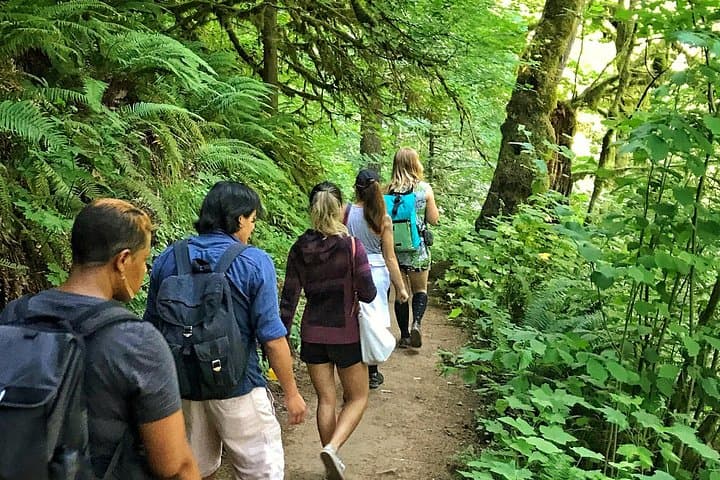
Lose the city for a few hours without leaving it: this 5-mile, 900-foot-gain Forest Park loop threads old-growth pockets, city viewpoints, and cultural landmarks for a compact taste of Portland’s wild side. Expect moss, roots, and stories.