
What the day feels like
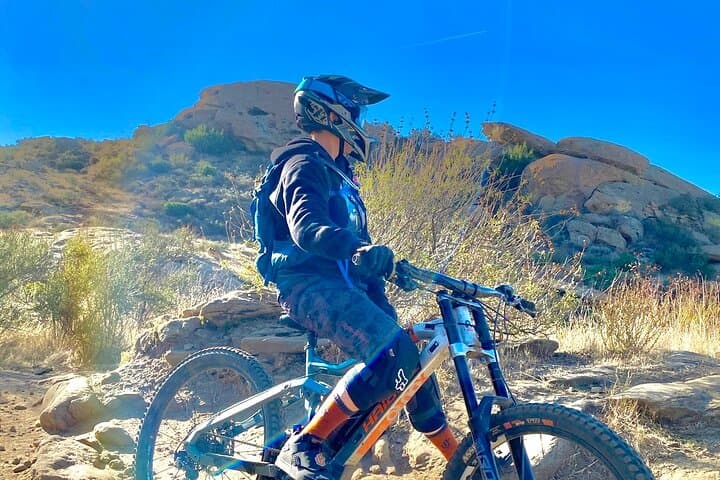
By the time the sun clears the shoulder of the Santa Susana ridgeline, the rocks at Rocky Peak have warmed enough to throw back a thin, bright light. Your bike hums at your feet — a Ducati‑branded TK‑01RR or a Specialized Kenevo, batteries full, tires ticking on loose shale — and the trail ahead narrows to a single dark ribbon that drops toward Simi Valley. For 120 minutes the landscape behaves like a one‑act play: scrubby chaparral trades barbs with wind, red sandstone ribs reveal themselves between stands of scrub oak, and the trail alternates between smooth, forgiving flow and short, gnarly pitches that demand attention. The earth here is not gentle; it dares you to pick a line and commit.
This is Southern California mountain riding in microcosm — quick, varied, and sun‑baked. Rocky Peak’s singletrack and fire roads stack speed and technicality in ways that favor riders who are comfortable in transition: pedal hard on the climbs, settle into the motor’s torque in the chunky sections, and stay light over the rocks. The best part of the electric assist is how it collapses the approach: instead of spending the morning earning descents, you arrive fresh at the ridge, battery and legs ready for the downhill sequences that make this ride sing.
The geology underfoot tells a quiet story. The Santa Susana Mountains are a jumble of Miocene sandstones and older schists folded by faulting; those tilted beds and exposed ribs create the sharp, rocky terrain that both defines the technical sections and frames the valley views. Historically, the Santa Susana Pass was a corridor for indigenous Tataviam and Chumash peoples and later for ranchers and mail routes that stitched coastal Los Angeles to inland valleys. Ride here and you’re tracing lines that were used long before bikes existed — a modern riff on a centuries‑old pathway.
Locally, the culture around Rocky Peak is pragmatic and unflashy. The communities in Simi Valley and the adjacent San Fernando neighborhoods have deep ties to outdoor labor and recreation — off‑road motorcycles and trail running share the same dusty DNA as mountain biking. Respect for other users is part of the code: yield to hikers, keep speeds moderated where the trail narrows, and pack gear that protects you and minimizes environmental impact.
Practicalities matter. This is a two‑hour, self‑guided intermediate ride: expect a mix of smooth fire roads and tighter singletrack with technical, rocky steps. The Viator experience includes a high‑end E‑MTB and protective gear (kneepads, elbow pads, gloves, eyewear), plus a quick orientation. Because it’s self‑guided, you bring choices — line selection, pace, and how aggressively you attack the technical options.
Pacing is everything. Start by feeling the bike’s weight and motor response on a mellow climb; tire pressures in the mid‑range (20–25 psi, depending on rider weight and tire volume) help the bike roll fast on the fire roads while still absorbing hits. On the first tight singletrack section, look ahead to pick a stable line and use the motor’s torque to settle through roots and rocks rather than mashing the pedals. Brake early and let the motor help you maintain momentum through obstacles: it’s not just an uphill crutch — it changes how you manage speed and balance downhill.
Safety is straightforward but nonnegotiable. The included pads are good, but many riders prefer a full‑face helmet on the steeper, rockier descents. Hydration matters more than you think in SoCal winds; a 1.5–2 liter hydration pack keeps you comfortable, and a small tool kit and spare tube are essential for any ride that spends much time off the beaten path. Finally, battery management: plan the route around the battery’s state of charge — the motor will get you up fast, but a conservative throttle through the early climbs preserves power for technical sections later.
Why go now? The route compresses a lot of Southern California into a short window: ridgelines, sweeping valley views, and rock gardens that test your skills. For travelers based in Los Angeles, it’s a two‑hour adrenaline investment with scenic payoff and enough technical variety to keep a weekend rider engaged. For seasoned locals, it’s a playground to sharpen descending skills without a full day commitment.
This ride doesn’t over‑promise serenity — the enjoyment is kinetic. The wind on the ridge feels purposeful, as if the range exhales in gusts that either push you forward or remind you to weigh your choices. When you finish, there’s a particular kind of satisfaction: the hum of the motor fades, and the memory of clean line choices and momentum kept alive is what remains. It’s efficient, intense, and very rideable — the exact kind of half‑day adventure that invites a return.
If you go: aim for shoulder seasons to avoid the hottest temperatures, bring layered protection against wind and sun, and treat the place with the same care you’d want for any shared trail. Rocky Peak rewards precision, and it rewards restraint: pick your lines, ride smoothly, and the ridgeline will give you one of the truest two‑hour descents SoCal has to offer.
Trail wisdom
Small choices, better day.
Manage Battery and Throttle
Start conservative with the motor on climbs to reserve power for technical sections and the final descent.
Tire Pressure Balance
Run 20–25 psi for a mix of rollover and puncture protection on the varied fire roads and singletrack.
Protective Gear Upgrade
Bring or request a full‑face helmet for exposed, rock‑strewn descents even if pads are provided.
Respect Trail Etiquette
Yield to uphill riders and hikers, announce passes, and avoid widening the trail on tight sections.
Local knowledge
Read the place, not just the route.
Watch for native species including Red‑tailed hawk, Black‑tailed jackrabbit.
Keep an eye out for wildlife during the transition between areas and habitats. Respect distance guidelines.
Trails here cross sensitive chaparral habitats—stay on trail, avoid widening switchbacks, and pack out all trash to minimize erosion and preserve native plants.
Follow the guide's instructions on size limits, ethical handling, and leave-no-trace practices.
Sunrise views from the north‑facing knob just off the main ridge. Short side trails with exposed sandstone slabs that make fast, fun runs
Locally recommended viewpoints and quiet spots known best to local operators.
The Santa Susana Pass was a key travel corridor for indigenous Tataviam and Chumash people and later served 19th‑century stage and mail routes connecting coastal and inland communities.
Maritime roots and regional tradition shape the waterways and working coasts.
Seasonal guide
Four versions of the same landscape.
Spring
Best forWildflowers · Mild temperatures · Clear views
ChallengesOccasional mud after rains · Higher weekend traffic
Spring typically offers the mildest weather and wildflowers; trails can be tacky after storms, so check conditions.
Summer
Best forLong daylight · Dry, predictable trail surfaces
ChallengesHigh heat · Increased fire risk · Brittle vegetation
Summer gives reliable dry trails but brings high temps—start early and carry extra water.
Fall
Best forCooler riding · Clear skies · Fewer crowds
ChallengesEarly‑season rain late in season · Shorter daylight hours
Fall is a great balance of fewer crowds and comfortable riding; pack a light wind layer for ridge gusts.
Winter
Best forSolitude · Crisp air · Battery‑efficient cool temps
ChallengesOccasional storms and muddy sections · Variable trail closures
Winter can be quiet and cool but watch for muddy patches and check local access before heading out.
Operator details
What the booking data adds.
Included
- ✓Bottled water
- ✓Certified Mountain Bike Guide
- ✓Snacks
- ✓2025 Specialized Kenevo Expert Electric Mountain Bike
Good to know
- ✓Not recommended for travelers with spinal injuries
- ✓Not recommended for pregnant travelers
- ✓Not recommended for travelers with poor cardiovascular health
- ✓Travelers should have at least a moderate level of physical fitness
Pack with intention
What to bring.
Good to know
Common questions.
You should be comfortable on mixed singletrack and technical descents; the motor helps with climbs but doesn’t replace core mountain‑bike skills.
Plan the edges
The details that make the day easier.
The Santa Susana Pass area around Rocky Peak was part of early overland mail routes in the 19th century and contains traces of indigenous Tataviam and Chumash travel corridors.
After the ride, head into downtown Simi Valley or nearby Old Town Newhall for a post‑ride meal—look for tacos, beer gardens, and casual BBQ spots to recover and compare lines with fellow riders.
- Closest airport
- Hollywood Burbank (BUR) ~35–40 minutes; Driving distance from Simi Valley center: 15–25 minutes to trailheads; Cell service: intermittent on ridgelines; Permits: generally none for day use—verify with local land managers.
This ridge sits among sensitive chaparral and wildlife corridors—stay on designated trails, don’t shortcut switchbacks, and pack out all trash to protect soil stability and native plants.
Explore by topic
Follow the threads.
Keep exploring
Make the story part of the trip.
 Related story
Less than two hours from Nairobi, Kereita Forest pairs hands-on canopy adventure with quiet montane trails and a sobering colonial history—perfect for families, teams, and curious travelers seeking a full-day pulse of nature.
Set out from Bass Harbor for a private, customizable day on Blue Hill Bay — lighthouses, puffins, seals, and the chance to feel Acadia from the water. Small groups, local captains, unforgettable views.
In four hours you can move from shaded canyon ferns to wind-scoured coastal ridgelines, guided by someone who knows where the light—and the hidden views—live. This private half-day hike on the Monterey Peninsula or Big Sur is compact, curated, and perfect for travelers who want depth without a multiday commitment.