
What the day feels like
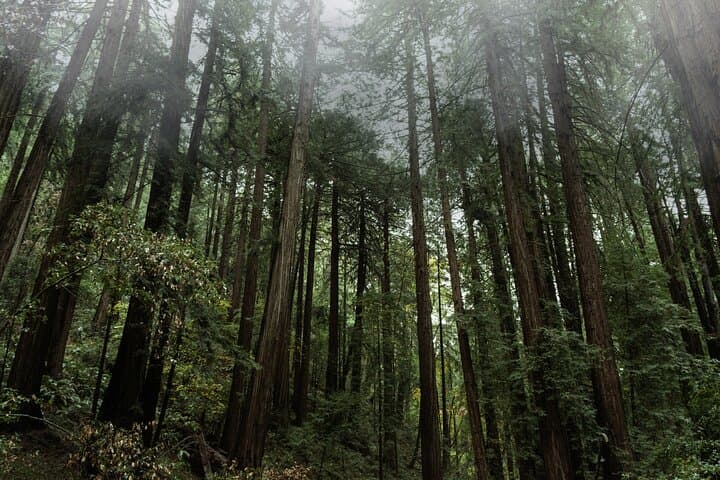
You step out of the van and the city’s edges — foghorns, traffic hum, a last city scent of coffee and salt—seem to fold away. The path underfoot softens from asphalt to pine duff and the air shifts, cooler and humid, scented with cedar and wet earth. Overhead, trunks the color of old mahogany rise like columns, each a living monument to centuries. For two hours you walk beneath this canopy: a measured, reverent stroll through Muir Woods that feels less like a hike than a slow unlocking of why people travel to Northern California at all.
Muir Woods National Monument is compact by old-growth-forest standards, but its concentration of coast redwoods (Sequoia sempervirens) is exceptional. The park’s main trail is an accessible 1–2 mile loop with only a few short grades—think 100 feet of cumulative elevation gain rather than a summit scramble. The route alternates boardwalks over rooty chips and shady dirt paths that thread between buttressed trunks. Light under the canopy is a study in green; shafts of sun cut through like spotlights, picking out ferns and the occasional banana slug crossing your path. Bring a person into frame to show scale, and the trees turn from background to context: these are the oldest living things on the landscape.
The narrative of Muir Woods is as important as its trunks. The grove was set aside in 1908 by a private citizen, William Kent, and protected that same year by President Theodore Roosevelt at the request of conservationists including John Muir — a winced-over moment in early American conservation history. It’s also part of the Golden Gate National Recreation Area today, a pocket of temperate rainforest perched above the Pacific and the Golden Gate. Geologically, these redwoods thrive because of the moist marine climate and the valley’s deep soils; the coastal fog that can make a San Francisco summer leave its sunburned suburbs is the fuel that keeps redwoods healthy.
From the hush of the forest the tour pushes west to Sausalito, a 20–30 minute drive down winding Marin roads that opens like a curtain. Sausalito is seafood and postcard views: a waterfront lined with houseboats, ferry slips, and cafes where people linger over coffee or cioppino. You’ll usually have about an hour to amble the shore, pop into a gallery, or grab a snack. It’s the civil, human counterpoint to the forest’s cathedral quiet, where the bay itself seems to echo the soft hush of the redwoods.
Why travelers choose a private half-day tour is pragmatic: timed-entry reservations for Muir Woods can be a headache, parking is limited, and the Marin roads reward local knowledge. With hotel pickup in San Francisco and your driver-guide handling tickets and logistics, you get the efficient slice of nature without the stress. For photographers or families, that ease of movement matters—more time under the trees, less time circling for parking.
If you’re planning it yourself, the practical specifics matter. Expect roughly 2 miles of easy walking inside the monument—boardwalks and well-maintained dirt trails—with minimal elevation gain but plenty of roots and damp patches, so traction matters. Drive time from central San Francisco is typically 30–45 minutes without heavy traffic, but weekends and holidays can add time. The tour’s rhythm is simple: pick-up, two hours in Muir Woods (entrance included), then an hour in Sausalito, and a return to town.
Timing is everything. Early morning and late afternoon visits reduce crowds and give softer, more cinematic light for photos. Fog can roll in off the ocean, cooling the forest and creating its signature light; carry a light rain shell even on sunny days. Cell service in the grove can be patchy—consider downloading maps or arranging your meet-up details in advance.
On etiquette: the redwoods live by margin and balance. Stay on trails to avoid compacting the shallow root systems, keep noise low to preserve the mood, and resist the urge to tack a climbing rope to an ancient trunk. Muir Woods’ conservation model relies on visitor care as much as on park management.
Practical packing and logistics are straightforward: sturdy walking shoes, a layerable jacket, water, and a camera. If you have mobility concerns, note that the main loop and boardwalk are among the most accessible stretches in the park, but some side paths are steeper. Families with small children find the path ideal for short, engaging outings; bring snacks and a sense of pace.
The half-day format is a tidy way to get both forest and waterfront into an urban itinerary. It’s not an expedition; it’s a restorative two-act experience: the slow, rooted calm of ancient trees, followed by the human warmth of a coastal town. Leave your city speed at the van door, and let the redwoods set the clock for the next few hours. You’ll return to San Francisco quieter than you arrived—which, for many, is exactly the point.
Trail wisdom
Small choices, better day.
Reserve entries and parking
Muir Woods requires timed-entry reservations and parking can fill; your tour includes tickets—if you go independently, book ahead.
Dress in layers
Coastal fog and shaded canopy create cool, damp conditions even on warm days; bring a light waterproof layer.
Good traction matters
Boardwalks and rooty dirt sections get slippery; sturdy walking shoes reduce slips and strain.
Respect the trees
Stay on trails, avoid touching or climbing trunks, and keep noise low—this protects roots and wildlife.
Local knowledge
Read the place, not just the route.
Watch for native species including Banana slug, Steller's jay.
Keep an eye out for wildlife during the transition between areas and habitats. Respect distance guidelines.
Timed-entry reservations and visitor limits help protect the fragile redwood roots and understory—stay on trails and pack out trash.
Follow the guide's instructions on size limits, ethical handling, and leave-no-trace practices.
Muir Beach Overlook for a brief coastal detour with sweeping views. Fort Baker and Cavallo Point historic district under the Golden Gate bridge for quieter viewpoints
Locally recommended viewpoints and quiet spots known best to local operators.
Muir Woods was protected in 1908 after William Kent donated the grove and President Theodore Roosevelt designated it a national monument, reflecting early U.S. conservation efforts.
Maritime roots and regional tradition shape the waterways and working coasts.
Seasonal guide
Four versions of the same landscape.
Spring
Best forWildflowers · Ferns unfurling
ChallengesPatchy rain · Cooler mornings
Spring brings fresh understory growth and fewer crowds than summer; expect some wet trails after storms.
Summer
Best forConsistent hours for visits · Long daylight
ChallengesFoggy afternoons · Peak visitor numbers
Summer can be busy and foggy; mornings are best for clearer light and thinner crowds.
Fall
Best forClearer skies · Fewer tourists
ChallengesSeasonal winds · Shortening daylight
Fall is often the best balance of light and smaller crowds—ideal for photography and relaxed walks.
Winter
Best forMoody light · Dramatic storms
ChallengesHeavy rain/storm closures · Slippery trails
Winter offers dramatic skies and saturated colors but bring waterproof gear and check conditions.
Operator details
What the booking data adds.
Included
- ✓Hotel pick up and drop off
- ✓Taxes
- ✓Private tour guide for 8 hours
- ✓Private vehicle with driver for 8 hours
- ✓Entrance tickets to Muir Woods
Not included
- —Food and drinks
Good to know
- ✓Public transportation options are available nearby
- ✓Not recommended for travelers with spinal injuries
- ✓Not recommended for pregnant travelers
- ✓Not recommended for travelers with poor cardiovascular health
- ✓Suitable for all physical fitness levels
Pack with intention
What to bring.
Good to know
Common questions.
For this private tour, entrance tickets to Muir Woods and hotel pickup/drop-off from San Francisco are included; parking is handled by the operator.
Plan the edges
The details that make the day easier.
Muir Woods was set aside in 1908 after William Kent donated the land and President Theodore Roosevelt officially protected the grove, making it one of the earliest U.S. federal conservation actions for redwoods.
After the forest, head to Sausalito for waterfront seafood at Scoma's of Sausalito or a casual pizza and bay views at Bar Bocce; for a quieter drink with a view, check out Cavallo Point's restaurant at Fort Baker.
- Closest airport
- SFO; Typical drive from San Francisco: 30–45 minutes (16–20 miles); Cell service: patchy inside Muir Woods; Permits: timed-entry reservations required for Muir Woods (this tour includes tickets).
Muir Woods is a protected old-growth stand—stay on designated paths, avoid disturbing vegetation, and pack out any trash; small actions help preserve the grove for future generations.
Explore by topic
Follow the threads.
Keep exploring
Make the story part of the trip.
Set out from Bass Harbor for a private, customizable day on Blue Hill Bay — lighthouses, puffins, seals, and the chance to feel Acadia from the water. Small groups, local captains, unforgettable views.
In four hours you can move from shaded canyon ferns to wind-scoured coastal ridgelines, guided by someone who knows where the light—and the hidden views—live. This private half-day hike on the Monterey Peninsula or Big Sur is compact, curated, and perfect for travelers who want depth without a multiday commitment.
 Related story
Beneath a sky of shifting light, Skaftafell’s ice reads like a map of time. This three-hour guided glacier hike mixes technical instruction with geology and culture: compact, safe, and unforgettable.