
What the day feels like
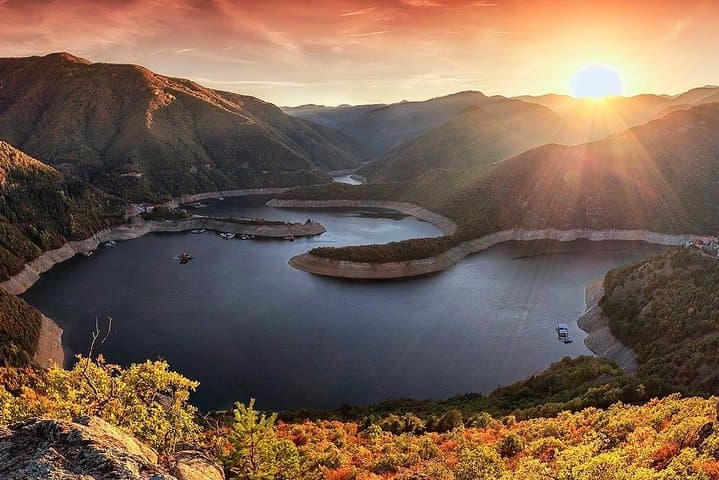
You step out of the minibus into Plovdiv’s Old Town and the air feels layered—coffee steam, sun-warmed stone, and the distant murmur of a city that has survived empires. Cobbled lanes rise and fall between Ottoman-era houses and Roman ruins; a lone busker picks at a guitar while the ancient Roman theatre—still intact after two millennia—looks down like a patient witness. By midmorning you’re retracing Roman footsteps; by late afternoon the landscape has changed from human history to geological choreography. A short drive unfurls into the Rhodope Mountains, where steep limestone walls pinch a narrow river. The only way back from the canyon’s most photogenic viewpoint is by boat, and when your skiff pushes off the water, the day’s tempo goes quiet and close. Water slides past the hull like a polished mirror; gulls wheel once and vanish. The canyon does not so much reveal itself as insist you pay attention.
That duality—Plovdiv’s layered human past and the Rhodopes’ slow-building geology—makes this day trip feel complete. Plovdiv is often called one of Europe’s oldest continuously inhabited cities; its Roman theatre, Ottoman buildings, and modern Kapana arts district remind you that Bulgarian life has been a long conversation. The Rhodope Mountains, carved from limestone and schist over millions of years, hold caves, waterfalls, and river-carved gorges that reward anyone who trades the square for a narrow, rocky track.
The itinerary is unpretentious and practical: expect an 11-hour day (the tour runs roughly 11 hours total), beginning with guided time in Plovdiv’s Old Town—Roman theatre, ethnographic museum façades, and a quick coffee in Kapana—and finishing with a scenic boat trip into a Rhodope canyon where short shoreline walks reveal steep cliffs and quiet coves only visible from the water. The cost is typically around USD 117 per person, and the tour books fast; it’s advertised with instant confirmation and free cancellation for convenience.
Why go? Because the contrast is immediate and satisfying. You can spend the morning tracing mosaic stones and frescoed homes, then trade cultural context for vertical rock faces and the tactile simplicity of being on a small boat. Photography opportunities arrive constantly—the Roman theatre framed by poplars, a canyon throat opening like the mouth of a cave, evening light gilding the reservoir. For travelers who want one-day variety without fuss, this is a high-value option: history, landscape, a short hike, and a boat ride, all within reach of Bulgaria’s major transport hubs.
Practical specifics: plan on approximately 4–6 km of walking across the day. In Plovdiv the terrain is cobbled and uneven; in the Rhodope segment expect rocky trails and some short rises—cumulative elevation gain is moderate, roughly up to 200 meters on the nature stops. Footwear should be sturdy and grippy; trekking poles are unnecessary but helpful if you have balance issues. The boat segment is calm water travel—bring a wind layer and a small dry bag for valuables. The tour is rated moderate for fitness: you’ll be on your feet through museums, stairs, and short shoreline walks, but there are no technical climbs or multi-day commitments.
A few local details make the day smoother. Plovdiv’s Old Town cafés serve strong Bulgarian coffee and banitsa—grab a bite before the drive if you want energy for the canyon walk. The Rhodope side of the day can be markedly cooler and windier than the lowlands; late afternoon light makes for the best boat photographs, so camera batteries and memory cards are a must. Guides on this route usually speak good English and will narrate both the Roman and natural history; take advantage of their local shortcuts and viewpoints.
Timing is everything. Spring (April–June) and early fall (September) deliver the best balance of comfortable temperatures and fewer crowds. Summer is warm and lively; if you go in July–August, aim for early departures to avoid afternoon heat. Winter can be dramatic but some boat segments may be limited by weather—confirm operations before you book.
What to expect from the operator: small-group logistics, a driver to shuttle between sites, guided walking in Plovdiv and a licensed boat captain for the canyon segment. Reviews recommend booking early—this trip sells out on popular dates—and note that instant confirmation makes it easy to coordinate around flights. With an overall rating near 4.8 from past guests, the experience is consistently praised for scenery and value.
If you go: pack layers, respectful footwear for cobbles, and expect to end the day with a taste for both the human-made and the wild. Share a local tavern dinner in Plovdiv afterward—a bowl of kavarma or grilled kebapche feels like a proper punctuation to a day that moves from Roman stone to river rock. For travelers who want a compact, single-day sampler of Bulgaria’s depth, this tour gives you both story and landscape in a single, satisfying loop.
Trail wisdom
Small choices, better day.
Shoes for cobbles and rock
Wear sturdy, closed-toe shoes with good grip—Plovdiv’s cobbles and the canyon trails are uneven.
Layer for the boat
Bring a windproof layer—the reservoir and canyon can be significantly cooler and windier than Plovdiv.
Protect camera gear
Use a small dry bag or waterproof case for electronics while on the boat to avoid spray.
Hydrate and snack
Carry 1–1.5 liters of water and a snack—opportunities between sites can be limited.
Local knowledge
Read the place, not just the route.
Watch for native species including Common kestrel, European otter (occasional sightings near rivers).
Keep an eye out for wildlife during the transition between areas and habitats. Respect distance guidelines.
Rhodope habitats are sensitive—stick to marked trails, avoid disturbing riverbanks, and pack out all trash to protect freshwater ecosystems.
Follow the guide's instructions on size limits, ethical handling, and leave-no-trace practices.
Kapana district in Plovdiv for craft cafés and street art. Lesser-known shoreline coves in the Rhodopes that are quiet for fotos and a short picnic
Locally recommended viewpoints and quiet spots known best to local operators.
Plovdiv is one of the oldest continuously inhabited cities in Europe with a well-preserved Roman theatre dating to the 1st century AD.
Maritime roots and regional tradition shape the waterways and working coasts.
Seasonal guide
Four versions of the same landscape.
Spring
Best forWildflowers · Mild hiking · Photography
ChallengesUnpredictable rain · Cooler mornings
Spring brings green slopes and manageable temperatures—ideal for walking in Plovdiv and comfortable boating in the canyon.
Summer
Best forLong daylight · Vibrant town life · Warm water reflections
ChallengesHeat in lowlands · Busier tours
Summer offers bright skies and energetic town scenes but expect higher temperatures and larger groups.
Fall
Best forCrisp air · Autumn color · Smaller crowds
ChallengesShorter days · Cooler evenings
Early autumn balances comfortable weather and dramatic light—perfect for both the Roman theatre and the canyon.
Winter
Best forDramatic skies · Quiet streets · Off-season rates
ChallengesCold water and wind · Possible boat schedule limits
Winter can be striking but check boat operations and dress warmly—some elements may be curtailed by weather.
Operator details
What the booking data adds.
Included
- ✓Entrance fees
- ✓Air-conditioned vehicle
- ✓Centraly located Hotel pickup and drop-off
Not included
- —Food and drinks
Good to know
- ✓Specialized infant seats are available
- ✓Not recommended for travelers with spinal injuries
- ✓Not recommended for pregnant travelers
- ✓Not recommended for travelers with poor cardiovascular health
- ✓Travelers should have a high level of physical fitness
- ✓Hiking shoes are mandatory
- ✓People with flu symptoms can't attend the tour
Pack with intention
What to bring.
Good to know
Common questions.
The tour runs about 11 hours and typically includes guided time in Plovdiv, transport between sites, the boat trip into the Rhodope canyon, and a guide—meals are usually not included.
Plan the edges
The details that make the day easier.
Plovdiv hosted the European Capital of Culture in 2019 and has archaeological layers spanning Thracian, Roman, Byzantine, Ottoman, and Bulgarian rule.
After the tour, head back to Plovdiv’s Kapana neighborhood for craft coffee and bakeries, or sit in a traditional mehana (tavern) for kavarma or grilled kebapche paired with local rakia or a Bulgarian craft beer.
- Closest major airport
- Sofia (SOF); Typical meeting
- starting point
- Sofia or central Plovdiv; Driving distance Sofia–Plovdiv: ~145 km (~1.5–2 hours); Cell service: Good in towns, patchy in narrow canyon spots; Permits: None for typical tourist boat trips—confirm with operator.
The Rhodope watersheds are ecologically sensitive—use reusable bottles, stay on marked paths, and refrain from feeding wildlife; choose operators who follow low-impact boating practices.
Explore by topic
Follow the threads.
Keep exploring
Make the story part of the trip.
 Related story
Less than two hours from Nairobi, Kereita Forest pairs hands-on canopy adventure with quiet montane trails and a sobering colonial history—perfect for families, teams, and curious travelers seeking a full-day pulse of nature.
Set out from Bass Harbor for a private, customizable day on Blue Hill Bay — lighthouses, puffins, seals, and the chance to feel Acadia from the water. Small groups, local captains, unforgettable views.
In four hours you can move from shaded canyon ferns to wind-scoured coastal ridgelines, guided by someone who knows where the light—and the hidden views—live. This private half-day hike on the Monterey Peninsula or Big Sur is compact, curated, and perfect for travelers who want depth without a multiday commitment.