
What the day feels like
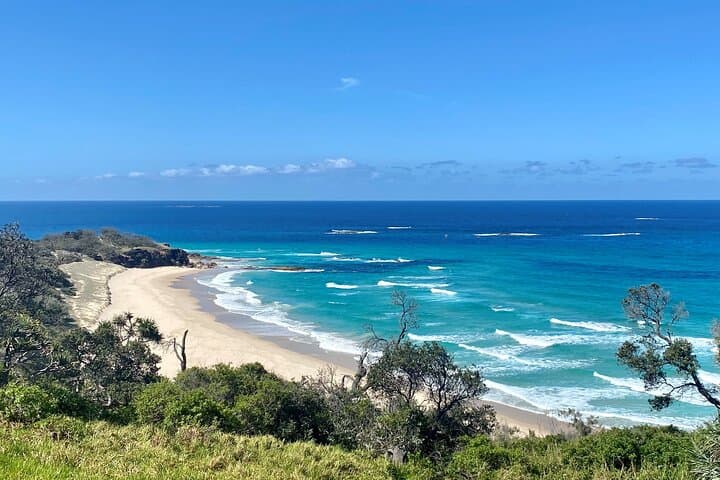
You step off the ferry and the air changes—salt and eucalyptus, warm and sharp, like a promise. The island stretches out in slow dunes and scarps of pale sand; carved tracks lead through banks of spinifex and along beaches that run uninterrupted to the horizon. For the next nine-and-a-half hours you live at the edge of two worlds: the restless water that defines the island and the inland freshwater lakes that lie like surprises in the sand. It’s an easy rhythm—walk, watch, swim, repeat—punctuated by small, remarkable encounters: a pod of dolphins slipping through a channel, a green turtle rolling in a turquoise swell, a koala dozing in the fork of a paperbark tree.
This is Minjerribah—known broadly as North Stradbroke Island—one of the world’s largest sand islands and a landscape shaped by coastal forces and time. The tour’s Gorge Walk is not a high-altitude Alpine slog; it’s a coastal traverse where the ground is sand, the views are big, and the vertical relief is modest. The route is a patchwork of cliff-top viewpoints, ribbon beaches, and wind-sculpted grasslands. Along the way your guide threads in stories about the island’s geology—how wind, waves, and longshore drift piled sand into ridges and created perched freshwater lakes—and its human history, from the deep link the Quandamooka people hold to the land and sea, to the more recent history of fishing and small-scale industry.
What distinguishes this small-group tour (max 11) is how it paces the day. You’re not being shepherded through highlights like a checklist. There’s time to linger at freshwater lakes—glass flats rimmed by she-oaks—walk the famous Gorge Walk at Point Lookout where whales and manta rays are sometimes visible offshore, and cool off at Amity Point Beach. The guide takes you to a quiet hollow where koalas are known to sleep in the wild; spotting one feels less like a photo op and more like a discovery shared among friends. As the day wanes you’ll make your way back to the ferry, the sun low and the water mirroring it—an understated encore to a day spent close to the elements.
Why would anyone from Brisbane or beyond sign up for a day like this? Because it packs varied ecosystems into a single, accessible itinerary. In one day you get beaches that look like postcards, freshwater systems that feel improbably still, coastal cliffs with panoramic outlooks, and close encounters with wildlife that are both common enough to be reliable and dramatic enough to matter. The tour’s small size matters: fewer people means quieter beaches, better wildlife viewing, and a more intimate conversation with the guide—often someone who knows where the koalas nap and when the dolphins gather.
Practicalities keep the pleasure practical. The tour runs about 9.5 hours, with on-island walking distances typically short—expect several easy-to-moderate strolls totaling a few kilometers rather than a single long hike. Elevation gain is minimal; the Gorge Walk involves cliff-top rises and short stair sections but no sustained climbs. Terrain alternates between packed sand, boardwalk, occasional rocky ledges, and beach sand, so stable footwear is a must. Bring swimwear and a towel if you want to jump in at Amity Point; water temperatures are pleasant in warm months but can be brisk in winter.
Safety and stewardship are part of the day. The guide briefs the group on sightings etiquette—keep distance from koalas, don’t feed wildlife, and use reef-safe sunscreen. Tides and weather shape what you’ll see: calm seas are kinder to dolphin and turtle watching, while spring and early summer bring warmer water and more active marine life. The ferry ride back is scheduled for sunset—a quiet, cinematic end to an active day—so plan for a later return to Brisbane.
If you’re plotting the trip, aim for spring when wildflowers and migratory birds lift the island’s palette; summer brings heat and more swimmers; autumn cools the crowds; winter can be quieter and offers clearer views but cooler swims. The tour price is modest given the day’s length and wildlife focus, and instant confirmation and free cancellation flags make it an easy add-on to a Brisbane itinerary.
In short: this is a day for people who want to be near water without being on a crowded beach, to find wildlife in situ rather than at a fenced sanctuary, and to move at a humane pace. It’s not adrenaline-packed, and it doesn’t pretend to be. Instead it offers those more subtle gratifications of slow coastal days—salt on your lips, sun on your shoulders, and a koala in a gum tree that suddenly makes the rest of the world recede. If you want a single-day escape from the city that mixes geology, culture, and abundant animal life with a low-effort, high-satisfaction itinerary, this tour does exactly that.
Trail wisdom
Small choices, better day.
Dress in layers
Mornings can be cool on the ferry and midday hot on exposed beaches—bring a light wind layer over breathable shirts.
Footwear matters
Choose sturdy walking shoes or trail sandals that handle sand and rocky boardwalks—avoid slick flip-flops for cliff-top sections.
Respect wildlife distance
Koalas and shorebirds are easily stressed; use binoculars and avoid getting between a mother and her young.
Hydrate and sun-proof
Carry a 1–1.5L reusable water bottle and reef-safe sunscreen—there’s little shade on exposed walks.
Local knowledge
Read the place, not just the route.
Watch for native species including Koala, Dolphin.
Keep an eye out for wildlife during the transition between areas and habitats. Respect distance guidelines.
Respect dune vegetation, use reef-safe sunscreen, and follow guide instructions to minimize disturbance—local stewardship helps protect fragile dunes and marine habitats.
Follow the guide's instructions on size limits, ethical handling, and leave-no-trace practices.
Brown Lake (Bummiera) and its tea-stained freshwater shore for a quieter swim. The Point Lookout Gorge viewpoints where tide pools and offshore channels concentrate marine life
Locally recommended viewpoints and quiet spots known best to local operators.
Minjerribah (North Stradbroke Island) is the traditional country of the Quandamooka people, who have lived here for thousands of years and maintain strong cultural ties to land and sea.
Maritime roots and regional tradition shape the waterways and working coasts.
Seasonal guide
Four versions of the same landscape.
Spring
Best forWildflower displays · Dolphin and whale watching · Pleasant walking weather
ChallengesUnpredictable showers · Strong sun on clear days
Spring combines mild temperatures with active marine life and blooming coastal flora—ideal for walks and wildlife viewing.
Summer
Best forBeach swims · Warm sea wildlife encounters · Long daylight hours
ChallengesHeat and humidity · Jellyfish season in some years
Summer is beach-friendly and busy—arrive early to avoid the crowds and pack sun protection.
Fall
Best forCalmer seas · Clear views for photography · Fewer crowds
ChallengesCooling nights · Occasional storms
Autumn cools the island and reduces visitor numbers while maintaining pleasant walking conditions.
Winter
Best forQuiet beaches · Clear air and longshore visibility
ChallengesCold water for swims · Stronger southerly winds
Winter offers solitude and crisp vistas; bring warmer layers and skip swimming if you prefer warm water.
Operator details
What the booking data adds.
Included
- ✓Bottled water
- ✓Ferry Crossing Return Ticket
- ✓Air-conditioned vehicle
Not included
- —The tour guide will recommend few options to buy takeaway food and have a beachfront picnic, or you can pack your own lunch.
Good to know
- ✓Public transportation options are available nearby
- ✓Suitable for all physical fitness levels
Pack with intention
What to bring.
Good to know
Common questions.
The tour is approximately 9.5 hours; departure and return times vary with season but expect a late-afternoon return to Brisbane after the sunset ferry crossing.
Plan the edges
The details that make the day easier.
North Stradbroke Island (Minjerribah) is one of the world’s largest sand islands and contains perched freshwater lakes that sit above the groundwater table—unique features for a coastal island.
After the hike, head to Point Lookout for fish-and-chips or a beachfront café; bring cash for small local stalls and, if time allows, visit Dunwich for local seafood and community-run craft stalls. Look for opportunities to support Quandamooka cultural tours or local producers.
- Closest airport
- Brisbane Airport (BNE). Typical pickup: Brisbane CBD or Cleveland onward to the ferry. Ferry crossing to Dunwich
- Point Lookout is ~30–45 minutes depending on route. Driving from Brisbane CBD to Cleveland ~30–40 minutes. Cell service
- intermittent in parts of the island. Permits: none required for day visitors; follow park rules where applicable.
This area contains sensitive dune systems and marine habitats—use reef-safe sunscreen, take all rubbish with you, stay on designated tracks, and respect wildlife distances. Support local Quandamooka enterprises to help sustain community-led conservation.
Explore by topic
Follow the threads.
Keep exploring
Make the story part of the trip.
Set out from Bass Harbor for a private, customizable day on Blue Hill Bay — lighthouses, puffins, seals, and the chance to feel Acadia from the water. Small groups, local captains, unforgettable views.
In four hours you can move from shaded canyon ferns to wind-scoured coastal ridgelines, guided by someone who knows where the light—and the hidden views—live. This private half-day hike on the Monterey Peninsula or Big Sur is compact, curated, and perfect for travelers who want depth without a multiday commitment.
 Related story
Beneath a sky of shifting light, Skaftafell’s ice reads like a map of time. This three-hour guided glacier hike mixes technical instruction with geology and culture: compact, safe, and unforgettable.