
What the day feels like
You step off the bus and the heat folds around you like a humid blanket, the jungle breathing in slow, green pulses just beyond the clearing. Salt hangs on the air from the nearby Caribbean, but the day's first thrill arrives with a cool splash—an underground river, a cenote opening its limestone throat and daring you to descend. That sort of double life, where turquoise reef meets shaded cavern and zip-lines thread canopy gaps, is the promise of the Full-Day Snorkel Extreme Adventure Tour from Riviera Maya. It is a single six-hour run that stitches together three terrains and three moods: the open, fish-rich reef; the high wire of the canopy; the subterranean hush of freshwater caves.
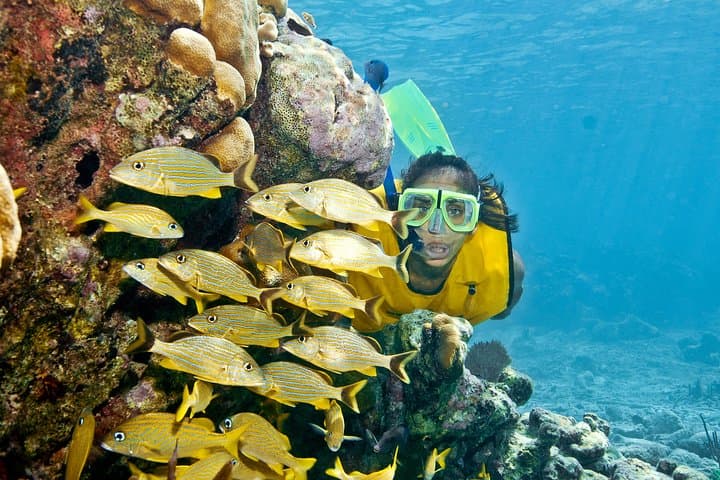
The day moves with cinematic clarity. Hotel pickup in air-conditioned comfort, a short drive through palms and small coastal towns, and then the action begins. Guides hand over equipment—wetsuits, life vests, helmets—and offer the same steady reassurance they will offer all day: safety first, respect for the environment second, and fun absolutely guaranteed. You find yourself snorkeling over plate-like corals and schools of parrotfish, feeling the current like a companion nudging you along. Later you clip into a zip-line and the jungle tests your appetite for speed; the world opens in long, leafy strips before you land on a platform and look back at what you just flew across. Rappelling down into a cenote is quiet in a way the reef is not. Water lights up from below in shards of turquoise. The subterranean river seems to hold time at bay—stone formations drip slowly, stalactites keep their own ancient schedule, and you are simply passing through.
Geology and history are in every layer. The Yucatan is a karst landscape of porous limestone underlaid by a vast freshwater aquifer. Where that rock collapses it forms cenotes, natural wells that were sacred to the Maya as sources of water and portals to the underworld. Above ground, the Mesoamerican Barrier Reef—second only to the Great Barrier Reef in scale—runs along the coast, its corals shaped by current, depth, and centuries of tropical weather. Local culture is woven into the day: guides often share stories of how their grandparents fished these waters, and you pass small communities where seafood and tortillas are still prepared from recipes handed down across generations.
For those who love a balanced itinerary, this tour is a tightly edited anthology of high-energy options. It does not pretend to be a full technical climbing school or a deep scuba certification course. Instead, it coherently bundles accessible exposure to snorkeling, aerial corridors, and cave swimming into a single, well-supported experience. That means it appeals both to families looking for an adventurous day and to experienced travelers who want to compress the Riviera Maya's range into half a day of memorable highlights.
Practical matters are where this trip shines. The tour is about six hours total, and guides provide equipment, lunch, and hotel transfers—so your carry list is compact. Fitness needs are moderate: you should be comfortable swimming short distances and climbing ladders and steps. Expect intermittent cell service; the cenotes and some jungle pockets have minimal reception. The tour runs year-round but timing matters: the dry months from November through April offer the clearest water and the calmest seas for snorkeling. Summer brings heat and the occasional storm, and hurricane season can complicate operations; the operator offers free cancellation, which makes last-minute weather flexibility easy to manage.
Safety is practical and visible. Helmets and harnesses on the zip-lines, life vests while snorkeling, and a guide-led protocol for entering cenotes keep the day low-risk. But you should still prepare: bring reef-safe sunscreen, a small dry bag for your phone, shoes that grip when wet, and a light attitude for getting wet and a bit muddy. Photography opportunities are abundant—above all, early in the tour when light is soft and the reef is less crowded. The cenote provides the most cinematic frames, with shafts of light and mirror-smooth water that reflect the limestone cathedral above.
Beyond the adrenaline there is an environmental note: these ecosystems are delicate. Local guides and operators increasingly emphasize responsible behavior—no touching or standing on coral, using reef-safe sunscreen, and packing out any trash. By following those guidelines, you help preserve the very spectacle you came to see.
If you want a single-day immersive sampler of the Riviera Maya that forces you out of your comfort zone in small, thrilling increments, this tour is an efficient, well-run choice. It pairs well with an extra day or two in Playa del Carmen to rest, explore beachside eateries, and take in the slower rhythms of the town afterwards. Come prepared, be curious, and let the water and the jungle both do the talking.
Trail wisdom
Small choices, better day.
Bring reef-safe sunscreen
Most operators require it to protect coral; apply at least 20 minutes before entering water
Wear water shoes
Grip on wet platforms and rocky shorelines keeps you steady during transitions
Hydrate early and often
The combination of sun and activity makes hydration critical—carry a reusable bottle
Stow electronics in a dry bag
Phone and camera protection keeps memories safe through reef swims and zip-lines
Local knowledge
Read the place, not just the route.
Watch for native species including Sea turtles, Parrotfish and angelfish.
Keep an eye out for wildlife during the transition between areas and habitats. Respect distance guidelines.
The Mesoamerican Barrier Reef is vulnerable to warming and pollution—use reef-safe sunscreen, avoid touching coral, and follow guide instructions to minimize impact.
Follow the guide's instructions on size limits, ethical handling, and leave-no-trace practices.
A quieter shallow reef shelf reached early in the day where fish are abundant. A small roadside seafood stand near Playa del Carmen favored by locals for ceviche and fresh tortillas
Locally recommended viewpoints and quiet spots known best to local operators.
Cenotes were central to Maya life and spirituality, used for drinking water and ritual; the coastal reef supported ancient fishing communities.
Maritime roots and regional tradition shape the waterways and working coasts.
Seasonal guide
Four versions of the same landscape.
Spring
Best forclear water snorkeling · mild temperatures · fewer crowds than winter
Challengesoccasional rain showers · increasing humidity
Spring balances warm ocean temps with relatively stable weather, making for good snorkeling and comfortable zip-lining.
Summer
Best forvibrant marine life · longer daylight · off-peak pricing
Challengeshigher heat and humidity · afternoon storms · hurricane season begins June
Summer brings rich marine activity but also heat and periodic squalls; check forecasts and pack accordingly.
Fall
Best forcheaper rates · less tourist congestion
Challengeshigher hurricane risk · choppier seas
Fall can offer value but carries the greatest weather risk; operators may cancel for safety during storms.
Winter
Best forcalm seas · crystal-clear snorkeling · dry conditions
Challengeshigher tourist numbers · cooler mornings
Winter is peak for clear water and stable conditions—expect the best visibility but also more people.
Operator details
What the booking data adds.
Included
- ✓Hotel pickup and drop-off
- ✓All necessary equipment
- ✓Buffet lunch and beverages
- ✓Air-conditioned transportation
- ✓Guide
- ✓Insurance, and taxes.
Not included
- —Gratuities
Good to know
- ✓Not recommended for travelers with spinal injuries
- ✓Not recommended for pregnant travelers
- ✓Not recommended for travelers with poor cardiovascular health
- ✓Travelers should have at least a moderate level of physical fitness
- ✓Lightweight clothes, sturdy footwear, sunglasses, hat, bathing suit, towel, and cash for pictures, souvenirs, and tips are recommended
- ✓Only biodegradable sunscreen and biodegradable insect repellent may be used
- ✓Children must be accompanied by an adult
- ✓Basic swimming skills recommended
- ✓Weight limit is 300 lbs (135 kg) and participants must be under size 44
Pack with intention
What to bring.
Good to know
Common questions.
Basic swimming ability and comfort in open water are required; life jackets are provided and guides stay nearby during snorkeling.
Plan the edges
The details that make the day easier.
The Mesoamerican Barrier Reef System is the second-largest coral reef in the world and runs along the coast of the Riviera Maya, making this region one of the most biodiverse marine areas in the hemisphere.
After the tour, head to Playa del Carmen's 5th Avenue for fresh seafood, tacos al pastor, and small craft breweries; beachside palapas and local fondas offer the kind of honest Mexican cooking that pairs well with a cold cerveza.
- Closest airport
- Cancún International (CUN); Driving distance: about 45–60 minutes to Playa del Carmen; Cell service: reliable along the coast, limited in cenotes; Permits: none required for this commercial tour; Pickup: hotel transfers included for Riviera Maya hotels.
These marine and cenote systems are fragile—use reef-safe sunscreen, do not touch or stand on coral, avoid single-use plastics, and follow guide instructions to protect habitats.
Explore by topic
Follow the threads.
Keep exploring
Make the story part of the trip.
Set out from Bass Harbor for a private, customizable day on Blue Hill Bay — lighthouses, puffins, seals, and the chance to feel Acadia from the water. Small groups, local captains, unforgettable views.
In four hours you can move from shaded canyon ferns to wind-scoured coastal ridgelines, guided by someone who knows where the light—and the hidden views—live. This private half-day hike on the Monterey Peninsula or Big Sur is compact, curated, and perfect for travelers who want depth without a multiday commitment.
 Related story
Beneath a sky of shifting light, Skaftafell’s ice reads like a map of time. This three-hour guided glacier hike mixes technical instruction with geology and culture: compact, safe, and unforgettable.