
What the day feels like
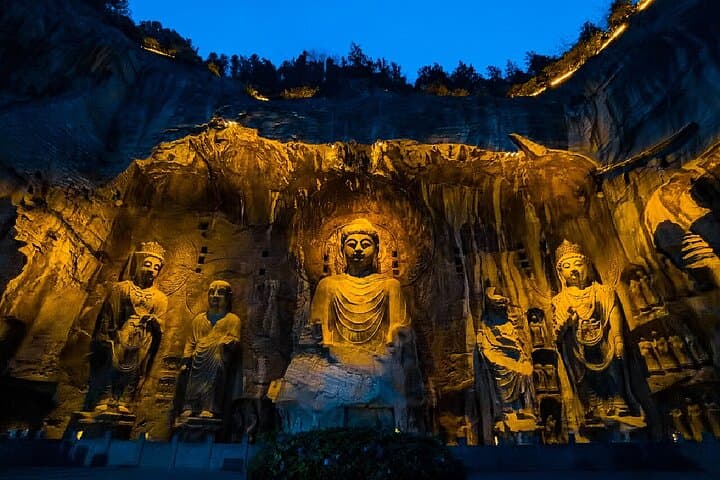
The morning starts with the city thinning out into fields and low, green hills; the 4WD purrs along and the guide points to a stone-strewn silhouette on the ridge—Shaolin Temple, where motion and stillness are practiced as one. You arrive to the clipped rhythm of a kung-fu demonstration: fists and feet punctuate the air, monks’ robes flaring like the measured beats of a metronome. Later, the team moves downriver to a different kind of silence—the limestone cliffs of Longmen Grottoes, where ten thousand carved Buddhas watch the Yi River curve beneath them. It’s a day that frames Henan province through two complementary languages: the kinetic discipline of Shaolin and the slow, patient craft of centuries of stone-carving. Both are vivid, both are human, and both feel close enough to touch.
There’s a clear line tying these stops together. Shaolin Temple, set in the Songshan mountains near Dengfeng, is as much a living monastery as a martial-arts myth—its pagoda forest contains hundreds of gravestones and its daily training grounds are a reminder that kung-fu was forged as practiced ritual rather than mere spectacle. Longmen Grottoes, a UNESCO World Heritage Site on the Yi River's limestone bluffs, narrates China's Buddhist art from the Northern Wei through Tang dynasties. The geology is part of the story: the soft, layered limestone cliffs invited generations of artisans to carve deeply into the rock, producing intricate niches and towering Buddhas, some nearly 17 meters tall. Together, these sites illustrate how belief, craft, and landscape shaped central China’s cultural backbone.
Expect the choreography of this private tour to be both efficient and intimate. With a private vehicle and an English-speaking guide, the day is paced to let you linger at key viewpoints: the Shaolin pagoda forest where brick towers rise like a sculpted cemetery; the training courtyards where monks move with extraordinary economy; and the Longmen galleries where light pools along carved faces and the scale of human devotion becomes measurable. The included local lunch is a practical delight—Henan-region cooking emphasizes wheat-based noodles, hearty stews, and the regional specialty, Luoyang Water Banquet, a sequence of light dishes that surprise with their subtlety.
Why go private? Beyond convenience, a small-group or private tour turns crowded thresholds into curated experiences. Your guide will steer you to quieter times at the most photographed grottoes, explain iconography—a bodhisattva’s hand mudra, a halo’s symbolism—and translate the local etiquette of temple spaces. There’s an educational currency here: knowing the difference between Tang and Northern Wei carving styles, or why a pagoda forest meant something different in Shaolin’s funerary landscape, deepens the visit beyond souvenir photos.
Practical realities: the outing is a long day—roughly 8 to 10 hours on the road and on foot—so plan with stamina and sensible footwear. Weather can swing: spring and autumn are pleasant and ideal for photography; summer brings heat and occasional rain; winter is brisk and can make the mountain approaches icy. You'll cover paved walkways, temple courtyards, and stepped cliff paths—gear should be light but protective. Mobile payments are ubiquitous in China, but international cards are not always accepted; carry some cash for small purchases, though major entrance fees and the tour are paid in advance.
Culturally, this route offers a layered experience. Shaolin's modern fame as a kung-fu export sits on top of centuries of Chan Buddhist practice; monks still live and train, and respectful observation matters. Longmen, carved over centuries, became a repository for imperial patronage and devotional offerings—every niche holds evidence of shifting dynasties and artistic priorities. Remember: these are active cultural sites—observe photography rules in temples, and follow rope lines at grottoes.
If you’re thinking like a planner: the tour runs about 8–10 hours and includes entrance fees, lunch, a private vehicle, and a guide. It’s an easy fit into a Luoyang stopover or as a highlight day while moving between Zhengzhou and Luoyang. For travelers with a curious mix of history, religion, and lived culture, this is one of those classic Chinese itineraries that rewards close attention. The contrast—monks training in open courtyards, ancient statues carved into cool shadowed rock—stays with you long after the drive back into town.
On the practical side: keep hydrated, give yourself elbow room during temple performances, and leave space in your schedule for a quiet walk along the Yi River after Longmen. The day’s variety—rock, ritual, and the measured violence of martial arts—makes for a balanced travel narrative: movement and monument, breath and stone. In the end you’ll have seen two ways people shape the world: with their bodies and with their hands. Both are forms of devotion, and both are worth the trip.
Trail wisdom
Small choices, better day.
Start Early
Leaving Luoyang at first light reduces crowds at Longmen and gives you cooler conditions at Shaolin during demonstrations.
Comfortable Footwear
Expect uneven stone steps and long gallery walks—sturdy closed-toe shoes are necessary.
Cash & Mobile Payments
Carry some yuan for small vendors; major sites accept mobile payments but international cards can be limited.
Respect Temple Etiquette
Dress modestly, avoid loud behavior during prayers, and follow posted photography rules.
Local knowledge
Read the place, not just the route.
Watch for native species including Common Magpie, River fish and local marsh birds along the Yi River.
Keep an eye out for wildlife during the transition between areas and habitats. Respect distance guidelines.
Both sites are protected: follow paths, avoid touching carvings, and support local conservation fees where applicable.
Follow the guide's instructions on size limits, ethical handling, and leave-no-trace practices.
Pagoda Forest at Shaolin—less visited afternoon corners with intimate stonework. Small riverside viewpoints below lesser Longmen niches for quieter photos
Locally recommended viewpoints and quiet spots known best to local operators.
Shaolin Temple is a historic center for Chan Buddhism and martial arts; Longmen Grottoes accumulated Buddhist carvings from the Northern Wei through Tang dynasties under imperial patronage.
Maritime roots and regional tradition shape the waterways and working coasts.
Seasonal guide
Four versions of the same landscape.
Spring
Best forWildflower-framed temple photos · Cool walking weather
ChallengesUnpredictable rain showers · Crowds during Golden Week if dates align
Spring brings mild temperatures and budding scenery—ideal for comfortable touring but pack a light rain layer.
Summer
Best forLush valley colors · Longer daylight for extended photography
ChallengesHigh heat and humidity · Afternoon thunderstorms
Summer is vibrant but hot; start early, rest midday, and expect sudden showers.
Fall
Best forCrisp air and clear skies · Peak photography conditions
ChallengesCooler mornings and evenings · Popular travel season leading to busier sites
Autumn offers the most pleasant conditions with clear light—prime time for this itinerary.
Winter
Best forCrisp, low-angle light on stone · Fewer tourists
ChallengesCold temperatures on mountain approaches · Icy steps at higher elevations
Winter is quieter and starkly beautiful, but bring warm layers and traction-aware footwear.
Operator details
What the booking data adds.
Included
- ✓Hotel pickup and drop-off
- ✓Bottled water
- ✓Entrance fee
- ✓Lunch
- ✓Driver with air-conditioned comfortable vehicle (include DIDI)
- ✓Professional English guide
Not included
- —Gratuities
Good to know
- ✓Service animals allowed
- ✓Public transportation options are available nearby
- ✓Not recommended for travelers with spinal injuries
- ✓Not recommended for pregnant travelers
- ✓Not recommended for travelers with poor cardiovascular health
- ✓Suitable for all physical fitness levels
Pack with intention
What to bring.
Good to know
Common questions.
The private tour runs about 8–10 hours (480–600 minutes); most departures are early morning from Luoyang to maximize time at each site.
Plan the edges
The details that make the day easier.
Longmen Grottoes contain tens of thousands of Buddhist statues and inscriptions, carved between the 5th and 8th centuries, and are a UNESCO World Heritage Site.
After the tour, try a Luoyang Water Banquet—a sequence of delicate dishes featuring local noodles and dumplings. For a relaxed drink, seek small tea houses near the city center; many restaurants around the Longmen area serve local Henan-style noodle soups and braised dishes.
- Closest airport
- Luoyang Beijiao Airport (LYA); Driving time: Luoyang to Longmen ~20–30 minutes, Luoyang to Shaolin (Dengfeng) ~1.5–2 hours; Cell service: generally available but some international apps require VPN; Permits: standard entrance tickets included in tour price.
Both Shaolin and Longmen are protected cultural sites—stay on marked paths, avoid touching carvings, pack out trash, and support local guides to ensure economic benefits remain community-based.
Explore by topic
Follow the threads.
Keep exploring
Make the story part of the trip.
 Related story
Less than two hours from Nairobi, Kereita Forest pairs hands-on canopy adventure with quiet montane trails and a sobering colonial history—perfect for families, teams, and curious travelers seeking a full-day pulse of nature.
Set out from Bass Harbor for a private, customizable day on Blue Hill Bay — lighthouses, puffins, seals, and the chance to feel Acadia from the water. Small groups, local captains, unforgettable views.
In four hours you can move from shaded canyon ferns to wind-scoured coastal ridgelines, guided by someone who knows where the light—and the hidden views—live. This private half-day hike on the Monterey Peninsula or Big Sur is compact, curated, and perfect for travelers who want depth without a multiday commitment.