
What the day feels like
You leave the clanging city behind not by driving for hours, but by stepping onto a boat. The Chao Phraya slides under the hull and the skyline—glittering temples and glass towers—recedes until the river narrows into a wooded embrace. On the far shore, Bang Kra Jao rises like a green thought: an oxbow of low hills, mangrove, and rice plots that Bangkok’s planners somehow never carved into condos. The air tastes of wet earth and coconut leaves; you lift your chin and the island exhales. Your bike’s tires find a narrow dirt track and, for the next few hours, the city seems very far away.
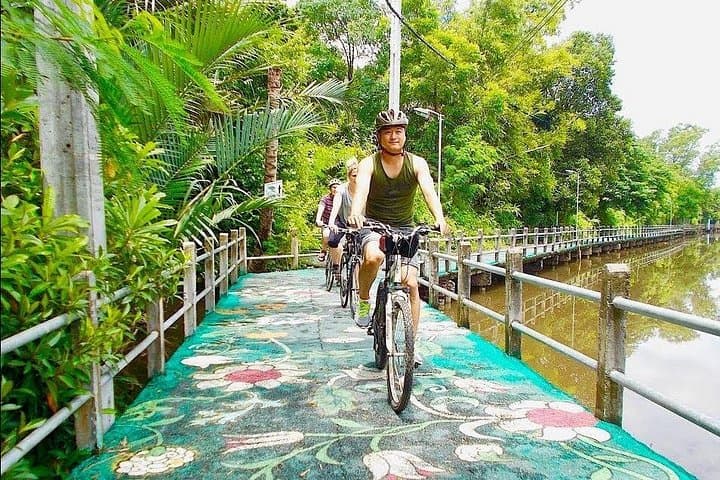
This short, three-to-four-hour loop through Bang Kra Jao—often called Bangkok’s “green lung”—is more than a photo op. It’s a corrective to the idea that mega-cities must be all concrete. The landscape here is coastal plain and reclaimed waterways, a collage of mangrove edges, rubber plantations, and community gardens. Geologically it’s an oxbow island formed by a bend of the Chao Phraya; the river’s patience and motion carved a crescent of land that locals have kept tame and green. Culturally, that restraint belongs to generations of families in Phra Pradaeng who tend plots, run small homestays and markets, and maintain elevated wooden paths where you coast past a fisherman mending nets or children chasing chickens.
The ride itself is approachable—flat, interrupted by quick climbs over raised soil and the occasional wooden bridge. Trails switch between packed dirt and rutted service roads; a few boardwalks thread mangrove fringes where mud grips at your tires and kingfishers skitter away. The tour you’re on mixes a short boat transfer with guided cycling: you’ll hop off a longtail, clip in, and follow narrow lanes into patches of jungle that dare you to go slow and look close. Birdsong and the hum of insects replace the city's engines. Fish flash in drainage canals, and bicycle cafes offer cold drinks and sticky-sweet mango slices.
A brief history keeps pace with the ride. Bang Kra Jao’s relative isolation shielded it from mid-century land speculation. In recent decades, community activism and municipal green-space planning have leaned into that advantage—protecting swaths of mangrove and encouraging small-scale agriculture. The result is a living, working landscape where conservation and local livelihoods intersect. It’s also becoming a proving ground for urban resilience: mangroves here buffer flood flows; the diversity of plantings supports pollinators that benefit nearby farms; and the low-impact tourism model—walkable trails, bike rentals, local guides—keeps money in neighborhood hands.
Why do this trip? Because it compresses a fuller Thailand—river life, small-scale farming, mangrove habitat, and Bangkok’s waterfront energy—into a morning or afternoon that’s accessible to most travelers. It’s a convenient reset: you can be pedaling beneath a canopy of rain trees an hour after breakfast in the city. It’s also good for photographers who want green textures and found portraits of everyday river life, and for anyone who wants to see an alternative side of Bangkok beyond temples and rooftop bars.
Practical details are simple but important. The tour runs roughly 3–4 hours and covers mostly flat terrain with soft dirt, some paved segments, and occasional mud after rains. Elevation gain is negligible; the challenge comes from distance and heat rather than climbing. Mornings are best—start early to avoid midday sun and to catch more active wildlife. Bring sun protection, a lightweight windbreaker for the boat ride, and insect repellent for the canalside stretches. Most guided tours include bike rental, helmets, and the short boat transfer from a Bangkok riverside pier.
On the route, expect to stop at a local market or garden stand—Bang Nam Phueng Floating Market, on weekends, is where traders sell grilled river prawns, coconut pancakes, and lively conversation. Respect local rhythms: slow down when you see elders at work, ask before photographing in people’s gardens, and buy a snack or two if you can—community-based tourism is the point. Finally, ride like a visitor: keep to marked trails, avoid trampling nursery beds, and pack out what you pack in.
Bang Kra Jao’s charm is in small details: the way sunlight stripe-boards through rain trees, the soft thump of bicycle tires, a child’s shout when a water buffalo appears. There is nothing dramatic about the terrain—no peaks to conquer—but a ride here asks you to notice: the smell of earth after rain, the sizzle of a roadside grill, the patient geometry of a rice plot. If you’re looking to add a tactile, restorative day to Bangkok’s frenetic rhythm, this is how you do it: two wheels, a river, and a stretch of green that refuses to be paved over.
Trail wisdom
Small choices, better day.
Go Early
Start in the morning to avoid heat and catch birds and markets at their liveliest.
Bring Insect Repellent
Canal edges and mangroves attract mosquitoes—repellent keeps the ride comfortable.
Choose a Hybrid or Mountain Bike
Wider tires and basic suspension help on rutted dirt and boardwalks.
Cash for Snacks
Small stalls and floating markets usually accept cash only—buy local produce or snacks.
Local knowledge
Read the place, not just the route.
Watch for native species including Kingfisher, Monitor lizard.
Keep an eye out for wildlife during the transition between areas and habitats. Respect distance guidelines.
Community-based conservation and municipal green-space planning keep much of the island low-impact; visitors are encouraged to support local vendors and stick to trails.
Follow the guide's instructions on size limits, ethical handling, and leave-no-trace practices.
Elevated wooden boardwalks through the mangroves. Small bicycle cafés near the central nursery
Locally recommended viewpoints and quiet spots known best to local operators.
Bang Kra Jao developed as a riverside agricultural community in Phra Pradaeng and was spared large-scale development, earning its nickname as Bangkok’s green lung.
Maritime roots and regional tradition shape the waterways and working coasts.
Seasonal guide
Four versions of the same landscape.
Spring
Best forQuiet trails · Wildflowers · Mild mornings
ChallengesIntermittent rains · Sticky humidity
Spring sees warming temperatures and occasional showers—early mornings are pleasant and trails are green.
Summer
Best forLush green scenery · Long daylight hours
ChallengesHigh heat and humidity · Afternoon thunderstorms
Summer is very hot; plan for early starts, frequent water breaks, and brief storms.
Fall
Best forClear light for photos · Comfortable temps · Bird activity
ChallengesPost-monsoon mud · Variable river levels
Fall often brings comfortable weather and vibrant plant growth—expect muddy patches after rains.
Winter
Best forCool, dry riding · Floating markets at their busiest
ChallengesCool mornings · Higher weekend crowds
Bangkok’s cool season (Nov–Feb) is the most comfortable time to ride and explore markets.
Operator details
What the booking data adds.
Included
- ✓Return Boat ride to cross Chao Phraya River
- ✓Bicycle rental and helmet
- ✓Thai meal (Pad Thai – Thai noodles or Khao Pad – fried rice)
- ✓Guided bike tour of Bang Kra Jao
Not included
- —Gratuities
Good to know
- ✓Public transportation options are available nearby
- ✓Infants are required to sit on an adult’s lap
- ✓Suitable for all physical fitness levels
Pack with intention
What to bring.
Good to know
Common questions.
Tours typically last 3–4 hours including the boat transfer, with cycling distance variable depending on stops—expect 8–15 km of pedaling.
Plan the edges
The details that make the day easier.
Bang Kra Jao is widely known as Bangkok’s “green lung”—an oxbow of the Chao Phraya River that local communities have preserved from development, creating a vital urban green space.
After your ride, head to the Bang Nam Phueng market for grilled river prawns, coconut pancakes, and fresh fruit; small riverside cafés nearby serve iced Thai tea and local coffees—buy snacks from vendors to support community businesses.
- Closest airport
- Suvarnabhumi (BKK). Driving from central Bangkok: 20–45 minutes plus a short boat transfer. Cell service: generally available but patchy under dense canopy. Permits: none required for day visits.
This area relies on community-based stewardship—stay on marked trails, avoid single-use plastics, and support local vendors to help maintain the island’s low-impact tourism model.
Explore by topic
Follow the threads.
Keep exploring
Make the story part of the trip.
Set out from Bass Harbor for a private, customizable day on Blue Hill Bay — lighthouses, puffins, seals, and the chance to feel Acadia from the water. Small groups, local captains, unforgettable views.
In four hours you can move from shaded canyon ferns to wind-scoured coastal ridgelines, guided by someone who knows where the light—and the hidden views—live. This private half-day hike on the Monterey Peninsula or Big Sur is compact, curated, and perfect for travelers who want depth without a multiday commitment.
 Related story
Beneath a sky of shifting light, Skaftafell’s ice reads like a map of time. This three-hour guided glacier hike mixes technical instruction with geology and culture: compact, safe, and unforgettable.