
What the day feels like
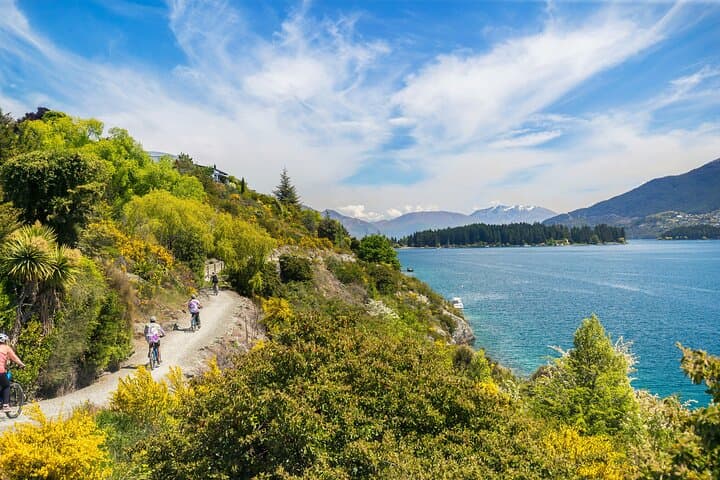
Morning light combs the Arrow River, catching in the ripples like handfuls of small coins. You swing a leg over a fresh-tuned Specialized hardtail, tires humming low as the riverside path pulls you downstream. Poplars stand at attention, their leaves whispering encouragement; the river keeps pace, nudging you along as if it remembers when fortune-hunters followed the same corridor with dreams heavier than panniers. This is Arrowtown on two wheels: independent, scenic, and surprisingly varied for a day that starts outside a humble bike shop.
The beauty of hiring here is the choose-your-own-adventure simplicity. Staff fit your bike, hand over a clear map, and match your ambitions to the terrain. From the shop door, you can roll onto the Queenstown Trail network—a well-marked web of crushed-gravel paths rated Grade 2–3 (easy to intermediate). Most riders aim for one of three classics: the Arrow River Bridges Trail to Gibbston (roughly 16 km one-way), the gentle loop around Lake Hayes (about 8 km), or a longer push toward Frankton and Queenstown via the Twin Rivers Trail (up to 35 km one-way). The riding is approachable—undulating rather than punishing—with short climbs that wake up the lungs and descents that reward the effort.
Out of town, the Arrow River plays guide, daring you across a series of swing bridges that float over green water. On warm days, eddies wink with promise; in summer, the river smells faintly of sun-warmed stone. The track carves into schist bluffs and rolls out again through willow shade, giving your cadence a natural rhythm—steady, easy, forward. Gravel corners require attention, but the terrain is forgiving enough for newer riders and entertaining for veterans who appreciate a quick, flowy spin.
History here doesn’t lurk—it rides alongside. Arrowtown boomed after gold was discovered in 1862, and echoes of that era sit in the fold of the valley. Detour to the restored Chinese Settlement on the riverbank to see tiny stone huts where immigrant miners endured brutal winters for a chance at luck. The town’s tidy main street still wears its 19th-century bones—false-front shops, corrugated tin, stone walls—and the trees, many planted by early settlers, blaze every autumn as if the hills themselves are panning for light.
Geologically, you’re pedaling through a storybook of ice and water. Schist outcrops peel like pages; the wider valley was shaped by glaciers that scoured basins and left behind the lakes that now mirror the sky. Ride the Lake Hayes loop and you’ll meet one of those basins: a still, reflective oval where the Remarkables often strike a perfect silhouette in late afternoon calm. The trail skirts wetlands alive with ducks and swans, a slow-motion interlude after the morning’s riverside momentum.
Culturally, the trail points toward Gibbston, the valley that taught pinot noir how to handle the southern sun. Follow the Arrow River Bridges Trail east and you’ll spill into a chain of cellar doors perched above the Kawarau Gorge. The river down there is a different animal—bolder, muscular, insisting on its way through narrow rock. It’s also where New Zealand’s commercial bungy jumping began, at the historic Kawarau Suspension Bridge. Even if you’re not jumping, it’s worth parking the bike to watch the daily theater and feel the gorge wind race up the cliffs.
This is a ride for planners and drifters alike. Want a casual half-day? Cruise Lake Hayes and grab coffee back in Arrowtown. Chasing a longer mission? Set sights on Gibbston and arrange a late shuttle to skip the uphill return. Either way, the logistics remain refreshingly light. The bikes are modern and well-maintained, the maps readable, and the trail signage direct. You decide how much sweat to spend and where the day will end—under pub lights in Arrowtown, or with a glass of pinot in vineyard shade while the sun smolders behind the ranges.
Practicalities matter on the South Island, and Arrowtown rewards those who respect the elements. UV is fierce even when the breeze feels mild, and the weather can swing in an hour from bluebird to brisk. Layers help. So does water—carry more than you think you’ll need. Gravel eats road tires, but these bikes are built for it; keep your weight light over the front wheel in corners and feather brakes on loose descents. On narrow bridges and single-lane pinches, yield to walkers and oncoming riders. The local etiquette is simple: slow down, smile, and let the trail work its charm.
The best part? This hire keeps adventure open-ended. No fixed schedule, no guide setting the pace. Just you, a reliable bike, and a network of paths that tie together history, geology, and the modern pleasures of a place that knows how to host adventurers. By late afternoon, the Arrow River runs copper, the willows soften, and the trail seems to exhale under your tires. The river pushes forward, as rivers do, inviting you to return and finish the story on another day.
Trail wisdom
Small choices, better day.
Start With the River
From Arrowtown, roll onto the Arrow River Bridges Trail for the smoothest warm-up and classic swing-bridge scenery before deciding on a longer route.
Respect Loose Corners
Gravel can be marble-like on shaded bends—keep your weight centered and brake before, not during, the turn.
Sun Is Strong Year-Round
New Zealand’s UV index is high even on cool days—apply SPF 50, wear sunglasses, and reapply at lunch.
Plan a One-Way to Gibbston
If riding to wineries, arrange a late-day shuttle back to Arrowtown so you can linger without racing sunset.
Local knowledge
Read the place, not just the route.
Watch for native species including Black swans on Lake Hayes, Fantails flitting along willow-lined sections of the Arrow River.
Keep an eye out for wildlife during the transition between areas and habitats. Respect distance guidelines.
Stay on formed trails to reduce erosion, yield to walkers on narrow sections, and pack out all rubbish. Consider donating to the Queenstown Trails Trust to support maintenance.
Follow the guide's instructions on size limits, ethical handling, and leave-no-trace practices.
Chinese Settlement on the Arrow River for a short historical detour. Lake Hayes boardwalk on the east side for mirror-calm reflections at dusk
Locally recommended viewpoints and quiet spots known best to local operators.
Arrowtown boomed after gold was discovered in 1862, drawing miners from around the world; remnants survive in restored huts and stone buildings.
Maritime roots and regional tradition shape the waterways and working coasts.
Seasonal guide
Four versions of the same landscape.
Spring
Best forBlossoms and fresh greenery · Brisk, crowd-light rides
ChallengesChangeable weather · Cool mornings
Trails are quiet and green returns to the valley. Expect chilly starts and the odd shower; pack a light shell.
Summer
Best forLong daylight windows · River dips and winery patios
ChallengesHigh UV exposure · Midday heat and busier trails
Warm, dry riding with dusty corners and popular bridges—start early, hydrate, and chase shade in the afternoon.
Fall
Best forAutumn color around Arrowtown · Crisp, stable weather
ChallengesCold mornings and possible early frosts · Festival crowds in peak foliage
Golden poplars frame the river and Lake Hayes reflects fire-bright hillsides. Layer up and book shuttles ahead.
Winter
Best forClear, still days · Snow-dusted mountain backdrops
ChallengesIcy trail sections · Short daylight hours
Short but beautiful riding windows—watch for black ice on shaded bends and finish before dusk.
Operator details
What the booking data adds.
Included
- ✓Helmet
- ✓Use of bicycle
- ✓Trail Map
Good to know
- ✓Infants and small children can ride in a pram or stroller
- ✓Service animals allowed
- ✓Public transportation options are available nearby
- ✓Specialized infant seats are available
- ✓Suitable for all physical fitness levels
Pack with intention
What to bring.
Good to know
Common questions.
Most routes are Grade 2–3 (easy to intermediate) with short climbs, gentle gradients, and some loose gravel. Confident beginners and families can ride shorter sections.
Plan the edges
The details that make the day easier.
Gold discovered in the Arrow River in 1862 sparked a rush that swelled Arrowtown to more than 1,500 miners within weeks—remnants of that era remain in the restored Chinese Settlement on the riverbank.
Post-ride, grab a pint and hearty fare at The Fork and Tap, or refuel with a fried-chicken burger at Slow Cuts. Coffee and pastries at Provisions of Arrowtown make an ideal mid-ride stop. If you roll into Gibbston, reward the day with a tasting under the vines—then shuttle back to town for a stroll down Buckingham Street’s heritage storefronts.
- Closest airport
- Queenstown (ZQN). Trail access: From central Arrowtown bike hire, pedal directly to the Queenstown Trail. Drive time: ~20 minutes from Queenstown to Arrowtown. Cell service: Good in town, patchy in the Kawarau Gorge. Permits: None for the Queenstown Trail; helmets required (provided).
Ride only on marked tracks, avoid skidding on corners to protect trail surfaces, and give way to walkers and uphill riders. Refill bottles in town to reduce single-use plastics and respect historic sites along the river.
Explore by topic
Follow the threads.
Keep exploring
Make the story part of the trip.
In four hours you can move from shaded canyon ferns to wind-scoured coastal ridgelines, guided by someone who knows where the light—and the hidden views—live. This private half-day hike on the Monterey Peninsula or Big Sur is compact, curated, and perfect for travelers who want depth without a multiday commitment.
 Related story
Beneath a sky of shifting light, Skaftafell’s ice reads like a map of time. This three-hour guided glacier hike mixes technical instruction with geology and culture: compact, safe, and unforgettable.
 Related story
Lose the city for a few hours without leaving it: this 5-mile, 900-foot-gain Forest Park loop threads old-growth pockets, city viewpoints, and cultural landmarks for a compact taste of Portland’s wild side. Expect moss, roots, and stories.