
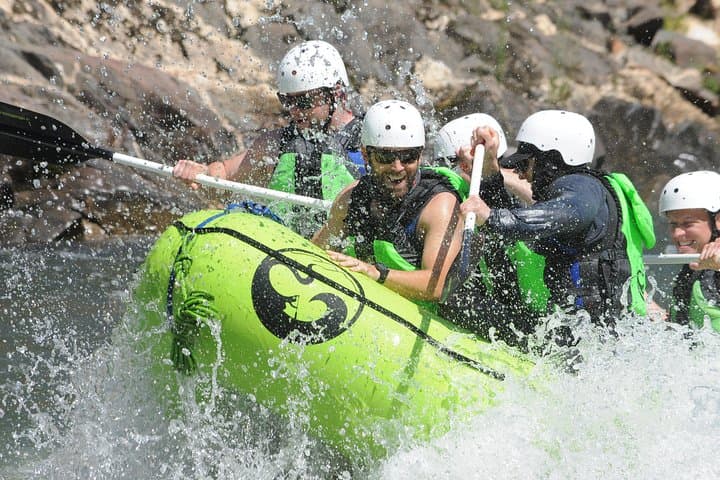
What the day feels like
The afternoon sun breaks over the Sierra foothills and the South Fork American River answers with a bright, rushing voice. Under a sky that looks painted by someone who knows the value of good light, a half-day group gathers on a gravel bar. Inflatable rafts squat low, paddles rest like tuning forks, and a guide’s safety talk cuts the air: think teamwork, lean forward, call commands. You push off, and the river starts doing work—moving you, testing your attention, offering the small, steady shocks of Class II and III rapids that make this stretch a perfect introduction to river running.
This is the PM Gorge run on the South Fork American River, a four-hour afternoon trip that packs approachable whitewater, a taste of Gold Rush history, and easy access from Sacramento into a compact, social adventure. The rapids are lively—fun wave trains, occasional holes that roll the boat slightly—and the current has a personality all its own, coaxing you into eddies, daring you into the center line, and rewarding good paddle technique with clean surfs and grin-worthy splashes. For families and mixed-ability groups, the balance is ideal: enough adrenaline to feel like an outing, not so much that you spend the day bracing.
Geology and history are close companions here. The South Fork has carved a narrow gorge through uplifted metamorphic and volcanic rock as it heads west toward the Sacramento Valley. The same watershed drew prospectors in the 1840s, and just downstream lies Marshall Gold Discovery State Historic Park in Coloma—the literal place where the modern history of California changed. You’ll float past talus slopes and pockets of oak and manzanita, and if you listen you can almost hear the echoes of sluice boxes and miners’ calls in the scrubby hills.
Culture and community matter on this stretch of river, too. Local outfitters—many family-run—have threaded commercial river running into a landscape that still hosts anglers, kayakers, and weekend campers. The camping near the launch points keeps the trip social: cookouts, late-night conversations and the river’s nocturnal cadence. Guides tend to be storytellers as much as safety professionals; expect local lore layered into the standard run-of-river instructions.
Why go? Because the PM Gorge gives you a concentrated, low-friction way to check a river trip off your list without committing to multi-day logistics or technical whitewater. It’s social—the raft is a shared machine and the faster you paddle together the better the ride—and it’s transferable: the skills you practice (edging, brace, reading the river line) are the same you’d use on longer or wilder runs.
Practicalities: trips are roughly four hours long, priced from about $110 per person, and run in the afternoon—prime timing for warm water and the best light for photos. The rapids are class II–III+, so this is beginner-friendly with moments that challenge. Bring a sense of humor, a water shoe, and a good quick-drying layer. Guides supply life jackets and helmets and will brief you on strokes and safety before the first move.
Safety and preparation are uncomplicated but important. Hydrate upfront and leave heavy cotton clothing at home. Choose footwear that won’t slip off and a sun hat that straps on—or trust the guide-provided helmets. If you’re traveling with kids, ask the outfitter about age and weight minimums; many companies position this run as family-appropriate but have limits designed to keep everyone safe.
Beyond the river, plan time to visit Marshall Gold Discovery State Historic Park in Coloma. It’s a tidy complement—a flat, interpretive walk through the exact place James W. Marshall spotted gold in 1848. If you’re camping, pick a riverside site and bring a headlamp: evenings by the South Fork fold into a chorus of frogs and owls, and the stars overhead are unabashed.
For photographers, the PM run is generous: golden-hour light on canyon walls, close-up action shots of paddlers and surfable waves, and quiet shorelines where reflections hold. But keep cameras protected—spray is constant—and prioritize a waterproof point-and-shoot or a chest-mounted action cam for the best combination of safety and imagery.
This afternoon raft is compact, practical adventure. It’s not about conquering the river; it’s about feeling it. You leave with a few wet memories, a sun-salted shirt, and a better sense of how river mechanics and human teamwork combine to make something louder than a single person—a raftful of people moving in sync. It’s an accessible, well-priced way to get intimate with a stretch of river that helped shape a state, and it’s the kind of outing that nudges you to come back for the longer trips.
If you’re planning, remember the basics: book early for summer afternoons, expect a casual safety briefing, and budget time after the trip to explore Coloma’s Gold Rush sites or set up camp. The South Fork runs in a very specific groove between accessible and exciting—an ideal afternoon for anyone curious about rafting but not yet ready to commit to multi-day expeditions.
Trail wisdom
Small choices, better day.
Wear secure water shoes
Avoid flip-flops—the riverbed is rocky and shoes that drain and grip will protect toes and give better footing in the raft.
Sun protection matters
Bring a brimmed hat that can be strapped and waterproof sunscreen—the afternoon sun on the water is intensified by reflection.
Listen to your guide
Guides give concise commands for steering and safety—following them keeps the trip smooth and more fun for everyone.
Secure electronics
Use a waterproof case or leave cameras on shore; phone-in-pockets are a guaranteed way to lose your device.
Local knowledge
Read the place, not just the route.
Watch for native species including Osprey, Black-tailed deer.
Keep an eye out for wildlife during the transition between areas and habitats. Respect distance guidelines.
Respect river corridors: pack out trash, avoid disturbing riparian vegetation, and follow outfitter guidance to reduce bank erosion and human-wildlife conflicts.
Follow the guide's instructions on size limits, ethical handling, and leave-no-trace practices.
Poke around the interpretive trails at Marshall Gold Discovery State Historic Park. Drive a short way upriver for quieter eddy pools and picnic spots
Locally recommended viewpoints and quiet spots known best to local operators.
This river corridor sits at the birthplace of the California Gold Rush—James Marshall found gold in Coloma in 1848 on the South Fork American River.
Maritime roots and regional tradition shape the waterways and working coasts.
Seasonal guide
Four versions of the same landscape.
Spring
Best forHigher flows and lively rapids · Wildflower viewing
ChallengesCooler water temps · Variable flows after rain
Spring brings higher, faster flows and vivid banks of wildflowers—the rapids feel more punchy and guides may adjust the route to match conditions.
Summer
Best forWarm water swims · Evening camping
ChallengesHigher visitor numbers · Strong sun exposure
Summer is peak season for afternoon runs—water is warm, days are long, and post-raft camping or river swims are ideal.
Fall
Best forCrisp air and changing leaves · Quieter runs
ChallengesCooler evenings · Earlier sunsets
Fall offers quieter launches and dramatic light on the canyon walls; expect cooler nights if you camp after your trip.
Winter
Best forOff-season solitude · Lower crowds
ChallengesCool to cold water · Outfitters run less frequently
Winter runs are available on limited schedules; bring warm layers and confirm departure times with your outfitter.
Pack with intention
What to bring.
Good to know
Common questions.
The PM Gorge trip runs about four hours from meeting time to return—expect roughly 2–3 hours on the water depending on flow and logistics.
Plan the edges
The details that make the day easier.
James W. Marshall discovered gold at Sutter's Mill in Coloma on the South Fork American River in 1848, sparking the California Gold Rush.
After a run, head into Coloma for the small cluster of cafes and the Marshall Gold Discovery State Historic Park; in nearby Placerville try local craft brews and a hearty pie—classic foothill comfort food after a day on the water.
- Closest airport
- Sacramento (SMF)
- Typical drive
- ~45–60 minutes to Coloma depending on route
- Cell service
- intermittent in the gorge
- Permits
- no special river permit for commercial trips; check outfitters for private-run rules
This river runs through sensitive riparian habitat—pack out all trash, use designated launch areas, and support outfitters that follow Leave No Trace practices.
Explore by topic
Follow the threads.
Keep exploring
Make the story part of the trip.
 Related story
Less than two hours from Nairobi, Kereita Forest pairs hands-on canopy adventure with quiet montane trails and a sobering colonial history—perfect for families, teams, and curious travelers seeking a full-day pulse of nature.
Set out from Bass Harbor for a private, customizable day on Blue Hill Bay — lighthouses, puffins, seals, and the chance to feel Acadia from the water. Small groups, local captains, unforgettable views.
In four hours you can move from shaded canyon ferns to wind-scoured coastal ridgelines, guided by someone who knows where the light—and the hidden views—live. This private half-day hike on the Monterey Peninsula or Big Sur is compact, curated, and perfect for travelers who want depth without a multiday commitment.