
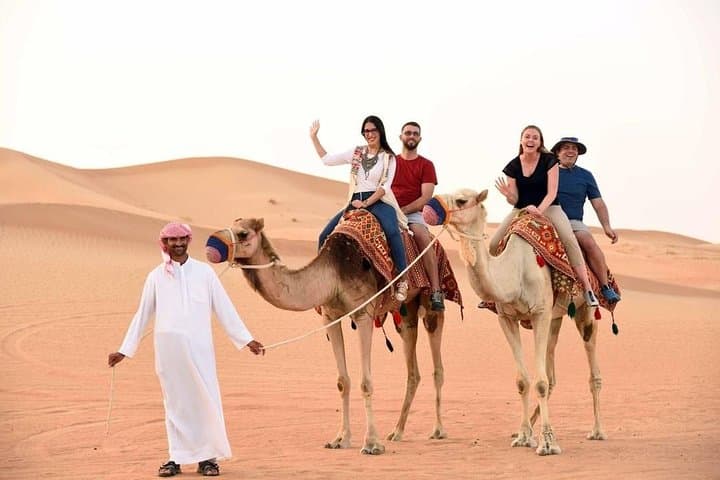
What the day feels like
When the late-afternoon sun tips toward the horizon, the Arabian sand begins to take on a slow, liquid glow—gold melting into copper, then pink. You feel the wind before you see it, a warm finger that brushes your neck and tugs at loose hair. A convoy of 4x4s slips away from the city’s glass and concrete and vanishes into this soft, low-lying ocean. For six hours you live between two worlds: Dubai’s hypermodern skyline fading in the rearview and a vast, rhythmically undulating desert ahead that seems intent on turning every sense inward.
This half-day desert adventure is designed to give you the maximum sensory payoff in the minimum time. The tour typically runs about six hours (approximately 360 minutes), beginning with a dune-bashing run—three decades of off-road expertise compressed into roughly 30 adrenaline-soaked minutes as your driver drops and climbs sand waves like a seasoned surfer. The vehicles push the dunes with precision: sand sprays like confetti, the engine’s growl is the desert’s metronome, and for a few minutes you feel the landscape has a pulse of its own, daring you to hang on.
The excursion then slows into something intentionally more human. In the middle of nowhere the convoy stops for the long-picture moment: a band of orange dunes and a sky that seems to broaden into its own hemisphere. From there you’re led to a Bedouin-style campsite where camel rides, henna painting, and shisha are offered with easy hospitality. An open-air barbecue spreads plates of grilled meats and flatbreads while performers—tanoura dancers spinning like living kaleidoscopes and belly dancers whose rhythms feel older than the city—occupy the flickering edge of the evening.
Dubai’s desert may feel timeless, but it sits atop a layered history. For millennia, the region’s people were seafarers, pearl divers, and nomadic pastoralists who read water and weather with an attentiveness that made survival an art. Falconry and camel husbandry remain cultural touchstones; the sight of a camel caravan at dusk is an echo of those older movements across these sands. Geologically, these dunes are part of the larger Arabian Desert system—wind-sculpted ridges that shift slowly but continuously, so that every visit writes a slightly different map of the place.
The tour is not just spectacle; it’s also a curated introduction to Emirati culture and desert ecology. Your hosts are typically licensed operators who aim to balance thrill and stewardship: quad-biking and dune-bashing happen under controlled conditions, and the campsite offers a chance to learn about local customs—how to drink coffee the Bedouin way, or why henna is more than decoration. On clear nights, the absence of city lights makes the Milky Way feel close enough to touch; the desert’s stillness is not blank but conversational.
Practicalities matter as much as poetry on a trip like this. The tour departs from Dubai (pick-up is commonly arranged from city hotels), and total door-to-door time runs about six hours. Dress in breathable layers—the desert cools quickly once the sun drops. Footwear should be closed-toe and secure; sand gets into everything, and a sturdy shoe will save your feet during camel rides and short walks between dunes. Hydration is non-negotiable: bring a refillable water bottle and drink steadily throughout the afternoon.
Safety is straightforward but critical. Listen to your driver and guide: dune-bashing relies on experienced driving and predictable passenger behavior. If your itinerary includes quad-biking, expect a brief safety orientation and a helmet; follow the marked courses. Respect cultural norms at the campsite—modest attire is appreciated during interactions, particularly if you plan to photograph people. Finally, be mindful of the environment: stick to designated routes, don’t litter, and avoid riding on fragile vegetation.
Photography-wise, the tour is a dream in the golden hour. Use a fast shutter for motion shots during dune-bashing, a wide-angle for panoramas across dune contours, and a mid-range zoom for dancers and close-ups. Bring a small, protective bag for sand and switch lenses as little as possible.
For travelers who want a compact but complete desert encounter—adrenaline, culture, and a hint of wilderness—this half-day safari is efficient and immersive. It’s an accessible way to experience desert dynamics without committing to an overnight. Whether you’re on a first trip to the UAE or looking for a dramatic evening outside the city, the dunes deliver a reminder: landscapes can be both performance and teacher, daring and generous at once.
Trail wisdom
Small choices, better day.
Hydrate Before and During
Bring a refillable water bottle and sip frequently—heat and wind are dehydrating even in cooler months.
Choose Closed-Toe Shoes
Sand, small rocks, and sudden dune slopes make sturdy shoes a better choice than sandals.
Follow Guide Instructions
Dune-bashing and quad-biking require coordinated behavior for safety—listen to briefings and remain seated when asked.
Pack Light, Protect Gear
Use a small, zippered bag to keep cameras and phones sand-free; silica pouches help after the trip.
Local knowledge
Read the place, not just the route.
Watch for native species including Arabian oryx (in protected areas), Desert foxes and various migratory birds.
Keep an eye out for wildlife during the transition between areas and habitats. Respect distance guidelines.
Several protected zones restrict off-road vehicles and require licensed operators; responsible tours follow designated tracks and avoid fragile vegetation.
Follow the guide's instructions on size limits, ethical handling, and leave-no-trace practices.
Stop at a dune crème vantage for a silent sunset moment away from the main campsite. Visit the nearby Al Marmoom Conservation Reserve for serene desert lakes and birdwatching on other days
Locally recommended viewpoints and quiet spots known best to local operators.
The dunes around Dubai have long supported nomadic traditions—camel caravans and falconry remain cultural anchors in Emirati life.
Maritime roots and regional tradition shape the waterways and working coasts.
Seasonal guide
Four versions of the same landscape.
Spring
Best forPleasant temperatures · Wildflower spotting on rare rainy seasons
ChallengesWindy afternoons that lift sand · Temperature swings between day and night
Spring offers comfortable daytime temperatures and long evenings—expect gusts that can make sand airborne, so bring wind protection.
Summer
Best forLow crowd levels · Sunset color intensity
ChallengesExtreme heat · Limited midday activity windows
Summer is extremely hot; activities are best scheduled strictly for early morning or after sunset and require extra hydration and heat-awareness.
Fall
Best forStable weather · Clear skies for stargazing
ChallengesOccasional dusty conditions · Cooler nights
Fall is an excellent shoulder season—warm days and crisp nights—just be prepared for some airborne sand during windy spells.
Winter
Best forComfortable daytime touring · Ideal stargazing and photography
ChallengesCool evenings (bring a layer) · Higher demand and fuller tours
Winter is peak season for a reason: comfortable hiking and superb sunset conditions, but book in advance due to demand.
Operator details
What the booking data adds.
Included
- ✓Barbecue meal vegetarian and non-vegetarian options
- ✓English-speaking licensed driver
- ✓Tanura and belly dancing show
- ✓Gaymat (sweets), Gahwa (coffee), and dates
- ✓Shisha pipe (hubble bubble flavour) in the Shisha Area
- ✓Dune bashing / Sand boarding / Short Camel Ride
- ✓Unlimited soft drinks
- ✓Transportation by 4WD air-conditioned Land Cruiser
- ✓Henna painting for ladies
- ✓Quad Bike ATV Ride
- ✓Pick-up and drop off at your selected hotel/ location
Not included
- —Alcoholic Beverages
Good to know
- ✓Specialized infant seats are available
- ✓Not recommended for travelers with spinal injuries
- ✓Not recommended for travelers with poor cardiovascular health
- ✓Suitable for all physical fitness levels
Pack with intention
What to bring.
Good to know
Common questions.
Dune-bashing typically lasts around 30 minutes, timed and driven by experienced drivers to maximize thrill while ensuring safety.
Plan the edges
The details that make the day easier.
Falconry—an ancient hunting tradition practiced across the Arabian Peninsula—was proclaimed by UNESCO as Intangible Cultural Heritage in 2010, and is still practiced and celebrated in the UAE.
After the safari, head to Al Hadheerah at Bab Al Shams for an immersive desert dining experience, or try camel-milk ice cream at a Dubai city cafe; local guides often share stories about Bedouin hospitality—accept a cup of Arabic coffee as a gesture of welcome.
- Closest airport
- Dubai International (DXB); Typical driving time from Dubai city center to desert meeting area: 30–60 minutes; Cell service: intermittent in dune areas—guides carry radios; Permits: Operators must be licensed to enter protected reserves, so book through regulated tour companies.
Choose operators that adhere to protected-area rules and stay on designated tracks; avoid feeding wildlife, pack out trash, and respect local cultural practices to minimize impact.
Explore by topic
Follow the threads.
Keep exploring
Make the story part of the trip.
 Related story
Less than two hours from Nairobi, Kereita Forest pairs hands-on canopy adventure with quiet montane trails and a sobering colonial history—perfect for families, teams, and curious travelers seeking a full-day pulse of nature.
Set out from Bass Harbor for a private, customizable day on Blue Hill Bay — lighthouses, puffins, seals, and the chance to feel Acadia from the water. Small groups, local captains, unforgettable views.
In four hours you can move from shaded canyon ferns to wind-scoured coastal ridgelines, guided by someone who knows where the light—and the hidden views—live. This private half-day hike on the Monterey Peninsula or Big Sur is compact, curated, and perfect for travelers who want depth without a multiday commitment.