
What the day feels like
The road leaves Denver’s grid behind and rises toward the slanted red ramparts of the Flatirons, sandstone tilted like a stack of books mid-fall. Wind noses along the windshield, testing your resolve, while the foothills pull you west with an old, familiar gravity. On this Private Rocky Mountain National Park Tour—your own pace, your own questions—the Rockies don’t just appear; they declare themselves. The mountains step forward, one ridge after another, until the horizon is nothing but rock, sky, and the bright cut of alpine air.
It starts as a story in layers. The Flatirons, some 300 million years in the making, tip you into the narrative of geologic uplift that built this state. By the time you sweep past Boulder and angle toward Estes Park, the landscape tightens. The canyon’s granite walls stand shoulder-to-shoulder, the river hustling below, daring you to keep up. The road unwinds into Estes, where elk treat the town green like a living room. You roll toward the park gate and the mountains seem to exhale—welcome, now let’s see what you can handle.
Inside Rocky Mountain National Park, the terrain shifts from ponderosa to fir and spruce, then breaks above treeline into tundra that has no patience for hesitation. Trail Ridge Road—the highest continuous paved road in the United States—threads the sky at 12,183 feet. Up here, the tundra hunkers low, every plant a strategy against wind that doesn’t ask, it insists. Clouds herd themselves over the Divide. A raven glides alongside the vehicle, offering commentary in its own surly dialect. The peaks keep their own weather, and you learn to read it: a quick build of gray to the west, a sudden lift in the wind, small pellets of graupel tapping the shoulders of summer.
What makes this journey special isn’t just altitude; it’s context. Your guide stitches together geology and culture as you move. Ute and Arapaho peoples traveled these passes long before this was a park, reading seasons in snow lines and elk migrations. F.O. Stanley helped put Estes Park on the leisure map, and his namesake hotel still lords over town with a white, well-kept grin. Stephen King’s stay at the Stanley famously inspired The Shining, and while Kubrick filmed elsewhere, the 1997 miniseries returned to the hotel’s halls. That blend of myth and reality feels fitting in a place where granite tells time and wildlife still dictates the day’s agenda.
The rhythm of the tour is deliberate. Stop at Many Parks Curve where the world steps back and shows you how it fits together—Moraine Park rolling open, Longs Peak shouldering the skyline at 14,259 feet. Forest Canyon Overlook, where ancient glaciers chewed the valley into a U, humbles even the loudest thoughts. At the Alpine Visitor Center, tundra spreads like a textured tapestry. Marmots pop out of granite cracks, as if taking attendance. The road itself behaves like a teacher who’s kind but firm: focus on the edge, the exposure, the way your breath gets shorter with altitude. Drink water, move unrushed, and you’ll find your pace.
Wildlife introduces itself on its own terms. In summer, elk drift through meadows at dusk. In fall, bulls bugle like horns made of fog—a sound that grabs the rib cage and shakes. Bighorn sheep ride the ridgelines, both casual and careful. In the willows near the Kawuneeche Valley, moose chew without hurry, as if they invented time. Give them space. A zoom lens does the work so you don’t have to become the news.
Here’s the practicality that makes this day work. This is an eight-hour, door-to-door experience run by local pros who understand storm timing, traffic patterns, and where the best bathrooms hide. Park entrance fees are included, and there’s water for refills—bring a bottle and keep sipping. Trail Ridge Road typically opens late May to October depending on snow; in shoulder seasons, your route may pivot to lower-elevation gems like Bear Lake and Sprague Lake. The altitude is real—Boulder sits around 5,400 feet; the park pushes you well above 11,000—so pace yourself and layer like a local. Sun at 12,000 feet behaves like it has something to prove.
Between viewpoints, your guide braids in stories. How the park came to be in 1915, how Trail Ridge opened in 1932 to knit east and west sides of the Continental Divide, how wildfires rewrite a forest and the next generation of aspen answers with a bright, determined leaf. The vehicle hum becomes a metronome. The landscape responds in measures: pine resin, cold rock, wind that never clocks out. Even the rivers seem to push forward with intention.
Estes Park bookends the day with small-town ease. If time allows, there’s a swing by the Stanley’s porch for that wide-angle look at the valley. Or a quick coffee replenishment before the eastward roll. As the tour points back toward Denver, sunset smears color over the Divide. The tundra, satisfied, quiets to a low whisper. The foothills unkink, town lights gather, and you carry the park with you—the breath, the space, the reminder that scale can reset perspective in a single, windy minute.
If you’re the kind of traveler who wants a high-alpine sampler with depth, this <a href="https://app.advcollective.com/local-experts/denver-private-rocky-mountain-national-park-tour-2">Private Rocky Mountain National Park Tour</a> hits the mark. It’s immersive without being exhausting, personal without being precious, and guided with the kind of local fluency that turns a scenic drive into an education. You’ll step out smarter about the Rockies and more attuned to how they move—the way weather negotiates with stone, the way wildlife sets the schedule, the way a road can take you high enough to hear the continent split its waters toward two distant seas.
Ready to go? Make your day easy by booking the <a href="https://app.advcollective.com/local-experts/denver-private-rocky-mountain-national-park-tour-2">Denver private Rocky Mountain National Park tour</a> and trade city noise for alpine wind. The mountains are waiting, and they’re not shy about it.
Trail wisdom
Small choices, better day.
Hydrate Early, Hydrate Often
Begin drinking water the night before and keep sipping en route—altitude makes dehydration sneaky.
Layer Like a Local
Temperatures can swing 30°F from Estes Park to the Alpine Visitor Center; pack a light puffy and windproof shell even in summer.
Beat the Weather Window
Afternoon storms build fast above treeline—expect earlier departures in summer to avoid lightning and traffic.
Respect the Wildlife Buffer
Use a 200mm+ lens and stay at least 75 feet from elk and 120+ feet from moose and bears; rangers enforce distance rules.
Local knowledge
Read the place, not just the route.
Watch for native species including Elk, Yellow-bellied marmot.
Keep an eye out for wildlife during the transition between areas and habitats. Respect distance guidelines.
Stay on durable surfaces above treeline—tundra plants can take decades to recover. Follow Leave No Trace and keep distances from wildlife to reduce stress on animals.
Follow the guide's instructions on size limits, ethical handling, and leave-no-trace practices.
Old Fall River Road (seasonal, one-way): a historic gravel climb with intimate tundra views. Lily Lake: a flat, scenic loop with big-mountain reflections and fewer crowds
Locally recommended viewpoints and quiet spots known best to local operators.
Rocky Mountain National Park was established in 1915; Trail Ridge Road opened in 1932 to connect the park’s east and west sides. Ute and Arapaho peoples long traversed these mountains seasonally.
Maritime roots and regional tradition shape the waterways and working coasts.
Seasonal guide
Four versions of the same landscape.
Spring
Best forSnow-draped peaks views · Lower-elevation lakes and waterfalls
ChallengesLingering snow and ice on roads · Unpredictable closures
Expect mixed conditions—sunny mornings, cold winds, and patchy snow. Trail Ridge may not be fully open until late May or June.
Summer
Best forTrail Ridge Road access · Wildflowers and long daylight
ChallengesCrowds · Afternoon thunderstorms and intense UV
Prime time for alpine tundra and big-views driving—depart early for calmer weather and lighter traffic.
Fall
Best forElk rut and bugling · Golden aspens
ChallengesRapid temperature drops · Possible early snow
Crisp air, fewer crowds, and dramatic color; watch for wildlife on roads at dawn and dusk.
Winter
Best forSnowy vistas · Quiet overlooks on the east side
ChallengesTrail Ridge closed · Icy conditions and frigid wind
The park transforms into a calmer, snowbound landscape; expect limited road access but beautiful, clear light.
Pack with intention
What to bring.
Good to know
Common questions.
Trail Ridge Road tops out at 12,183 feet when open; many overlooks range between 10,000–12,000 feet.
Plan the edges
The details that make the day easier.
Trail Ridge Road in Rocky Mountain National Park is the highest continuous paved road in the United States, cresting at 12,183 feet.
Post-tour, grab a table at Bird & Jim for modern mountain cuisine or Smokin’ Dave’s for no-frills BBQ in Estes Park. Need a pick-me-up? Kind Coffee sits by the river with strong brews. Toast the day back in Boulder at Avery Brewing or Mountain Sun—both pair Colorado craft beer with laid-back, local energy.
- Closest airport
- Denver International (DEN). Pickup: Complimentary within Denver Metro. Drive time: ~1.5–2 hours to Estes Park depending on traffic. Cell service: Reliable in town; spotty to none inside the park. Permits: Park entry fees covered by the tour; timed-entry reservations may be required for private vehicles in peak season, but your operator handles access.
The alpine tundra is fragile—stay on paved paths at overlooks and never trample vegetation. Pack out all trash, use designated facilities, and observe wildlife from a distance to keep animals wild.
Explore by topic
Follow the threads.
Keep exploring
Make the story part of the trip.
In four hours you can move from shaded canyon ferns to wind-scoured coastal ridgelines, guided by someone who knows where the light—and the hidden views—live. This private half-day hike on the Monterey Peninsula or Big Sur is compact, curated, and perfect for travelers who want depth without a multiday commitment.
 Related story
Beneath a sky of shifting light, Skaftafell’s ice reads like a map of time. This three-hour guided glacier hike mixes technical instruction with geology and culture: compact, safe, and unforgettable.
 Related story
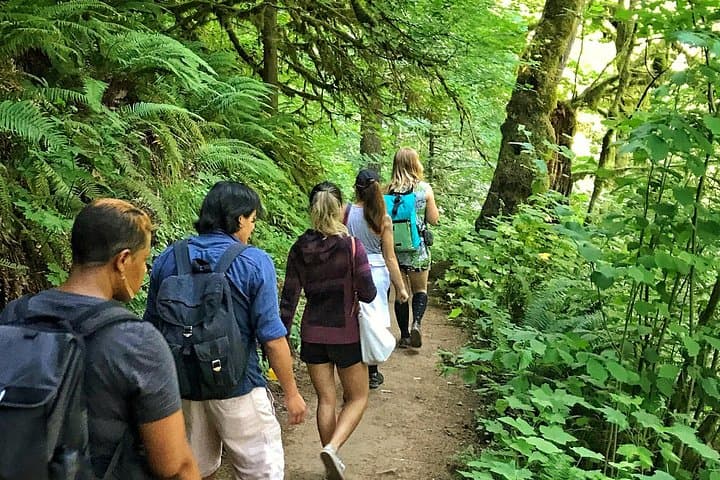
Lose the city for a few hours without leaving it: this 5-mile, 900-foot-gain Forest Park loop threads old-growth pockets, city viewpoints, and cultural landmarks for a compact taste of Portland’s wild side. Expect moss, roots, and stories.